

For Flavor-Packed Pork Chops, Add This Type Of Beer To Your Marinade
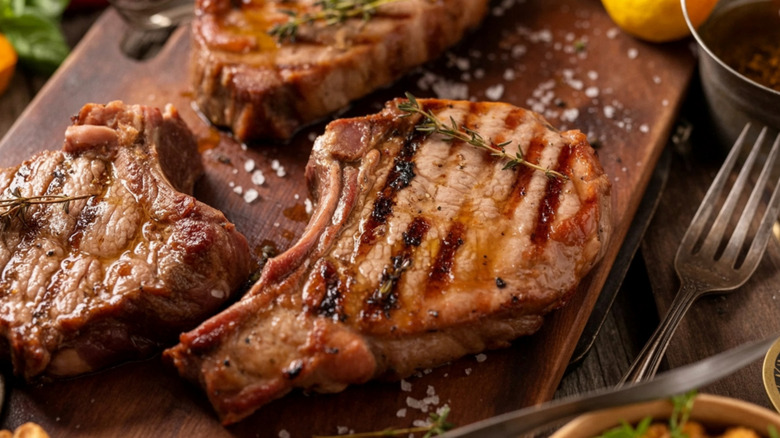
Pork chops excel at providing a hearty, meaty entree while keeping things relatively affordable. While their taste may be more simple compared to a steak, you can easily upgrade their flavor profiles with one, non-boozy beer: ginger beer.
The biggest difference between ginger beer versus ale is that the former has a more consistently sharp taste with less sugar, making it not only a great cocktail mixer but also a fantastic marinade ingredient. Its slight sweetness helps your meat develop a lovely glaze without being too overpowering and its acidic bump tenderizes meat, turning even the cheapest chop into a melt-in-your-mouth delight. While powerful, ginger also pairs well to a pretty wide variety of seasonings, giving you a range of additional marinade options to develop your own perfect recipe.
The best part is that because ginger beer is so potent, you don't need too much. Go easy on the salt but be sure to include enough to help your flavor penetrate the meat. When combined, too much salt and acid can turn your meat to mush or override its natural flavors. You'll only need a bottle (about ¾ cups) per two pounds of chops, so if you're only making one or two, feel free to hang onto some and mix yourself a cocktail complementary to your entree. While you might need to let thick chops marinate for close to eight hours, just remember that this mixture is potent, so thin chops should be good after only a couple hours.
Best type of chop and other ingredients for a ginger beer marinade
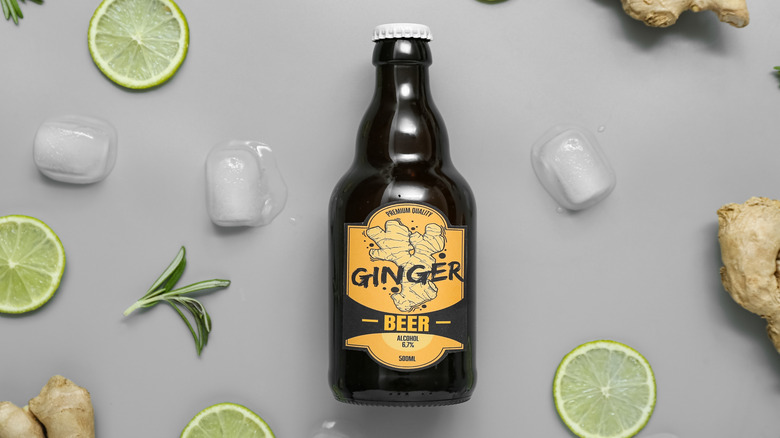
A good marinade deserves a good chop, something with enough fat and flavor to balance the intensity of your bubbly ingredient. Still, yes, it has a ton of taste on its own, but pairing it with the right spices gives you something overwhelmingly delicious while ensuring this recipe never gets too complicated.
When you want tender meat with just the right amount of fat, you can't go wrong with the "ribeye" of pork, the rib chop. Cut from the same section that gives you baby backs and spare ribs, this one has enough marbling to take the edge off of sharper flavors. Plus, when combined with the added moisture from a salty ginger beer marinade, the fat makes it almost impossible to dry out. Its thickness also means you need to cook it at a slightly lower temperature, letting the sugars from your seasoning caramelize beautifully without running the risk of burning them to a bitter mess.
Ginger plays well with other acidic ingredients, like citrus and vinegar, but only if you add a bit of extra sugar. If you want to keep the flavor profile simple, white sugar works fine, but you can up the complexity with some good honey as well. Still, since you've already got a bit of acid and fat, rounding out your seasoning with earthy herbs and spices, like rosemary and cumin, can give you an all-in-one meal that isn't too one note.