

How To Tell If Wagyu Beef Is Fake
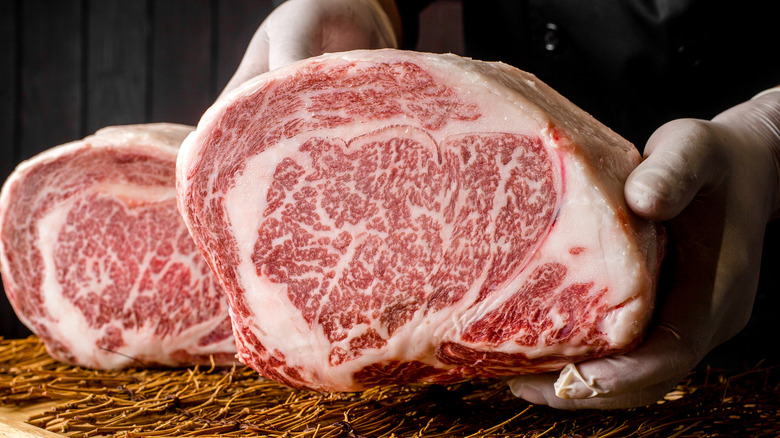
Wagyu beef is the gold standard of steak. Prized for its intense marbling, extremely tender texture, and unmatched flavor, the most premium cuts can command exceptionally high prices. But with its untouchable reputation and high demand in the luxury scene, there are many cases of steak being fraudulently sold as Wagyu. Fortunately, there are a number of telling signs that separate the fakes from the real deal.
The majority of label misrepresentations come from lower-grade Wagyu being passed off as high-grade Japanese Wagyu. "Wagyu" itself isn't a guarantee of quality. Instead, there's a spectrum that ranges from cheaper, crossbred beef reared overseas to meticulously bred, fully traceable Japanese cattle graded under Japan's strict A1 to A5 system.
The difference between a mid-tier Wagyu and an A5 Wagyu is easy to spot. Because of the way the cattle are raised, you'll be able to tell the quality just by the meat's appearance. A5 beef (the highest tier of Japanese wagyu) is threaded with dense, lace-like marbling that gives the meat a pale pink hue rather than the more typical deep red associated with beef. This marbling is what sets Wagyu apart from other types of steak, so the denser it is, the more likely that it's a higher-quality cut. Beyond appearance, any restaurant serious about serving it should also be able to tell you exactly where it came from. Real Japanese Wagyu comes with a certificate of authenticity, which verifies its origin and pedigree — down to the prefecture and farm. So if a restaurant is selling A5 Japanese Wagyu, yet can't speak confidently on its providence, there's a very high chance it isn't the real thing.
Look out for these red flags when ordering Wagyu
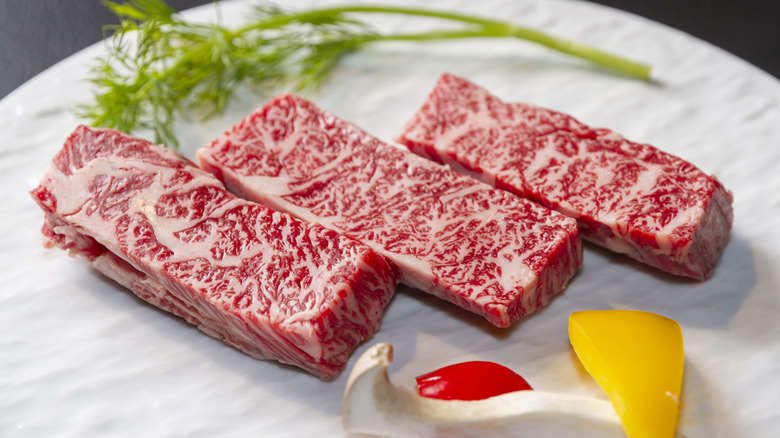
Wagyu was once reserved almost exclusively for high-end steakhouses and luxury tasting menus. But as its demand has exploded, the prized beef has found its way onto fast-food menus, casual restaurant specials, and even supermarket shelves. While we love to see it made accessible for everyone, not every restaurant serving Wagyu is delivering the real experience. If you want to taste what makes Wagyu truly special, keep an eye out for these red flags before ordering.
A peppercorn or béarnaise sauce can do wonders for a standard ribeye or filet mignon, but if you ever spot a restaurant offering Wagyu buried under heavy sauce or swimming in a marinade, consider it a major red flag. Wagyu's signature appeal is that intense marbling and exceptionally low melting point, which allows the fat to practically dissolve on your tongue to deliver a rich, buttery flavor all on its own. Covering this delicate flavor up with rich sauces or marinades masks the very qualities that justify its premium price tag. At that point, you're paying for the name, but not the experience.
Another restaurant red flag to be on the lookout for is a suspiciously cheap "Wagyu" burger. High-grade Wagyu is costly, and no serious steakhouse is grinding down A5 cuts just to press them into patties. Beyond the price alone, it would be a waste of the beef's prized marbling (which would likely end up causing the burger to be overly greasy anyway). In most cases, budget-friendly Wagyu burgers are made from lower-grade crossbred cattle that contain only a small percentage of Wagyu genetics. That doesn't make them automatically bad, but it misses the entire point of Wagyu.