

Yes, There Was Fast Food In Medieval Times, But It Looked A Bit Different
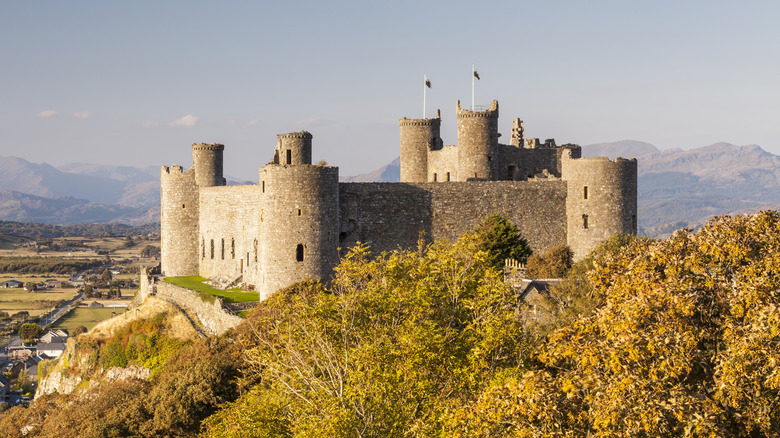
The idea of fast food seems like an entirely modern innovation. When the first chains popped up in the early 20th century, they were entirely novel. Today, they're defined by drive-thrus, in-app ordering, and a global presence never seen before. But while the face of fast food may have changed, the idea of it has been around since Medieval times, a period of European history spanning roughly from the 5th to the 15th century.
The idea of food during this period has become somewhat one-dimensional. We picture royalty enjoying rich, decadent banquets while peasants were left with miserable gruels of mysterious origins, but the reality was much more complex. One of the main reasons fast food was so prevalent in Medieval Europe was because it provided a meal away from the kitchen. Home kitchens were a rarity reserved for the wealthy, so the working class had no choice but to eat out at fast food joints known as "cook shops."
Like today, fast food was known for being cheap, speedy, and open late, but the menus looked very different. Modern fast food joints are dominated by burgers and fried chicken, which would have been considered delicacies by Medieval standards. Cook shop fare was more functional and was designed to be filling and travel well. This made pasties and meat pies all the rage. Another big difference is that customers could often bring their own meat to a cook shop. Cooks would then place the protein into a casing of stale bread and bake it.
Fast food has a history of convenience, class, and controversy
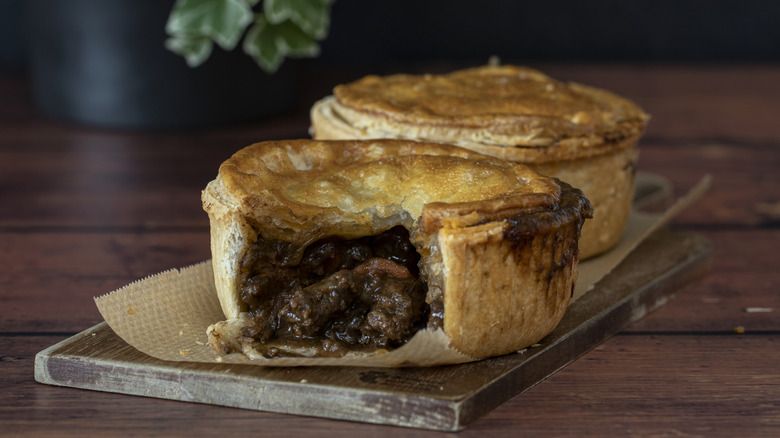
Fast food undeniably plays a monumental role in how we eat today. Chains like McDonald's have a vast global presence, and the industry as a whole is estimated to be worth hundreds of billions of dollars. Although it's heavily associated with the working class, it's enjoyed by both rich and poor, and most people have tried it at least once. However, while cook shops were equally accessible, their clientele was almost exclusively made up of the poorest members of society.
Modern fast food chains and cook shops have one big similarity: They have always been viewed with a certain level of skepticism. Fast food chains are often criticized for using preservatives and additives — aka serving ultra-processed food — and contributing to the environmental impact of mass production. In contrast, cook shops were infamous for being unhygienic. While the modern fast food industry faces several ongoing challenges, hygiene tends to be one of its operational strengths. Between the watchful eye of local health departments and the viral power of social media exposing grimy kitchens, bad hygiene has been responsible for some of the industry's biggest scandals (and subsequent reforms).
But while hygiene oversight did indeed exist in the Medieval period, it was by no means as rigorous. This era already has a bad reputation for sanitation, and, to the average Medieval citizen, cook shops were viewed as foul places. Notorious for serving diseased meat and spoiled food, they became spots for only the most desperate, while those who could afford better avoided them like the plague.