

This Seafood Restaurant Red Flag Should Have You Running For The Door
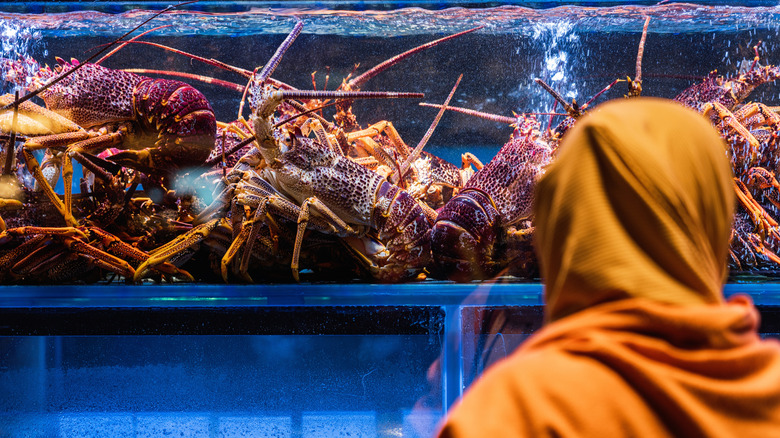
Live seafood tanks are a common feature of seafood establishments. From high-end Japanese sushi bars to your run-of-the-mill wet markets, they promise the freshest possible fish, crustaceans, and oysters. While some are charmed by the novelty of hand-selecting their meal, these tanks don't always guarantee quality. Before ordering, it's good practice to inspect the tank beforehand. If the water isn't crystal clear and its inhabitants look lethargic, use this as a sign to take your business elsewhere.
A key thing to look out for in a seafood restaurant is the condition of its live tank, since it can offer clues about overall maintenance and handling practices. A well-kept tank should have steady circulation and a working filtration system. If you can't tick these boxes, consider that a red flag. For example, cloudy water often indicates poor filtration or a buildup of waste and bacteria, which suggests that the tank isn't being regularly cleaned. Stagnant water, or a lack of visible circulation, is another major concern, as it can lead to low oxygen levels and declining water quality. While some algae is normal in fish tanks, a large amount, in combination with poor filtration and cloudy water, is another warning sign.
It's also important to look at the animals themselves. Dead fish or shellfish in the tank are a potential food safety risk. They can leach bacteria into the tank, contaminating its other inhabitants. Some live tank species, particularly shellfish and crustaceans, deteriorate quickly after death, which can affect the surrounding water. On the other hand, signs like lethargic movement can point to stress or suboptimal conditions, which isn't necessarily a food safety risk, but is a telling sign of poor animal welfare.
Other seafood restaurant red flags to keep an eye out for
There are plenty of seafood restaurant warning signs worth keeping in mind if you want to guarantee a top-tier meal. Freshness is a big one. That's the whole appeal of live tanks, and why coastal regions and island restaurants tend to have a reputation for better seafood. If a restaurant is displaying fish on ice, take a closer look. The scales should be firm, and the fish should have clear (not clouded) eyes. Beyond that, a strong, fishy odor emitting from the kitchen is a clear sign the fish being used is well past its prime.
Seafood is seasonal, and menus should reflect that reality. If something is labeled as "wild-caught" and "fresh" but seems out of sync with typical harvest patterns, you could be paying a premium for mislabeled fish. Conversely, much year-round seafood is farm-raised, though its price and sustainability fluctuate based on the species and farming methods. There are also some important distinctions between wild and farmed fish, particularly regarding their nutritional profiles and environmental impact, so make sure to do your research beforehand.
At oyster bars, pay attention to the ice. Oysters should be kept on clean, preferably crushed ice that drains properly. If they're sitting in a pool of melted water, that's a problem. The ice keeps the oysters firm, fresh, and, most importantly, alive, which prevents bacterial growth. On top of that, submerging them in freshwater kills oysters, so if the ice melts, they risk drowning and decomposing. Anyone who's had the misfortune of eating a bad oyster will know it's an experience best avoided.