

This Popular Beer Brand's Strongest Brew Is Banned In Certain States
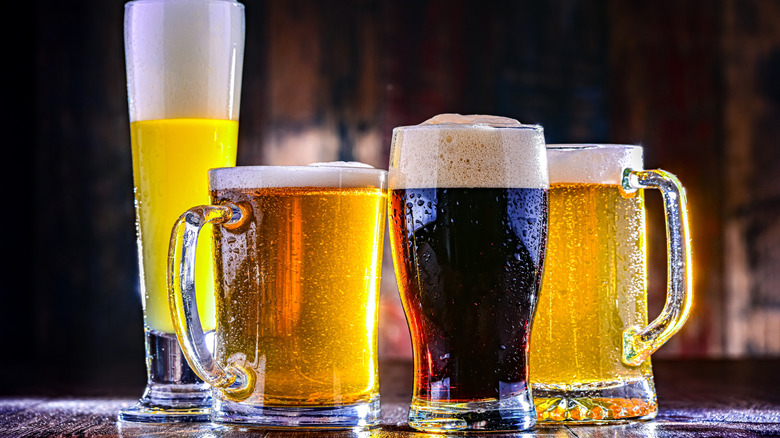
Compared to spirits and wine, beer isn't a drink with a high amount of alcohol. Most popular brands fall within the range of 4% to 6% alcohol by volume (ABV). But one beer seems to defy all logic. A product of the Boston Beer Company, Samuel Adams Utopias has a record-breaking 30% ABV. That's around the same ABV as Grey Goose Essences and Triple Sec. But while it may be in league with spirits, it's still classified as a beer. Unfortunately for Samuel Adams Utopias, this very designation resulted in it being banned in 15 states.
In the states where Samuel Adams Utopias is banned, legislation sets a legal limit for the ABV of beer products. These laws vary from state to state. For example, Vermont sets the limit for beer at 16% ABV, whereas in Utah and Colorado, it's capped at 4% ABV. The majority of the states where Samuel Adams Utopias is legal do not have any statutory limits in place.
Samuel Adams Utopias isn't your typical beer. Most beers are brewed from malted grains, boiled with hops, fermented with yeast, and carbonated before serving. Utopias pushes that process to the extreme. It uses a proprietary alcohol tolerant yeast (known as "Ninja yeast") that ferments far longer than standard yeast, driving up the ABV. The liquid is then aged for years — sometimes decades — in a mix of barrels, including Irish whiskey and White Port casks. It's uncarbonated and designed to be sipped at room temperature, making it more akin to a port or spirit than a conventional beer. The price also rises with its ABV. Just one 24.5-ounce bottle will set you back an eye-watering $240.
Each state has their own unique alcohol laws
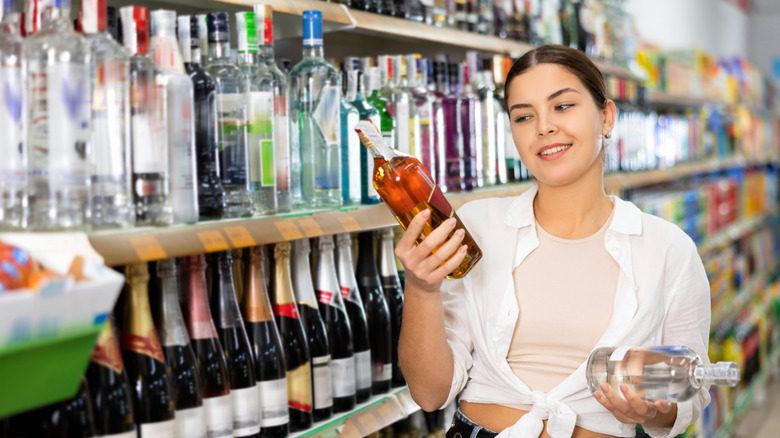
Alcohol laws vary significantly from state to state. The reason for this can be attributed to the 21st Amendment to the Constitution, which repealed the national Prohibition and granted individual states the power to regulate the production, sale, and distribution of alcoholic beverages. While some laws — such as a minimum purchasing age of 21 or bans on "marrying bottles" — operate on a federal level, the majority are state legislated.
One of the biggest differences between states is control versus license laws. In control states, the state government acts as the wholesaler and often the exclusive retailer for spirits. This means that bars or nightclubs have to purchase alcohol from state-run liquor stores. In contrast, license states allow private businesses to sell alcohol under state-issued licenses. But even within states, alcohol laws can vary. Some states have what is known as dry counties, where the local government has completely banned the sale of alcoholic beverages. This is largely based on religious or moral grounds. Interestingly, Moore County — where Jack Daniel's famous charcoal filtration takes place — is a dry county, meaning that while the famous spirit cannot be sold within its hometown.
Another big difference is when you're allowed to buy booze. In certain states, especially in the Bible Belt, there are restrictions on buying alcohol on Sundays. These laws are known as "blue laws" and were put into place to promote Sunday as the holy day of rest. Meanwhile, in states like Nevada, alcohol sales are allowed 24/7.