

Oatmeal Vs Cream Of Wheat: Which Breakfast Food Has More Protein?
We may receive a commission on purchases made from links.
Protein, one of the essential biological macronutrients, performs many important functions in the human body, including building healthy muscles and bones, supporting the immune system, and transporting nutrients. Eating a sufficient amount without overdoing it with protein-maxxing gives your body what it needs to rebuild, and loading up at breakfast helps keep you full longer. For comforting, porridge-type breakfasts, oatmeal and Cream of Wheat both compete for your attention on the grocery store shelf, and you might wonder which one contains more of this amino-rich fuel.
The two foods differ in several aspects. Oatmeal, which can be made from different types of oats (steel-cut, rolled, or quick-cooking), is chewy, with a grainy texture and a hearty, nutty flavor. Cream of Wheat — actually a brand name; the grain it is based on is called farina — is smooth, creamy, and milder in taste. If you like to make a hot breakfast on a whim, Cream of Wheat might be quicker; depending on the product, it typically takes between one and three minutes to cook. Oats, on the other hand, can take anywhere from a few minutes to several hours to prepare, depending on the cut and cooking method. But if your goal is maximizing your protein intake, a side-by-side nutritional look is essential.
The scoop on protein and other nutrients in oatmeal
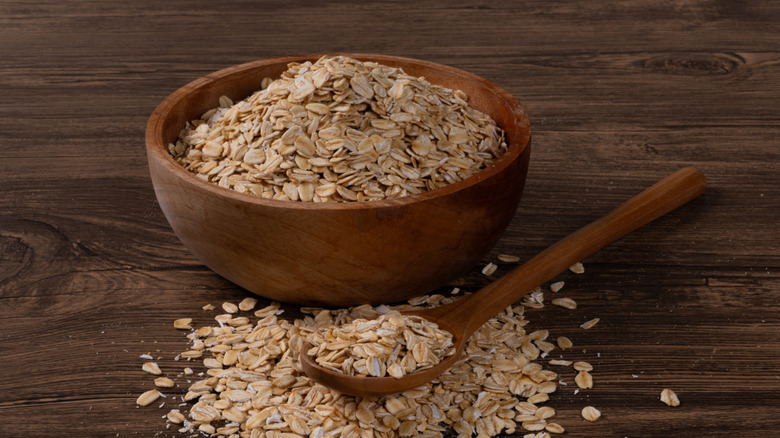
A ½ cup of dry oats yields roughly one cup cooked and contains about 5 to 6 grams of protein — a count that remains largely consistent whether you choose steel-cut, rolled, or quick-cooking varieties. The most prevalent proteins in oats are actually more similar to those found in soybeans and peas than in other grains like wheat. Called globulins, they make up about 80% of an oat's protein content.
Oats are also high in several key minerals, including magnesium, which is needed to synthesize protein in the human body. Another mineral that oats are high in is manganese, which plays a key role in energy production and helps protect cells from damage. Oats are also an excellent source of the antioxidants vitamin E, which protects cells against the detrimental effects of free radicals, and vitamin B2 (riboflavin), which is essential for cell growth and function.
Oats are naturally gluten-free, but you need to know how to pick the right ones, because the product may have come into contact with wheat during growing or processing. Overall, oatmeal is great for a nutrient-rich breakfast, and you can always increase the protein by stirring milk, Greek yogurt, your favorite protein powder, or peanut butter into your bowl, or by sprinkling it with almonds or pistachios, which have some of the highest protein content of all culinary nuts.
How the nutritional value of Cream of Wheat compares to oatmeal
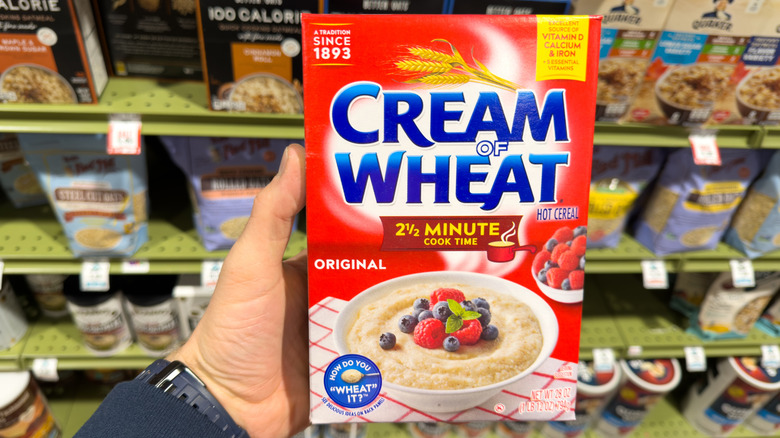
With around 3 to 4.43 grams per cooked cup, Cream of Wheat contains less protein than oatmeal. However, if easy digestion is your priority, it might be a better choice (just note that it contains gluten). The refined product is made by finely grinding the inside of wheat grains, the endosperm, and discarding the bran, which results in a soft, quick-cooking texture. With 1.45 grams of total dietary fiber per serving, it has less than half the amount found in oats. Additionally, if you love the taste and texture of Cream of Wheat and want to increase your protein intake, the company offers Cream of Wheat Instant Protein, which contains 10 grams per serving.
Cream of Wheat's micronutrient levels, however, show significant differences compared to its whole-grain counterpart. It contains only a fraction (14.45 milligrams) of the magnesium found in oats (63.2 milligrams), and no manganese. For calcium, though, it scores high, with 154 milligrams — a sevenfold increase over oats. Another striking difference is the sodium level. While oats naturally contain only 9.36 milligrams, quick-cooking Cream of Wheat can have 246 milligrams — disodium phosphate, a salt used in food production to decrease cook time, is sometimes listed in its ingredients.
When it comes to oatmeal and Cream of Wheat, it depends on how important speed of preparation, taste, fiber content, and minimal processing are to you when determining which is the better fit for your morning routine. Choose oatmeal for its hearty fiber and naturally higher protein content, or reach for Cream of Wheat if you need a quick, gentle start to your day.