

Why Grapes Are Sold In Ventilated Bags
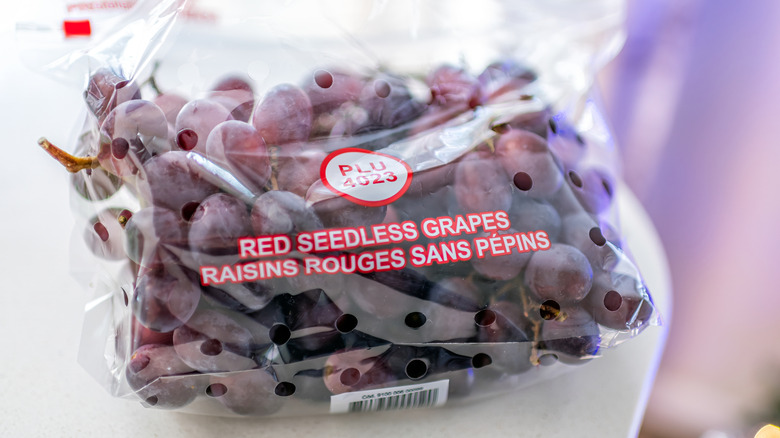
Grapes are one of the world's most popular fruits, and it's easy to see why. They make the perfect sweet, refreshing picnic snack, or you can freeze them and turn them into a simple, cooling dessert. From classic green and red varieties to more unusual types like cotton candy grapes, there's plenty of variety to enjoy. Yet one detail rarely changes: the packaging. If you've ever picked up a bag or clamshell of grapes, you have probably noticed the tiny holes scattered across it. They might seem unimportant, but they actually help keep the fruit fresher for longer.
The reason grapes need ventilation comes down to one simple fact — they're still alive. Even after they're picked, grapes continue to respire. On the vine, that process helps them ripen and sweeten as acids are broken down. Off the vine, however, the ripening stops, while the respiration continues. This is where the trouble starts. Respiration produces moisture, and in a sealed bag, that moisture has nowhere to go. On top of respiration, grapes are made up of over 80% water and naturally perspire, which also creates the perfect conditions for mold and bacteria to take over.
Without proper ventilation, the result is a humid, closed environment that the grapes simply can't handle. Instead of staying firm and plump, they begin to soften and spoil quickly. This is where the small holes come in. They let excess moisture escape, keeping the air circulating and the environment dry enough to slow down spoilage long enough for you to enjoy your grapes.
How to store grapes to extend their shelf life
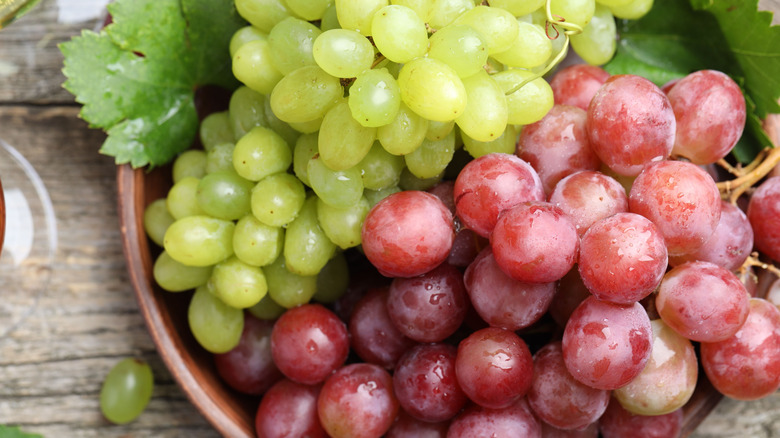
Once you've procured your grapes, there are several smart hacks to prolong their shelf life. For starters, make sure to keep them dry and unwashed until you're ready to eat them. Beyond that, keeping a paper towel in their packaging is a handy tip to absorb excess moisture from the fruit. Even better, if you're planning on enjoying the grapes the day you buy them, we recommend removing them from the plastic packaging and storing them in a paper bag. Aside from giving them a chic, rustic vibe, this is also often the preferred method of storage in farmers markets and specialty green-grocers to promote better airflow. Just keep in mind that for extended storage, you'll want to prioritize humidity to keep them from shriveling.
As for where to store your grapes, the refrigerator's crisper drawer is the best pick, as its high-humidity conditions reduce water loss. While grapes don't produce ethylene gas — which triggers ripening in fruits like peaches and tomatoes — themselves, they're still sensitive to it. This means you should keep them away from ethylene-producing produce, such as apples and bananas, to prevent premature spoilage. Before storing them, we also recommend inspecting your grapes for signs of decay, like mold or a slimy texture. Just one or two bad grapes can quickly ruin the whole batch.