
Walmart Vs Aldi: The Grocery Store Chain With Cheaper Eggs In 2026
We may receive a commission on purchases made from links.
No food category is more volatile in price than eggs, notes the USDA. Indeed, it often makes the headlines, oftentimes due to shortages and surcharges. When times are tight, shoppers leave Costco shelves empty, while periods of normalcy bring back carton after carton into the cart. For many, it's a food consumed daily, a pragmatic protein and nutrient source. So even when the food isn't in high demand, it pays off to consider the price per purchase.
Two cost-effective retailers that come to mind are Walmart and Aldi. Both rank on the affordable side of shopping, falling onto the lower end of the national average. Unlike warehouse retailers, the two stores don't require a membership, meaning you can simply swing by and look for a carton stress-free. Both carry an ample selection, with both classic Grade A eggs, as well as pasture-raised and organic options available. The egg competition is neck-in-neck, often just a few cents differentiating each store. When it comes to absolute cheapest, Aldi sells a dozen Goldhen Grade A Large Eggs for $1.85, while Walmart's Great Value Large White Eggs go for $1.67, per Texas locations in April 2026. Walmart takes the egg cake, but depending on your needs, there's more to unpack per retailer.
Walmart offers a more varied, often cheaper egg selection
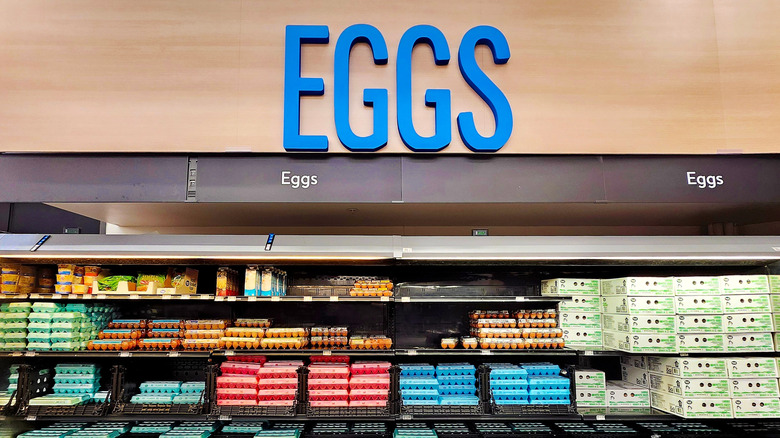
As with other groceries, Walmart's egg selection is expansive. While Aldi often sells around four to five options plus egg whites, Walmart carries well over a dozen. The store covers eggs of both well-known brands and private labels, in different sizes as well as quantities. Such a selection lends financial advantages per your individual egg needs.
For starters, you can save more money by buying eggs in bulk. While Aldi only carries cartons of a dozen, you can buy Walmart's Great Value Brand in an 18-count, 36-count, and even 60-count. All three work out just a tinge cheaper than Aldi per egg — with extra large varieties running around $0.15 per egg; large varieties set at just under $0.14.
If you're one to buy store-bought egg white cartons, more Walmart deals await. For example, 32 ounces of Great Value Liquid Egg Whites go for $4.87, while the same quantity is $5.29 at Aldi. Plus, Walmart even sells a case of 15 32-ounce cartons of egg whites for $186.50, as well as a 30-pound pail of organic, frozen, and pasteurized eggs for $246.02 — bulk sizes unavailable at Aldi. Whether you're planning on opening a diner or you simply go through eggs at a rapid pace, Walmart will save you more than Aldi in 2026.
Head to Aldi for better deals on fancy eggs
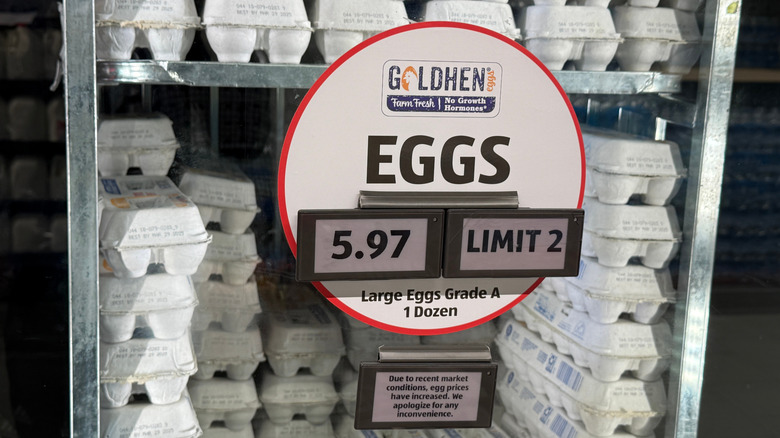
According to Consumer Reports, Aldi is typically more affordable than Walmart when comparing an average grocery haul. While such savings don't apply to farm factory eggs, Aldi nevertheless wins out on price in other egg categories. Among the varied egg labels, many find pasture-raised eggs worth the hype. The sticker guarantees 108 square feet per hen, which, in turn, translates to better flavor – a more assured marker than free-range, for example. Aldi sells a dozen pasture-raised eggs for $4.35, a far better deal than Walmart's cheapest available pasture-raised option for $6.92 (although this carton is also organic). Walmart does occasionally carry a package of Marketside Pasture Raised Eggs for a similar price, but the item is often out of stock.
In terms of organic eggs, the two retailers are neck-in-neck here, too. Technically, the cheapest option goes to Walmart, with the 18-count of Marketside cage-free eggs working out to just over two cents less per egg than Aldi's Simply Nature Organic option. Yet if Walmart's is out of stock, there's a quick price hike; next in line is the Eggland's Best carton for $5.96. As Aldi only sells private-label eggs, there's more certainty that you can snag a top-quality carton for a bargain price, making it a reliable stop for good value shopping.