

Why Your Steak Isn't Browning On The Grill
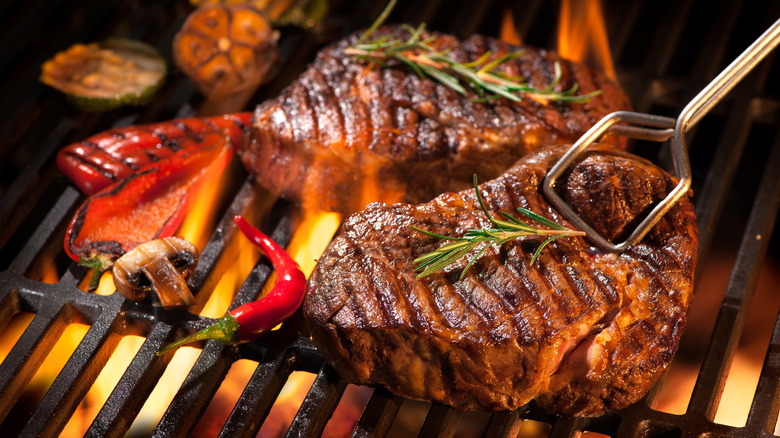
Failing to get the right coloring on your steak is annoying, but fortunately is more often than not a simple fix. So long as you remove any excess moisture, incorporate a bit of fat, and get your grill to a high enough temperature, you should be able to consistently develop a delicious, beautiful crust.
When using a grill, unnecessary moisture delays the Maillard reaction, that chemical phenomenon responsible for giving cooked meat a hearty, satisfying flavor and texture. The radiant heat essentially has to evaporate the water before it starts to alter the sugars, amino acids, and proteins to produce the best possible taste. A bit of fat helps this process out as well, but you have to pick the right one. The most common oil mistake everyone makes is using one with a low smoke point, so it burns and grows bitter before your steak is finished. Instead, pick something like peanut or safflower oil, or even use a bit of mayo to give your steak a perfect sear.
If you've got all this lined up, you'll need a temperature high enough that it won't just turn your meat gray, but not so high that it'll burn the exterior while your steak's inside is still cool and red. To grill the perfect steak, you want to maintain a temperature between 450 and 550 degrees Fahrenheit. If you like yours more well-done, opt for the lower end to allow it to cook a bit longer.
Prep tips for helping your steak brown on the grill
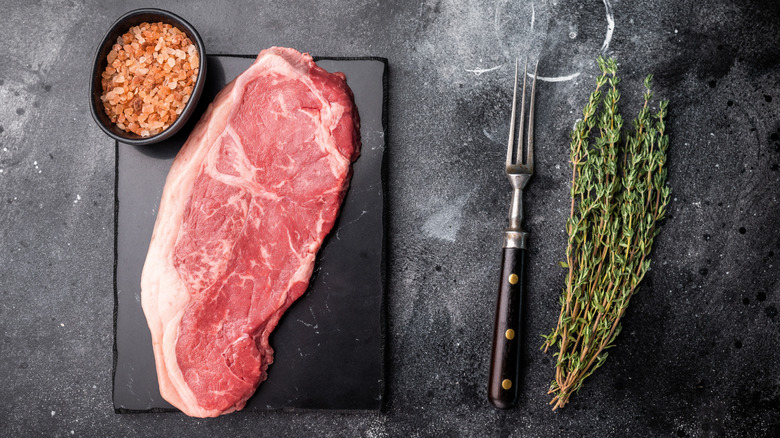
While proper cooking procedure is the most important way to get your steak to brown properly, never neglect all the ways good prep work can help as well. Not only will it help you develop the right color, but it can also enhance your steak in other ways, like making it more tender and juicy.
As with most recipes, salt is your best friend when grilling a steak. If you're looking for something more basic and quick, try salting your steak an hour before you put it on the grill. It draws out extra moisture, mixes it with the salt, then infuses it back into the meat, reducing exterior wetness while enhancing interior juiciness. This effect only becomes more pronounced the longer you let your steak sit, but if you leave it for more than an hour, be sure to let it stay cool in the fridge to maintain food safety.
Especially tough cuts can benefit from a salty marinade, as they not only flavor, but soften them up as well. Just a few hours in a good mixture gives them the juice and tenderness they need to stand up to the type of searing required for a great crust. Plus, most good marinades have plenty of other seasonings and fat in them. Once you're ready to cook, simply remove your steak, pat it dry, then slap it on the grill for some hands-off deliciousness.