

For The Best Sushi Rice, Chef Nobu Washes It Way More Than Once

Few celebrity chefs are as renowned as Chef Nobu Matsuhisa. After undergoing the rigorous training to become a sushi master, he moved to Peru to learn the techniques of Peruvian cooking. He then settled in L.A., where a chance friendship with Robert De Niro's guidance led to the first-ever Nobu opening in New York City in 1997. The rest is history. Today, his culinary brand includes 55 restaurants. Fortunately, Chef Nobu is more than willing to share his culinary tidbits with us mere mortals, and one of his most simple yet essential pieces of cooking advice is washing rice until the water runs clear.
In an exclusive interview with Tasting Table, Nobu revealed his method for washing rice. "The rice is washed at least five to six times before cooking using filtered water." Aside from clearing it of any residual dirt and grime, it's the starch that you really want to get rid of. Rice is naturally full of starch — which has a lot of great uses — but when it's left to cook, it causes the rice grains to clump together as it's a natural thickener. Rice is meant to be fluffy, with distinct grains that are clearly separated. You'll know the rice is ready to be cooked when the water is no longer cloudy.
The type of water you wash rice in is slightly less important. Nobu opts for filtered water, but he is also running one of the most luxurious restaurant chains in the world, where such things are normal — even expected. While tap water will suffice, it's the temperature you need to keep an eye on. Cold water is the gold standard, as hot water can activate the starch and impact its texture before you've even started cooking.
Other tips for Chef Nobu-approved sushi rice
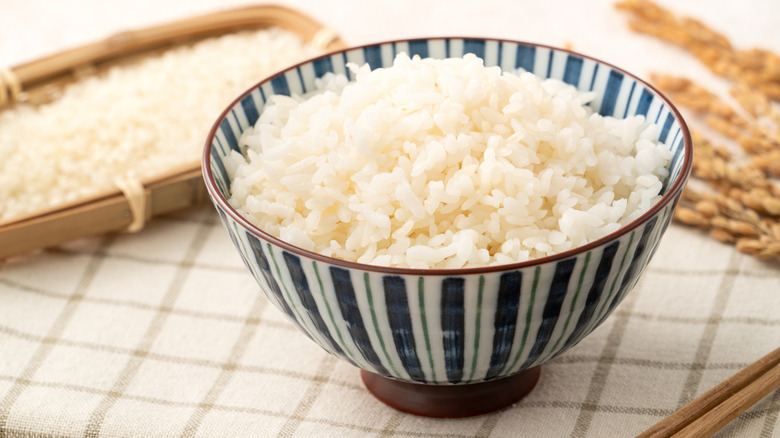
It's always worth putting aside a little extra time and soaking your rice before cooking. This helps to hydrate the grains, allowing them to develop a fluffier texture. On the topic of rice grains, we recommend sticking to a short grain Japanese rice for Nobu-style rice. After your rice has finished cooking, it's also a good idea to let it rest covered for around five minutes. The residual heat from the steam will continue to gently cook and finish the rice, and as everything settles, the remaining moisture is given time to evenly distribute. This results in a much more satisfying texture.
Rice is an art form, and the simple act of washing, boiling, and serving can take three years to master in Japan. One of the most important elements of the process is the seasoning. In a video shared to YouTube, Chef Nobu Matsuhisa shared his simple rice seasoning: vinegar, sugar, salt, kombu, and mirin. Everyone should be familiar with the first three ingredients, but kombu and mirin tend to be more obscure. Kombu is typically simmered with the other ingredients to infuse it with a deep umami flavor. On the other hand, it is a sweet, low-alcohol Japanese rice wine that imparts a subtle sweetness to the dish. If you don't have it on hand, sugar mixed with white wine vinegar is a great substitute. The key here is balance. You want the sweet, acidic, and savory flavors to meet each other perfectly in the middle.
Static Media owns and operates Food Republic and Tasting Table.