

Ribeye Vs T-Bone: Here's Which Steak Is More Affordable
We may receive a commission on purchases made from links.
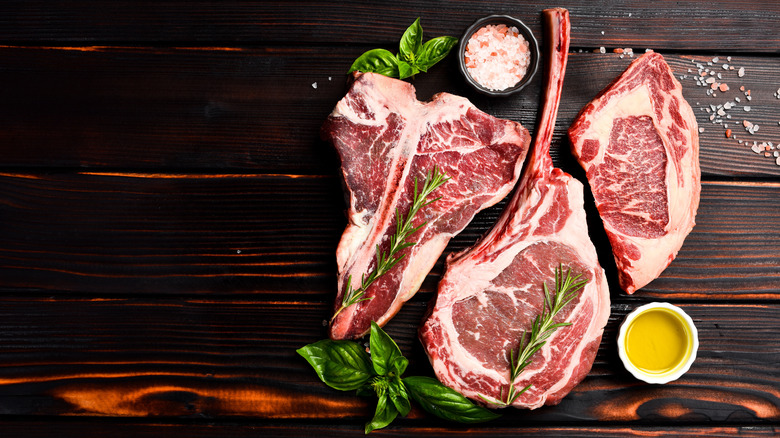
While you won't see it on any lists of budget-friendly cuts of steaks, T-bones are still cheaper than ribeyes nine times out of ten. While choosing the perfect steak is all about preference, and neither is inherently better than the other, pricing one as a seller is more about supply and demand.
Between getting fewer T-bones off of each cow and the fact that they include the prized muscle responsible for filet mignon, it's normal to think that they'd actually be pricier than ribeyes. However, at Walmart, they're only 87 cents an ounce while ribeyes can cost $1.47 per ounce. The reduced cost is partially due to the namesake bone, which makes each individual steak yield less actual meat than a comparably sized ribeye. It also separates two different cuts, the sirloin and the tenderloin, and perfectly preparing both is more difficult than properly cooking a ribeye.
The incredible marbling of most ribeyes makes them rich in flavor and practically foolproof for beginner cooks, so despite the fact that their supply is greater than that of T-bones, their demand counterbalances this quite a bit. Plus, the rib roast is easy to work with and versatile, whether you're preparing a whole prime rib, slicing your own steaks, or shaving it down for stir-fry ingredients. While there are plenty of people who still prefer the complexity and flavor of a T-bone, restaurants and stores across the board almost universally sell T-bones for less.
How to make a T-bone taste more premium
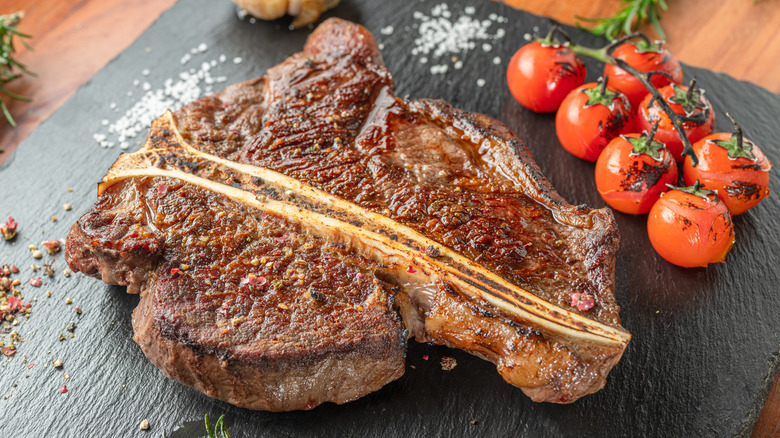
While ribeyes may be the belle of the ball for most of the steak world, upgrading a T-bone steak is usually simple and straightforward. You don't have to drop a ton of cash on expensive ingredients, and a few affordable tricks can make your cut compete with anything twice the price.
You might be a die-hard believer that steaks taste best when cooked in a pan with plenty of juice and fat, but an easy charcoal grill set-up gives you the best results for a T-bone and its beefier cousin, the porterhouse. By keeping the smaller tenderloin muscle at a cooler temperature than the larger sirloin, you can avoid drying the former out while the latter comes to the right temperature. This allows you to experience both the buttery tenderness of the tenderloin and the intense beefiness of the sirloin to their full potential.
If you aren't able to keep a dual-temperature cooking environment, then your best bet is to marinate your meat for a few hours to introduce extra moisture. While your filet may still get a little more done than your personal preference, a bit of acid keeps the meat tender, and extra fluid from your base, such as soy sauce or stock, gives it a juicy bump to keep it from drying out. Be careful not to marinate for more than eight hours, as this can make the meat mushy and potentially even fall off the bone during flipping.