

The 2-Pan Method For Perfect Blackened Fish
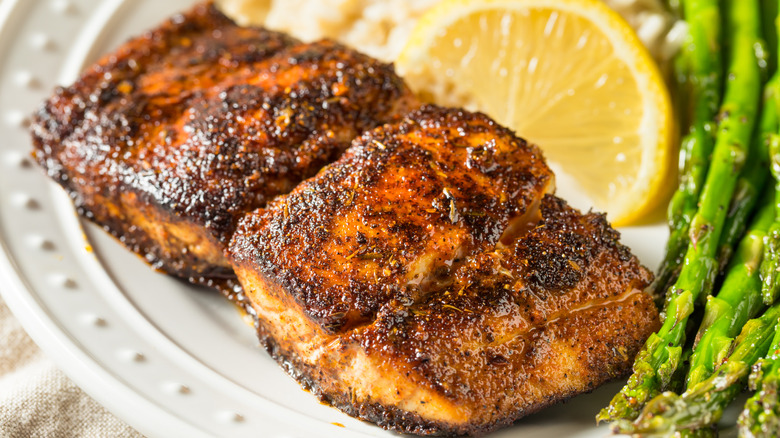
Charring food isn't the same as blackening it, which makes this style of cooking a bit tricky for most first-timers. Things only get more complex when you introduce a delicate protein like fish, but luckily, all you need is a cast-iron pan, a non-stick pan, and a fish filet only seasoned on one side to guarantee great results.
To get that trademark, almost burnt exterior, you need quick exposure to high heat. This is why you need a cast-iron, as they're able to absorb tons and tons of heat without becoming damaged. Once your cast-iron takes on a dull, flat coloring, this mean's it's borderline red hot and ready for your meat. Add your oiled and seasoned fish, herb side down, and let it smoke like crazy for a couple of minutes to char those herbs and spices.
Once it's done, you'll see why you only seasoned one side of the filet. Traditional blackening recipes call for flipping the fish from one side to the other to develop a good crust without truly burning the seasonings, but then you run the risk of breaking your delicate filet. Instead, by heavily seasoning only one side, you can let the unseasoned part finish cooking in a non-stick pan, bringing the whole protein to a food-safe temperature. This method is especially great for thick filets, like great big cod steaks, which will turn to charcoal on the outside by the time the interior finished.
More tips for the best blackened fish
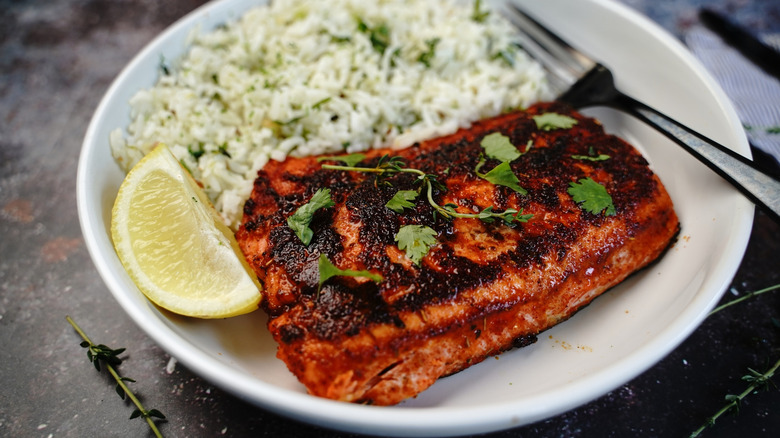
This classic seafood dish is simple at its heart, but adhering to a few tips and tricks can make it much easier to prepare. Using the right types of fish, seasonings, and cooking fat is how you get the truly traditional taste that makes this dish legendary in the South.
While the two-pan method expands what kind of fish you can use, this recipe traditionally calls for firm-fleshed varieties. Since you won't be flipping it quite as much, there's nothing wrong with using delicate haddock or cod, but the flavor won't quite be the same. Instead, try to use something like catfish, grouper, or skate, as these are common around the Gulf of Mexico (where this recipe originates). If possible, try to opt for redfish, something so delicious that it actually led to a fishing ban of the species. While only available in small, hard-to-find quantities, it's well worth the trouble.
No matter how good your fish is, it won't matter if you don't get your spice blend right. A good blackening seasoning leans pretty heavily on paprika and cayenne, supplemented with fat pinches of dried thyme and oregano. Other Cajun staples like onion, garlic powder, and black pepper should be mixed in to suit your tastes. Finally, that perfectly dark crust isn't complete without some milk solids, so be sure to let some butter blacken in the cast-iron along with the fish itself.