

The Best Texas Roadhouse Dipping Sauce Is A Fiery Classic
We may receive a commission on purchases made from links.
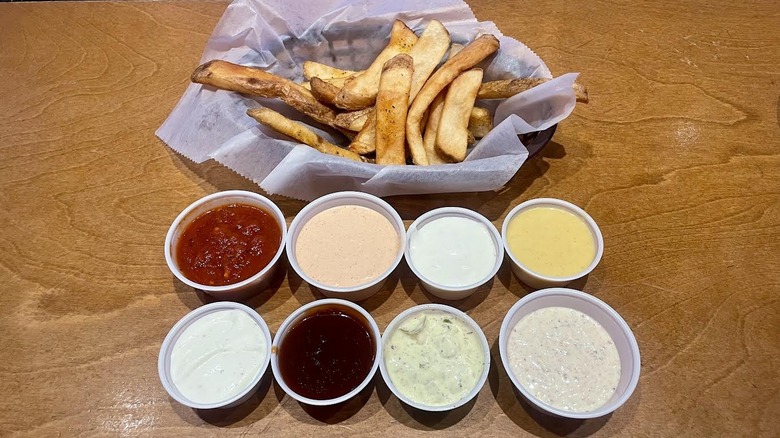
Understandably, Texas Roadhouse's affordable steaks are the restaurant chain's claim to fame; however, we implore you not to sleep on its array of dipping sauces. Not only are they made in-house, but according to our taste tester, who ranked eight of the chain's offerings, the Cajun horseradish is an absolute must-try.
While the lowest-performing option, the tartar sauce, was dinged for not being the most versatile (it would pair great with beer-battered fish and chips, but beyond seafood, it's just not as multipurpose), the winning dipper scored points because it complements a wide variety of other Texas Roadhouse dishes. It's bold, but not so overly spicy as to deter sensitive palates; its zesty kick cuts through the fried, deliciously decadent appetizers it accompanies, such as the Cactus Blossom and the Rattlesnake Bites, but its savory profile could just as easily harmonize with a prime rib or a loaded baked potato.
As for what's in the sauce, exactly? The exact formula is a mystery, but enterprising fans have tried to make their own copycat recipes, which typically feature mayo for creaminess, sour cream for tang, prepared horseradish for heat, and some combination of cayenne, chili sauce, or Cajun seasoning. Of course, if you're not up to making your own blend, you can always grab a tub of the Cactus Blossom Dip from Walmart. It may not be the exact same sauce you get in the restaurant, but it's a convenient alternative if you're craving those zippy flavors at home.
Horseradish defines Texas Roadhouse's unique take on Cajun sauce
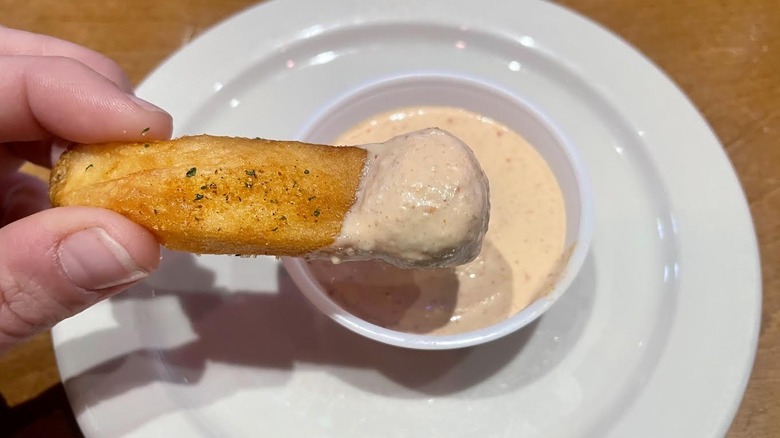
While Texas Roadhouse's sauce does have "Cajun" in the name — and our taste tester mentioned being able to taste those signature spices, which often include paprika, garlic powder, and black pepper, "front and center" — it actually differs from classic Cajun sauce in a few key ways. For one thing, the restaurant's version is made to stand up to thick, salty breading. As such, it's typically served alongside deep-fried bites, likely because of its nasal-clearing qualities (horseradish, after all, is sharp and pungent, providing a bright heat that hits hard but dissipates fast). A traditional Cajun sauce relies on capsaicin — a compound found in chili peppers — for its lingering, tongue-based piquancy.
There's also the matter of consistency. Your standard Cajun sauce can be a bit thinner and tends to skew more savory and acidic — often closer to a remoulade. It sometimes features Creole mustard and lemon juice, and is more commonly seen paired with seafood or used as a sandwich spread. That's because it provides a different kind of heat — it's slower to unfold, though it can certainly be quite powerful, depending on the chiles involved.
So, what does this mean in practice? Essentially, if you're trying to choose between the two, reach for Cajun sauce if you're trying to brighten up delicate flavors — it would be right at home slathered on a shrimp po'boy. If you're looking for a bright punch, akin to the way wasabi hits the sinuses when you're eating sushi, then the thicker Cajun horseradish sauce is your best bet.