

This Classic Beer Went From One Of The Top Brands To Nearly Unfindable
Big beer brands — referred to as macros — can appear everlasting. Whether a constant keg at your local bar or a six-pack at the convenience store, it's tough to imagine classics like Budweiser or Miller Lite ever fading away. Yet Milwaukee's Schlitz — once a major competitor to such widespread brews — underwent a swift decline, going from a former shelf stalwart to essentially unfindable in just a few decades.
Started in 1849, Schlitz once reigned as America's top brewery, reflected in both sales and culture. The company won over Chicago residents by handing out free kegs following the Great Chicago Fire of 1871, built a massive beer palace in the early 20th century, and even survived Prohibition by selling nonalcoholic drinks and sweets. Through the 1950s, Schlitz remained America's best-selling brewery by volume, until Budweiser permanently overtook that status in 1957, remaining the biggest brewery in the U.S. to this day.
Even still, Schlitz remained second in line until the 1970s, flowing through taps and out of cans nationwide. All the while, its downfall was brewing, driven by poor decisions both inside and outside of production. Most prominently, several major modifications were made to the recipe, but Schlitz also misfired with an unsuccessful marketing campaign and engaged in unethical business practices. The end came in 1981, when a months-long strike shuttered the brewery, and the brand went up for sale — taking it from a once-popular beer to an elusive find.
The complex story of Schlitz's decline
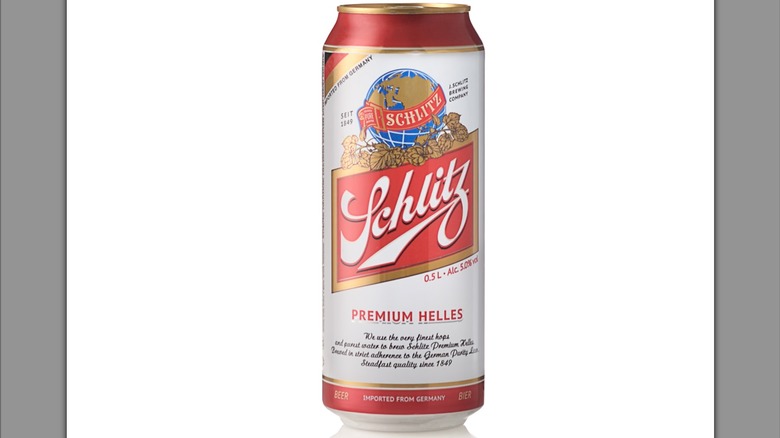
The collapse that took Schlitz from a household favorite to a nearly impossible-to-find name involved multiple poor decisions. The onset of mismanagement occurred in the late 1950s, right as Budweiser surpassed Schlitz in sales. The brewery decided to minimize production costs, thereby increasing profit margins. Rather than using a classic beer composition of hops, barley, yeast, and water, the company opted for cheaper corn syrup and hop pellets. Schlitz also sped up the fermentation process, even incorporating silica gel to fix the brew's appearance — decisions that severely worsened flavor and even led to a more than $1 million recall in 1976.
At the same time, Schlitz launched a controversial ad campaign nicknamed "Drink Schlitz or I'll kill you." For 10 weeks, the company aired clips of men who made supposedly comedic threats if Schlitz beer was taken away. Expectedly, such a media approach startled consumers, further dwindling sales.
In 1981, Schlitz's run came to an end with a huge 6,000-person layoff, followed by acquisition by Stroh, which was later bought out by Pabst Blue Ribbon in 1999. Schlitz redebuted in 2009 under PBR, with small-scale circulation continuing to this day. In select regions like the Midwest, some consumers hold onto early 20th-century nostalgia. But while Hamm's remains a beloved Midwestern brew from the 1800s, Schlitz's reputation eventually soured, leaving the beer a seldom-seen tap today.