

This European Aldi Feature Trumps Anything In US Stores

Ever since the Germany-based grocery chain Aldi opened its first store in the United States in 1976, shoppers have flocked to the store for its low-priced groceries, made possible in part by high efficiency despite minimal staff. In a highly competitive market, Aldi has held its position as the sixth most popular supermarket according to the American Customer Satisfaction Index. However, there is one item that Americans can only envy from afar after seeing videos posted online from Spain and Portugal: a machine that squeezes orange juice right in the store.
That Aldi is offering these machines in Spain is no coincidence, as Spain is the leading orange producer in Europe. The machines have also been sighted in Portugal, a country that only ranks fourth among European orange producers but whose orange production has a long history and traditions — Portuguese explorers led by Vasco de Gama brought sweet oranges back from Asia at the end of the 15th century; until then, only bitter oranges had been known in Europe.
The orange juice machine at the Aldi stores has an automatic feed; all you need to do is press the tap and hold your bottle under the spigot, and then watch as oranges drop into the transparent juicer, so you can see the whole process. This self-service has not yet been spotted in other parts of Europe. In the U.K., for example, Aldi sells freshly squeezed orange juice in bottles that indicate how many fresh oranges have gone into it, but it doesn't offer DIY action.
Why Squeezing Your Own Orange Juice Isn't Commonly Offered in the USA
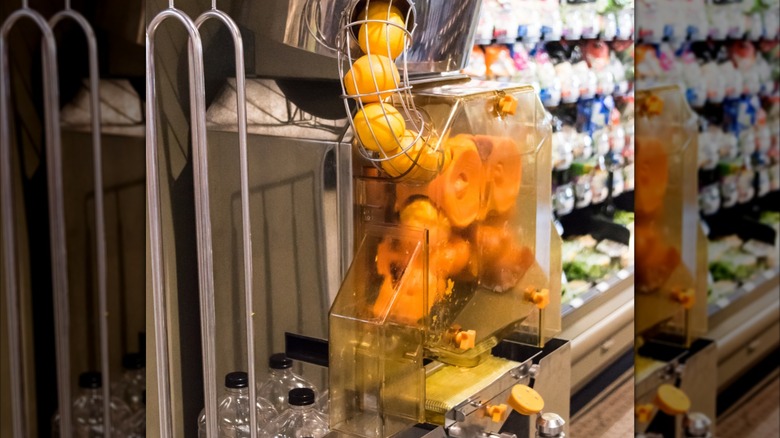
In the United States, self-service orange juice machines at supermarkets are the exception. Some Whole Foods locations offer it, but it's rare enough for TikTokers to post about it. Other chains like Sam's Club and Market Basket, which is challenging Aldi with its low prices, sell freshly squeezed orange juice, but it isn't DIY. There is a good reason for that — squeezing your own orange juice in a store may result in contamination of the juice, especially if the machines are not properly cleaned. Besides food safety and hygiene concerns, the unsupervised operation of any machine by customers also raises safety concerns and, as a result, liability issues for the store.
The answer to why juicing your own oranges is not commonly found at supermarkets in America may have to do with heat. Most of the juice in the United States undergoes pasteurization to eliminate harmful bacteria. Any product that is not pasteurized must say so on the label and alert consumers of the risk that consuming it may "cause serious illness in children, the elderly, and persons with weakened immune systems." Thus, freshly squeezed orange juice must contain a warning, putting it in the same category as unpasteurized apple cider and cold-pressed juices. So, as appealing as squeezing your own orange juice at the store is, the reluctance of American shops to stray from the bottled orange juice consumers know (although some brands have better ingredients than others) may deter more stores from offering this eye-catching self-service.