

10 Beginner Tomato Gardening Tips You Need To Know
We may receive a commission on purchases made from links.
Tomatoes are some of the most versatile fruit — yes, fruit — in all of the culinary world. Perhaps their most well-known use is in classic pasta sauces, but even that is up for debate — after all, they're also the base for one of the most beloved condiments on earth (tomato ketchup, which you can make at home), creamy tomato soup, and also work beautifully sliced on sandwiches or mixed into salads with nothing more than a little salt or dressing. Ultimately, the limits of tomatoes in the kitchen are the limits of your own imagination.
With all that culinary utility, you might be tempted to grow them yourself to ensure you have the freshest tomatoes on hand. It's a great idea, but if you're new to gardening, starting your own crop can be a little intimidating. Tomatoes are not the most labor-intensive plant, but they do have unique needs; you can't just plant them and forget them. Thankfully, knowing what they need ahead of time can save you a lot of heartache and ensure that you have the most bountiful harvest of juicy red fruits.
Wait for warm weather to plant
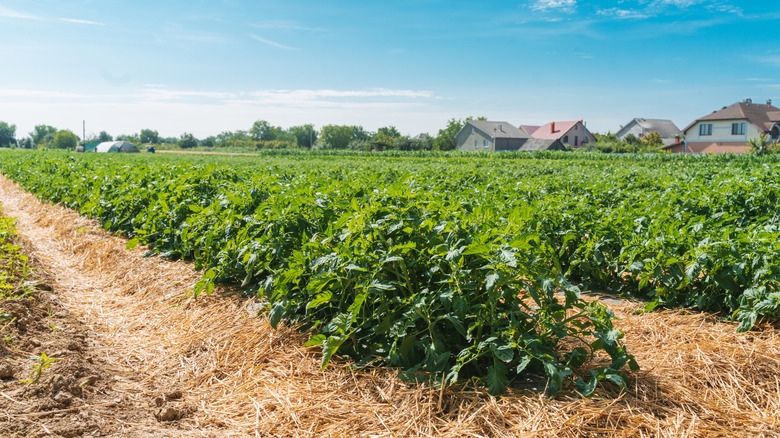
So you have your tomato seeds or seedlings and you're ready to put them outside. But are they ready to go outside? Is the weather hospitable for your baby plants?
Tomatoes and frost of any sort do not mix; they only thrive in the warmth of late spring and summer. Ideally, you want the outdoors nighttime temperature to be consistently at 50 degrees Fahrenheit or above. While the tomato plants necessarily die in colder weather, they certainly won't be bearing fruit. Additionally, you need to consider the soil temperature as well as the air temperature. You want the soil temperature to be 60 degrees Fahrenheit and above during the daytime. If it's still too cold before proper planting time, you could always start your plants indoors — particularly if you're starting from seeds, which can take 4-8 weeks to become hardy enough for outdoor planting — and transfer them outside once the weather improves.
However, there is a balancing act with the ideal temperature for tomato gardening. If it gets too hot, the tomatoes will have trouble pollinating or even keeping their flowers and thus will have a much smaller harvest. If your area gets hot summers, you may want to plant your tomatoes as early as possible. Remember: Tomatoes like warmth, not extreme heat.
Make sure they get enough sun
Okay, so this one is kind of intuitive. That tomato plants need sunlight to grow is Gardening 101; it's true of basically every plant in existence. But the trick is to recognize just how much sunshine they need to truly reach their full potential.
Tomatoes need a lot of sun, in the range of six to eight hours of direct sunlight. Otherwise you'll likely end up with sickly, sad plants that will barely produce fruit. Moreover, while they can grow okay with six hours of sunshine, the plants won't have as good of a harvest as they would with a full eight (although smaller varieties can do okay with a solid six). This means you really need to think about where you are planting your tomatoes. A window box garden sounds adorable, but if the window faces the east or west sides of your house your tomatoes may not be getting all the precious sun they need. Look for the consistently sunniest space before you plant or consider transferring the plants to a new spot if needed.
Your soil should be mineral-rich
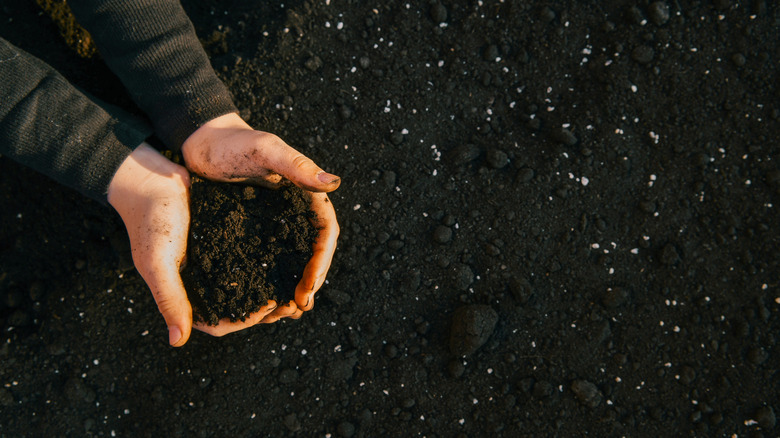
Even gardening novices understand that plants need sunshine and water to grow. But what often gets lost in the shuffle is that the plants aren't growing in a vacuum. They don't just need soil. They need the best, most mineral-rich soil possible to truly grow beautifully.
Your tomatoes prefer slightly acidic soil that drains well and is chock-full of nutrients. Soils that retain too much water, like heavy clay, can cause serious, sometimes fatal, root problems and fungal infections. Additionally, your soil should have a balance of nitrogen, phosphorus, and potassium (not too much of any of them, as that can stop them from absorbing other nutrients) as well as micro-nutrients like zinc, iron, and calcium. Determining the perfect ratios of which nutrients should be in the soil at what time of the plant's development can be a little tricky. However, a good rule of thumb is to use a high nitrate-nitrogen, low ammonium fertilizer to supplement your soil.
Alternatively, you can use select compost materials to provide the right nutrients as needed. Epsom salts can provide magnesium, eggshells can boost calcium, bone meal for phosphorus, and manure for nitrogen. A soil test should tell you what you need, as well as let you know if it has the ideal pH of between 6.2 to 6.8, which skews slightly acidic.
Don't overwater your plants
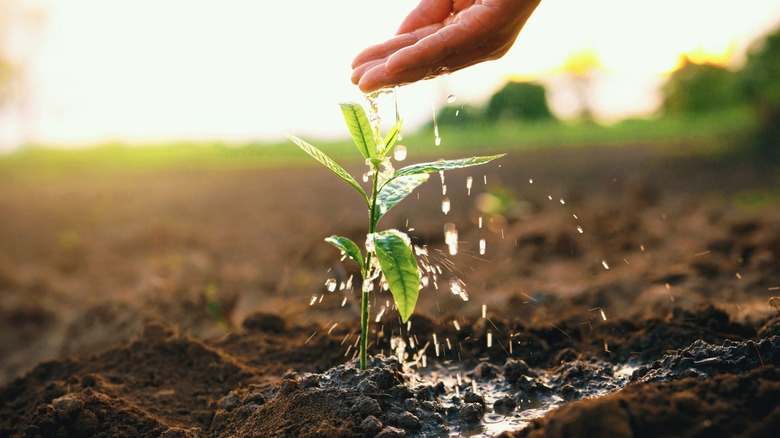
Where some beginning gardeners can struggle is watering their plants. However, this is not about forgetting to water their plants, but instead knowing how much water their plants need to maximize their growth and health. Tomatoes can be very sensitive to the amount of water they receive, so this truth applies double to them.
Tomatoes fare best in moist but not waterlogged soil, and should receive about one inch of water per week. Overwatering them, or inconsistently watering them, can cause your tomatoes to crack as they ripen since they'll be absorbing too much water at once. However, this is more of a guideline rather than a hard-and-fast rule; factors such as weather or whether you're using a raised bed can absolutely affect the amount of water your tomatoes need. That said, letting the soil dry out can be just as bad, if not worse, than overwatering, so visually inspect and lightly touch the soil daily to make sure it is still moist and add more water as needed. And don't forget to water around the base of the plant — where the roots are — rather than on the leaves.
Know how to support them
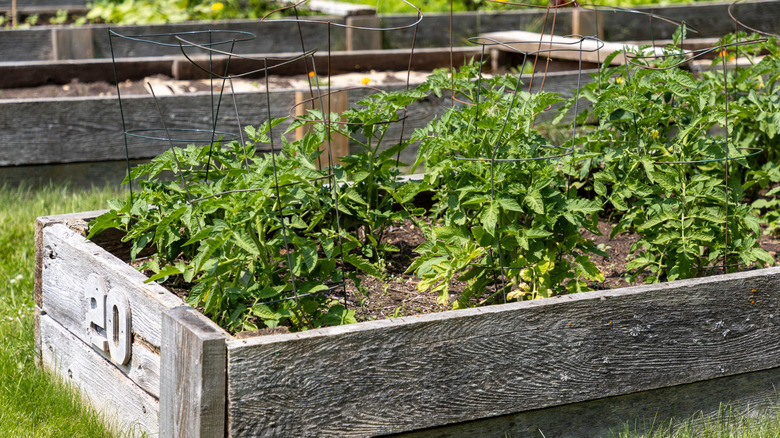
As mentioned earlier, tomatoes are not plant-it-and-forget-it types. Often, they will need active support to grow properly. And that's not a metaphor for proper watering and soil care (although they do need both) — some varieties of tomatoes thrive best with literal support structures like trellises or cages.
What structures your tomatoes will need will be determined in large part on whether you are growing determinate or indeterminate tomatoes. Determinate tomatoes, which include favorites Roma and San Marzano tomatoes, have been bred to grow to a certain height and flower and fruit quickly. Usually, they don't require much in terms of structure, since they grow into short bushes rather than vines, thought short cages can help rein them in and prevent tipping once the fruit get heavy. However, they also fruit in a single harvest, so once they're picked, they're done for the season.
Indeterminate tomatoes, which include cherry tomatoes and most beefsteak varieties, instead grow on vines that just keep going up. They continually flower and fruit throughout the season, so instead of one big harvest there is a summer-long continuous harvest. However, because indeterminate tomatoes keep growing, they need stakes, cages, or trellises to guide and support them as they grow as well as keep them disease-free. Make sure whatever structure you use is tall enough (six to eight feet tall is generally the accepted height) and that you train the stems and shoots to ensure they follow the structure. Tying them to the trellis, stake, or cage with tomato twine (or regular butcher's twine) can help.
Plant the seedlings deep
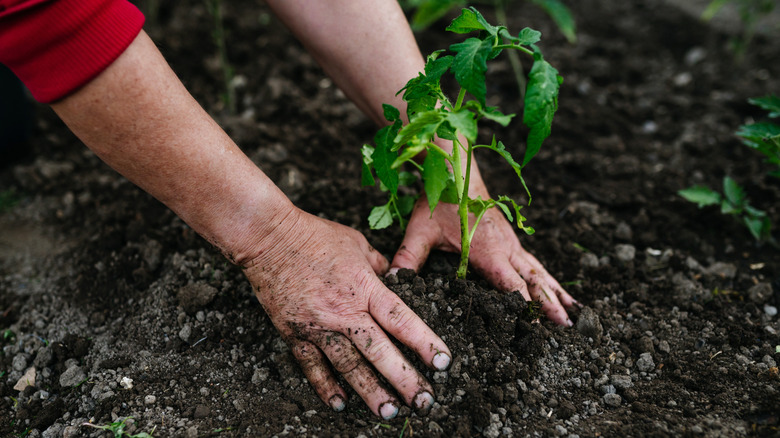
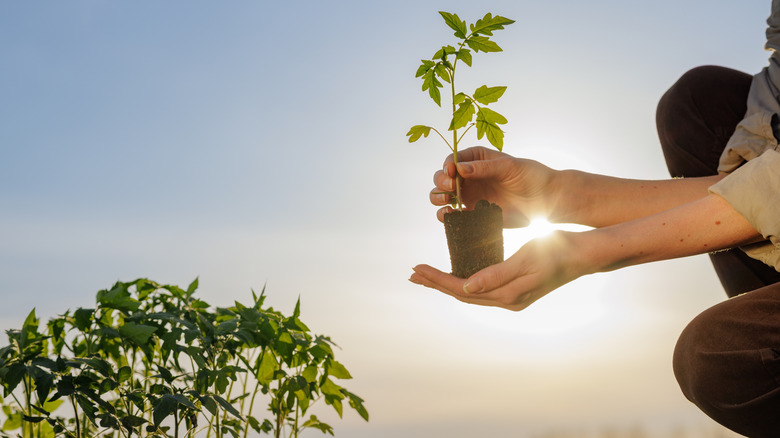
A common mistake in tomato gardening involves how to actually plant tomato seedlings you bring into the outside world. Some people have a notion that they need as much of stem should be above the soil as possible, but this couldn't be further from the truth.
Tomato plants share a unique trait: Their stems can grow roots. By planting a tomato plant seedling deeper than you think would be necessary, it can grow out a new root system that will ultimately help it grow stronger and taller. Just how deep should it be? For a 10-inch tomato seedling, all but three or four inches of the plant should be under the soil. Seriously, tomato plant roots are no joke. This is partly why tomato plants should be spaced out about 18 to 24 inches apart.
Note that this initial depth only applies to seedlings though. If you are planting your tomato plants from the seed, you should go much shallower, to about ¼ -inch deep instead. Any deeper and your seeds will have trouble germinating.
Mulch them on the regular
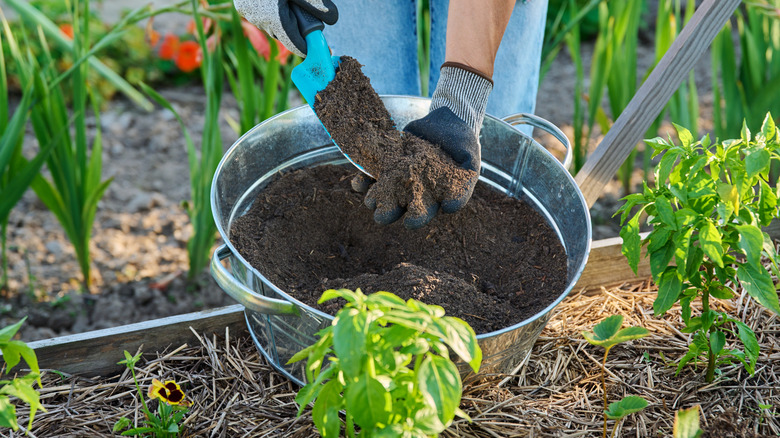
When you start exploring tomato gardening, you'll find one tidbit of advice recurring across all sources: You have to mulch your tomato plants regularly. But the "why" can be a little elusive if you're new to the gardening life.
Mulching is basically just a protective layer over your soil, and it brings with it a lot of benefits. Mulches can keep the soil warm especially at night, just the way tomatoes like it. A good mulch can also help the soil retain moisture, which is essentially to prevent tomatoes from drying out. And using an organic mulch like grass clippings or leaves provides the soil with much-needed nutrients. Mulching can even help with preventing weeds from sprouting. The trick is to use the right mulch at the right time, after the soil has warmed up. Be careful not to overdo it too early in the growing season or you might accidentally keep the soil cold instead.
Prune for perfection
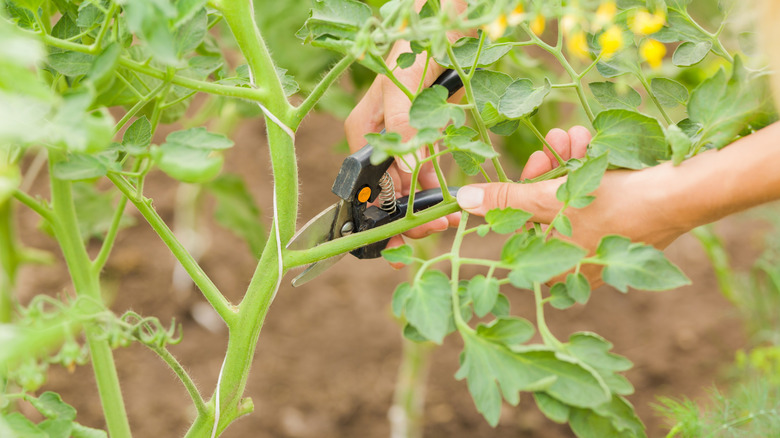
Pruning is an essential task for the tomato gardener. By pruning, you create a healthier plant that's less prone to fungal diseases and one that will bear more, and sometimes much larger, fruit. However, knowing how and when to prune is just as important, if not more important, than the act itself.
First, you only need to prune indeterminate tomato plants. If you're growing determinate plants, you can relax. Second, you'll want to prune what are known as "suckers" — these are the little stem growths that branch off from the spaces or crooks between the main stem (the one or two stems going straight up) and the lateral branches and stems. They can be a little hard to identify, but with practice you'll be able to spot them. You'll want to prune these as soon as you notice them, except for the one sucker that is immediately below the lowest flowering branch. This one can be left to grow into its own flowering branch. You should start pruning when the first flowers start to bloom (which will make the suckers easy to identify) and prune every two weeks or so until just before the harvest begins.
Don't forget companion plants
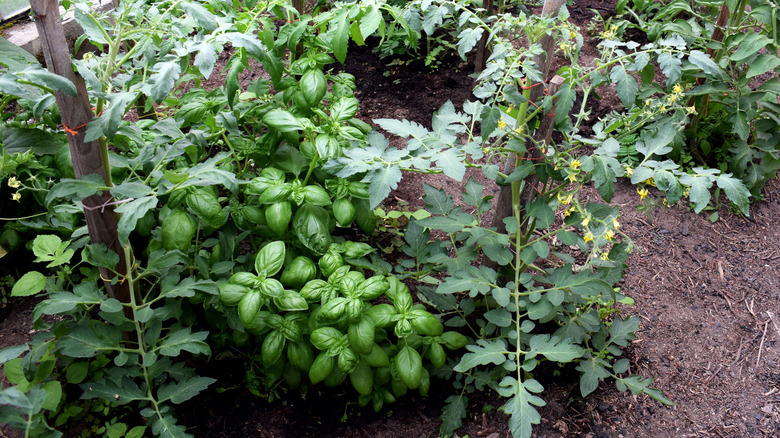
It's easy to assume that your tomato patch, wherever that may be, has to only be for tomatoes. That's the way we tend to imagine our agriculture: One plot, one plant. And yet this may be missing a prime opportunity to foster stronger, healthier plants by having them share the soil together as companion plants.
Take the humble and aromatic basil plant, for example. Not only do tomatoes and basil work wonderfully together in sauces, salads, and bruschetta, among other dishes, but the plants also grow well in close proximity. Basil's natural aroma deters and disorients a lot of tomatoes natural enemies like thrips and aphids, and attracts friendly pollinators like butterflies. Better yet, there is some evidence that tomatoes grown with basil have improved flavor and can foster more fruits during harvest time.
While basil is certainly the most famous companion plant for tomatoes, it's far from the only one. Garlic, dill, cilantro, and parsley all make fabulous friends to your growing plant by deterring pests with their distinct scents. Some flowering plants like lavender and daisies can help with pollination by attracting non-tomato-eating insects to visit.
Know when to harvest
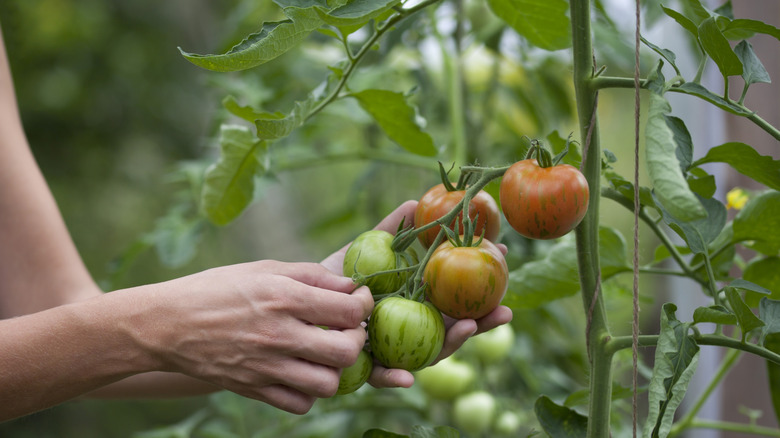
You've done it all. You managed the water, gave your plant lots of sunlight, got rid of the suckers, and gave your tomato plants a friend. Now you just have to wait for that bountiful harvest to roll in. Which is ... when, exactly?
Determining when to actually pick your tomatoes is more of an art than a science, but there are a couple of clear indicators to look for. Look for shiny, glossy looking tomatoes that have a slight give when squeezed lightly. But here's another trick: Once the tomatoes start to ripen, you don't have to wait for them to ripen on the vine. You can pick them when they are about half green and half pinkish and let them ripen in your kitchen with no issue. This allows you to safeguard the tomato until it is fully ripe, preventing pests from munching on all your hard work.