

This Pork Chop Cut Delivers Tender Meat With Just The Right Amount Of Fat
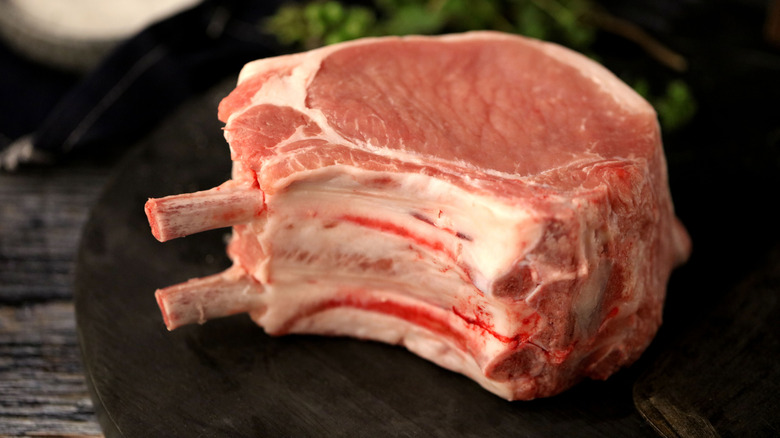
There are many standout pork cuts; you've got the succulent pork belly, the barbecue essential pork shoulder, and of course, the humble pork chop. But there's one lesser-known cut, which is also known as "the ribeye of pork," which delivers flavor, juiciness, and tenderness: the rib chop.
To clear things up, the rib chop is technically a pork chop. That's because a pork chop is a general term for a cut of pork loin, so this could be anywhere from the shoulder to the hip. On the other hand, the rib chop is a specific, premium cut that is taken exclusively from the rib primal section of the loin. This cut features a large, circular eye of meat, and typically comes with a single rib bone. It also typically has a thin layer of fat around the outer edge, also known as a fat cap. The reason why this cut is known to be so tender and flavorful is that it's cut from the loin, which is a muscle that does very little work. This allows it to develop intramuscular fat (marbling) as opposed to dense connective tissue, more common in harder-working areas like the shoulder or the shank.
The presence of the intramuscular fat, as well as the fat cap, is super important during cooking. As the rib chop heats, this fat melts and bastes the meat, preventing it from drying out while infusing it with rich flavors. On top of that, the bone acts as a natural insulation, preventing the meat from overcooking and keeping it moist.
The best ways to cook a rib chop
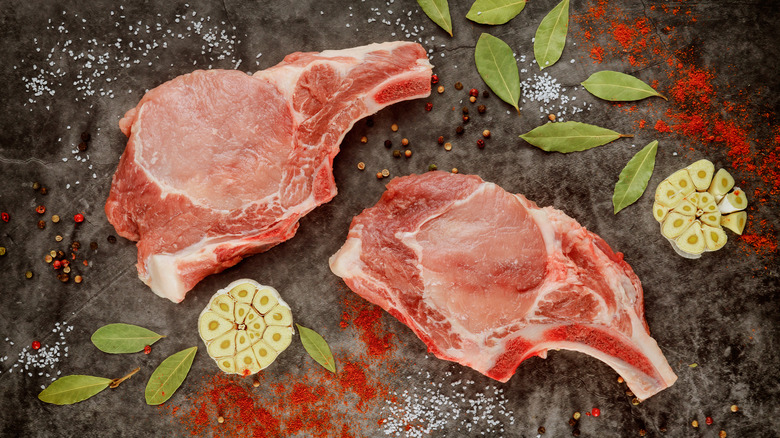
Generally, a rib chop is often sold thick, often ranging from one inch or more. Compared to your standard pork chop, the greater levels of marbling make it much more forgiving and less prone to drying out. As it's so similar to a ribeye steak in both thickness and marbling, it only makes sense that the similar cooking methods would work for both.
Our favorite way to cook a rib chop is by pan-searing it, then putting it into the oven. A quick, high-heat sear in the pan will allow it to develop a beautiful crust, and then putting it in the oven (at around 400 degrees Fahrenheit) allows it to finish cooking without drying out the interior. You could also take the reverse approach with the reverse sear, cooking it in the oven and finishing it in a smoking hot skillet to develop that beautiful char. Once it's finished cooking, make sure to let it rest for around 15 minutes to allow the muscles to relax and the juices to redistribute.
While pork chops can struggle on the grill, the rib chop's much higher fat content makes it far more suited for grilling. The flames will render out the fat beautifully while infusing it with a smoky flavor. However, we recommend avoiding other barbecue methods like low and slow cooking for the rib chop. Braising or smoking it can cause it to dry out, as it's still leaner than prime barbecue cuts like pork shoulder or butt. They're also inherently tender, so they don't require the same amount of time that tougher cuts need to break down.