

This Kitchen Habit Is Secretly Jamming Your Sink
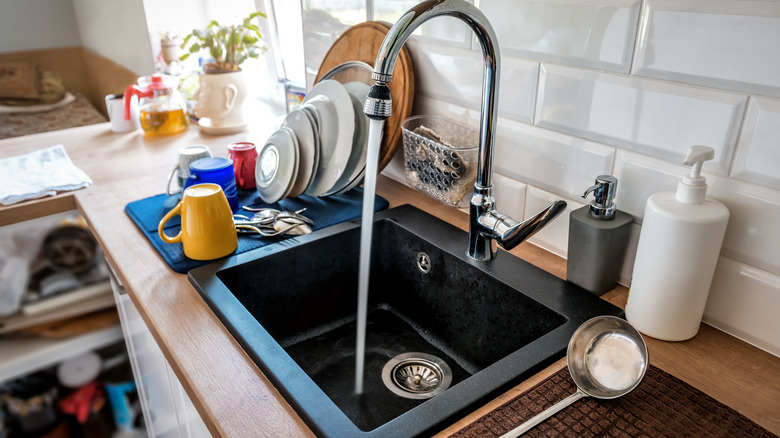
Whether you're trying to wash dishes or drain your al dente pasta, one of the biggest hassles to encounter in the kitchen may be a sink that's slow to drain. You might think you're doing everything right, but pipes can easily get backed up, and there can be a multitude of reasons why. However, one of them may be somewhat surprising: fiber-packed veggies.
While fibrous vegetables may be good for cleaning out your internal plumbing, they can do the opposite when it comes to the kitchen kind. The likes of carrots and broccoli can wreak havoc on your pipes if you're tossing them into the garbage disposal, and you can be sure the term "okie-dokie artichokey" won't apply if you rinse the remains of that veg down the drain.
The reason why is twofold. Not only can the strands from those foods get caught up in your disposal, but if they do make their way through, they can get stuck in the pipes and cling to anything else you may be trying to wash away. The end result is a sticky situation that may leave you with a giant clog in your pipes and a sink full of water that's hanging around far longer than you want it to be.
Fortunately, the solution to this problem is easy. Either save and repurpose your veggie scraps, compost them, or toss them in the trash.
Avoid common drain clogs and learn how to fix them
If fibrous vegetables aren't the culprit for your slow drain, there may be some other issues getting in the way. Another major no-no is fruit and vegetable peels, which can cause the same problem as the pesky fibers. Also avoid starches, which absorb water and expand, and can potentially lead to a swollen, starchy blockage. Other sink-clogging offenders include eggshells, shellfish, fats and oils, and coffee grounds.
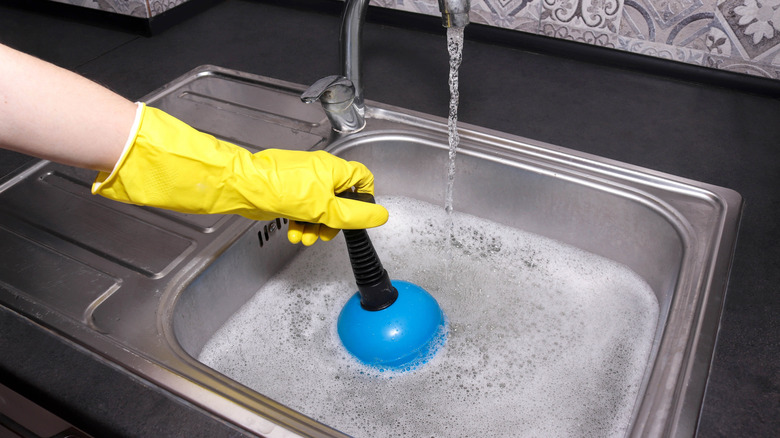
While it's obviously best to avoid all of these, if you've made a mistake and put your pipes to the test, there are a few easy ways that may help fix the situation. First, try using some simple kitchen staples. Pour baking soda down the drain, followed by vinegar, and give the mixture a little time to sit. Then run the faucet to rinse it all away. Baking soda can also be mixed with salt, but this one takes longer — you'll have to wait a few hours before running the water. Another trick, if the obstruction isn't too deep, is to use a wire coat hanger. Just uncoil the hanger and stretch it out until it's straight. At one end, create a hook. Next, place the straight end into the drain and use the hook end to rotate the wire. Then remove the wire, which should have the debris attached to it. Finally, a plunger may work as well — just be sure to use one specifically intended for the sink.