

The Easy Charcoal Grill Setup For Perfect T-Bones And Porterhouses
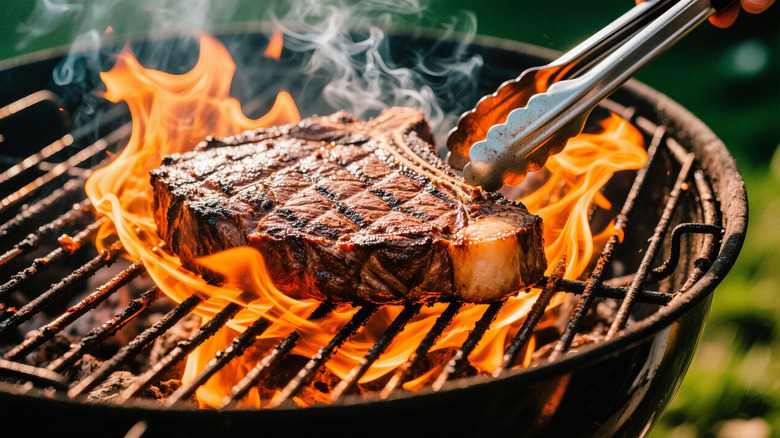
Both T-bones and porterhouses are luxurious cuts made for sharing, but because they consist of two different muscles, grilling them perfectly can be tricky. Fortunately, the answer is as simple as grabbing a few bricks to build yourself a two-level fire.
This method keeps one side of the grill searing hot and the other slightly cooler. However, it doesn't require you to stoke one side more or use extra charcoal. Instead, laying a few clean bricks on one half of the grill and pouring live charcoal over them brings the heat closer to the food, increasing the relative cooking speed. The exact number of bricks you'll need depends on the size and depth of your grill, but the goal is to bring the charcoal to within a couple of inches from the grill grate.
T-bones and porterhouses consist of a strip muscle and a tenderloin, separated by the iconic bone. While both benefit from a perfect Maillard crust, the tenderloin tends to dry out quickly — losing its tender, buttery flavor if overcooked — while the strip needs a bit more time to develop its natural beefiness. After a brief sear over the hot half of the grill, shifting the tenderloin over the cooler side allows it to reach optimum temperature exactly when the strip does, balancing the two muscles' cooking requirements without overdoing either.
Precision grilling tips for T-bones and porterhouses
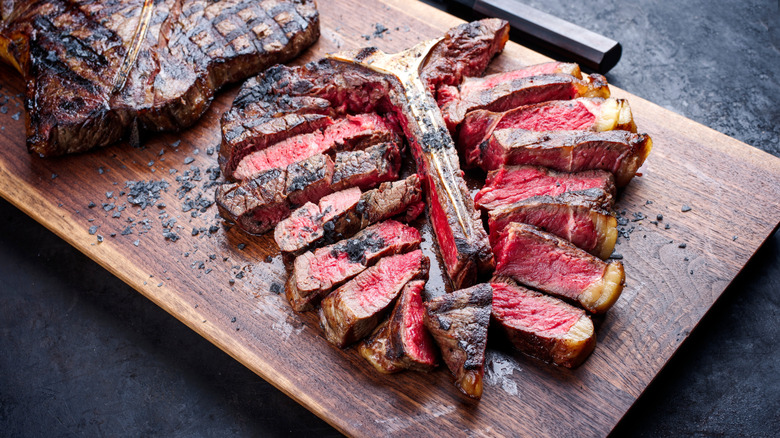
T-bone and porterhouse steaks are similar, but not exactly the same; porterhouses have a significantly larger tenderloin side. While a porterhouse won't dry out quite as quickly as a T-bone, it still requires specific preparation to optimize its flavor.
For T-bones especially, heat control is vital. While many keep a squirt bottle on hand to deal with flare-ups, managing the steak's position on the grill is more important during the initial sear to avoid burning the tenderloin's exterior. While some consider using a steak marinade to moisten the meat, it is often better to use a dry rub or a simple oil coating to help the exterior brown properly without steaming. This keeps the preparation easy while providing the elements needed to enhance the meat's taste and texture.
A porterhouse's thicker tenderloin might stand up to heat better, but, depending on its thickness, it may also require more time to reach the right temperature. Since you're already dropping some serious cash on this cut, it may be worth splurging for a prime-grade cut. The increased intramuscular fat makes them some of the best cuts of steak to grill, as the marbling helps prevent them from drying out due to prolonged heat exposure. If you prefer your meat a bit more on the lean side, a quick butter basting halfway through the cook also helps preserve your juices and texture, while saving you a bit of money.