

How Houseplants In Your Kitchen Can Help With Cabin Fever
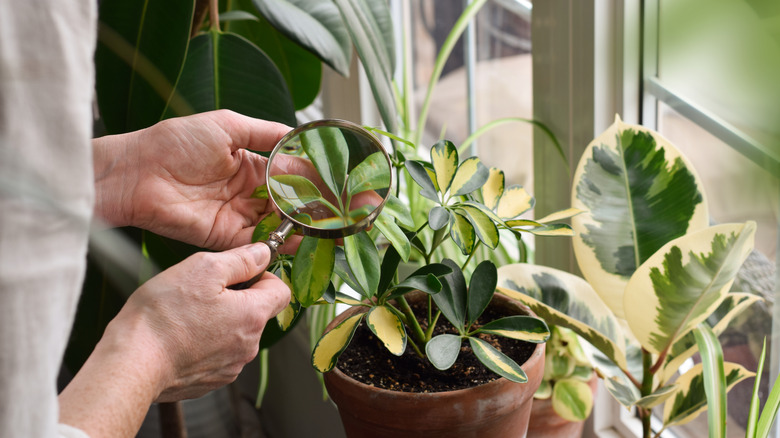
When you're cooped up inside, it's perfectly normal to develop a bit of cabin fever. Whether it's the winter months when your garden is asleep or just a particularly work-heavy few weeks, you can combat that restless itch with some strategically placed houseplants.
When you're restricted to indoor spaces, your body may produce more cortisol, the primary hormone associated with stress. This, in turn, affects your serotonin levels, a hormone that influences your overall mood, as well as bodily processes like sleep and digestion. However, multiple studies show that interacting with indoor plants can have a marked effect on cortisol levels, helping to improve your mood. It's the same reason gardening has become an increasingly popular form of therapy to promote mental wellness.
This is all without even mentioning the more tangible benefits of houseplants, such as beautifying your space and providing a sense of connection to nature. Fortunately, you don't have to turn your living room into a jungle, though keep in mind that some plants require more care, sunlight, and attention than others. Still, depending on your home's layout, you can do just about anything from purchasing a few succulents to sit in the window to growing a vegetable garden in your kitchen. Provided you have at least one plant in your general field of vision, you should feel the benefits over time.
Choosing the perfect plant for your indoor space is paramount
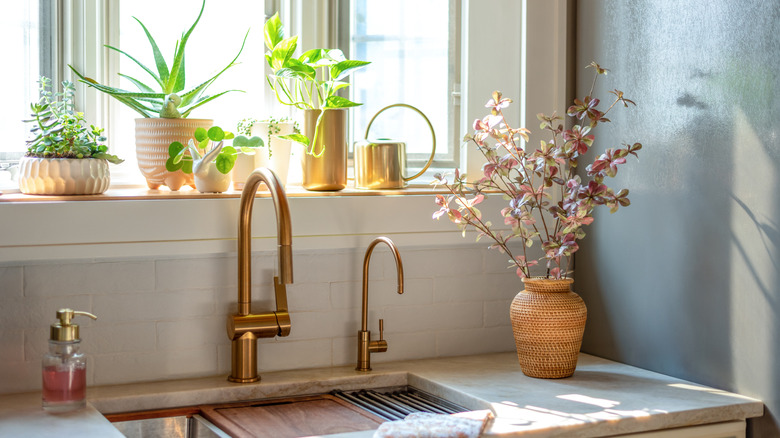
Determining which houseplants are best for your environment boils down to the amount of sunlight and care you can give them. While it may be tempting to try growing a pomegranate tree indoors, you also don't want to add more stress to your life by dealing with a labor-intensive plant if you lack the time to maintain a rigorous care schedule.
Low-maintenance greenery like snake plants, peace lilies, and pothos are beautiful, easy-to-nurture options that are ideal for people who don't have much of a green thumb. Peace lilies, in particular, are great for novice plant owners because they tell you when they need hydration, falling flat when dry, then popping right back up once watered. Pothos, meanwhile, is a fantastic trailing ivy that is perfect for adding splashes of color to bannisters or filling out a windowsill. Snake plants, also known as mother-in-law's tongue, are basically all-natural air filters, cycling out carbon dioxide and producing fresh oxygen.
If you're looking for something more on the edible side, you can grow peas indoors throughout the winter to scratch your gardening itch. Most herbs also tend to do well inside until they reach a certain size, at which point you can transplant them outside and start the process over again. These also turn your kitchen into a full sensory experience, combining the benefits of a scented candle and greenery to give you a cozier atmosphere to work in. Just be sure to plant herbs together based on their water requirements, as you wouldn't want to accidentally drown your sage just to water your basil.