

Elizabeth Taylor's Favorite Retro Champagne Label Is Now Worth A Small Fortune
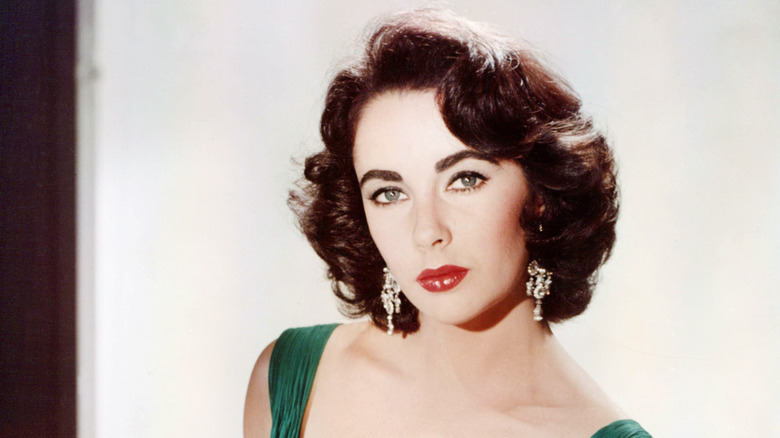
Few celebrities have ever embodied glamour quite like Elizabeth Taylor. So it's hardly surprising that her favorite holiday drink matched her legendary sense of style. In a 1968 Town & Country article, Taylor revealed that when it came time to celebrate, she favored Dom Pérignon — but not just any bottle would do. In true Taylor fashion, she had an eye for vintages, citing 1961, 1964, and 1959 as her personal favorites. Unfortunately, Champagne can command exorbitant prices, and if you want to drink like Taylor, you'll need deep pockets.
Unlike most Champagne houses that produce a yearly non-vintage blend to maintain a consistent house style, Dom Pérignon stands out because its vintages are produced using only grapes from a single harvest. As a result, each bottle is a little different. If one growing season is hampered by a sudden cold snap — or, in recent years, extreme heat — the house simply won't produce a vintage for that particular crop. On the other end of the spectrum, some years are known for their exceptional harvests, making them extremely coveted. All of Taylor's favorites fall into the latter category.
By law, vintage Champagne must be aged for at least three years. Dom Pérignon, however, takes a far more patient approach, typically waiting at least eight years before releasing a bottle to the market. Thanks to this meticulous process, certain Dom Pérignon vintages are worth a small fortune, and they often appreciate with age. A standard bottle typically starts at a steep $200. But compare that with Taylor's 1961 vintage, famously served at the wedding of Prince Charles and Lady Diana Spencer. Today, bottles from that celebrated year can fetch prices of up to $3,000.
Dom Pérignon is widely recognized as the world's first prestige cuvée
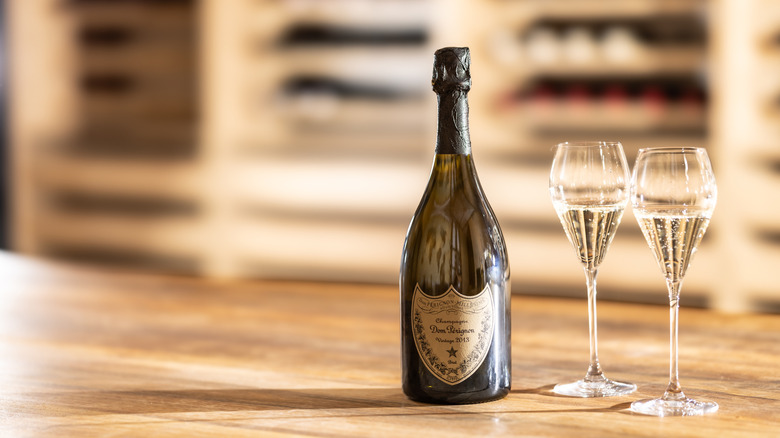
Dom Pérignon takes its name from Dom Pierre Pérignon, a Benedictine monk often credited with inventing Champagne. A closer look at the history, however, tells a different story. Much of his work was actually devoted to trying to remove the bubbles to prevent bottles from exploding. But we can look past that for now.
The modern brand began in 1936, when Moët & Chandon released a super-luxury Champagne made from its finest grapes from the exceptional 1921 harvest. The wine quickly became a sensation among wealthy elites in the United States and is widely regarded as the first commercial prestige cuvée, aka the highest tier of wine produced by a Champagne house made available to the general public.
In the Champagne region, vineyards are ranked by quality based on the character of the grapes they produce. At the top are the Grand Cru villages, with just 17 in total, and Dom Pérignon has access to grapes from many of them. One notable exception is fruit sourced from the historic vineyards surrounding the Abbey of Hautvillers, the monastery where Dom Pierre Pérignon lived, which is classified one tier below as a Premier Cru. The blend typically consists of roughly equal parts pinot noir and Chardonnay for a complex and elegant finish. Every grape is picked by hand during the narrow window when ripeness and acidity are perfectly balanced.