

How McDonald's Mascot Has Transformed Over The Decades: From The 1960s To 2026
We may receive a commission on purchases made from links.
Many of us have nostalgic ties to our favorite fast food restaurants, if only because so many of them have been around for the majority (if not entirety) of our lifetimes — and when it comes to McDonald's, there's a lot to love. Whether you grew up eating the Golden Arches' gloriously greasy fries or have been getting that "ba da ba ba ba" jingle stuck in your head since your elementary school days, the brand feels like a constant in an ever-changing world.
However, the truth is that while visiting McDonald's can evoke a sense of childhood comfort, the chain is actually constantly evolving. Those delectable fries used to be fried in beef tallow; then it switched to vegetable oil; now, the restaurants use a natural beef flavoring to mimic that classic taste. And for every iconic new item the chain debuts, there's a graveyard of McDonald's menu fails (McLobster, anyone?) that did not stand the test of time.
While it can be hard to keep up with every change, we can track some of the evolutions the company has undergone by taking a look at its mascots. The transition from Speedee to Ronald — and the subsequent birth of the lore-filled world of McDonaldland — offers a fascinating lens through which to view how the franchise has adapted its image (to varying degrees of success) to meet the changing expectations of each generation.
Before Ronald, Speedee was the face of McDonald's
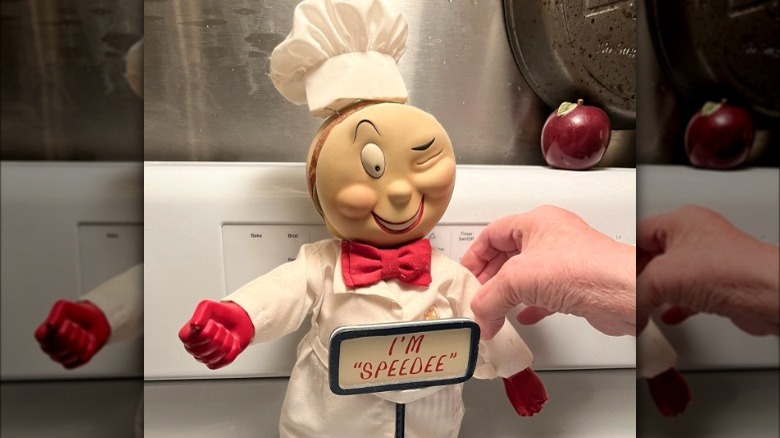
Once upon a time, Speedee, a smiling chef with a hamburger-shaped head, was the official mascot of McDonald's. The character symbolized McDonald's early "Speedee Service System," which was all about quick, efficient food preparation, and appeared on signs, packaging, and advertising in the 1950s and into the early '60s.
Ronald McDonald debuted in the '60s with Willard Scott
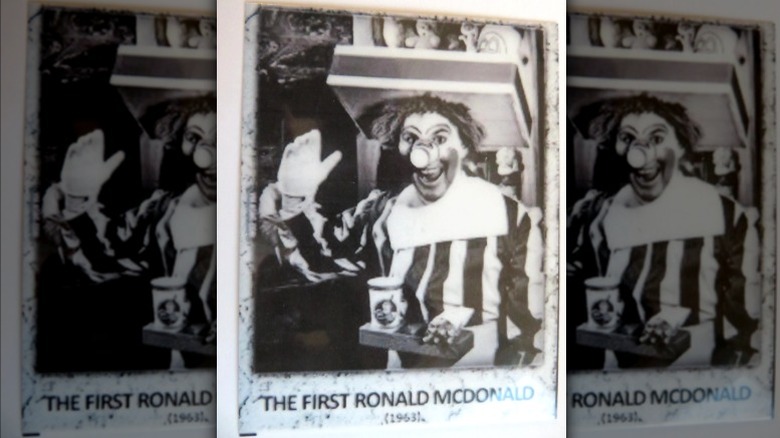
Ronald McDonald made his grand debut in 1963. He was, in fact, portrayed by a real-life TV personality named Willard Scott (who, perhaps not so coincidentally, had previously played Bozo the Clown).
This original iteration of Ronald wore a tray containing burgers and fries as a hat and donned a paper cup for a nose.
By the late '60s, Ronald McDonald gained his iconic style
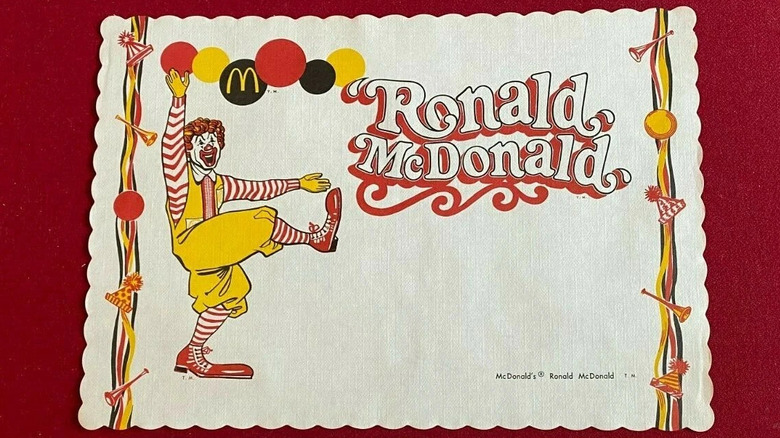
Ronald McDonald continued to evolve throughout the '60s, and by 1966, the character's design was refined to more closely reflect the Ronald McDonald we recognize today. He began sporting his signature red hair, theatrical face paint, and that absolutely iconic yellow jumpsuit.
The '70s featured the launch of McDonaldland
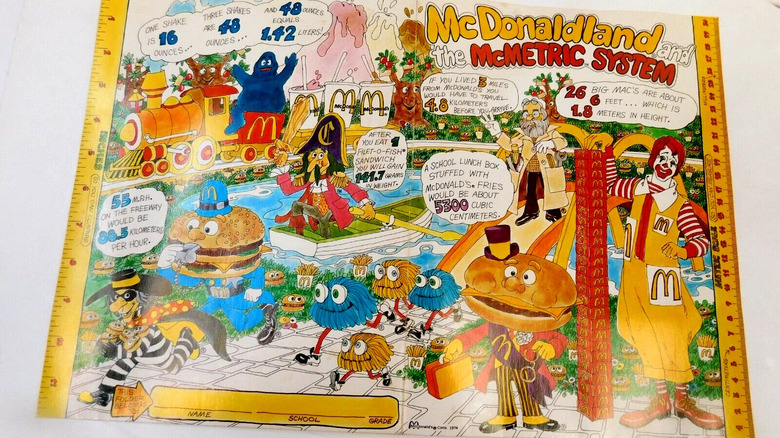
In the early 1970s, the fictional world of McDonaldland hit the scene. Suddenly, Ronald McDonald was no longer just a mascot; he became a central figure in a whimsical, cartoon-like universe populated by fan-favorite characters such as the originally villainous Grimace, Mayor McCheese, the Fry Kids, and Hamburglar.
The '80s solidified Ronald's look and global mascot status
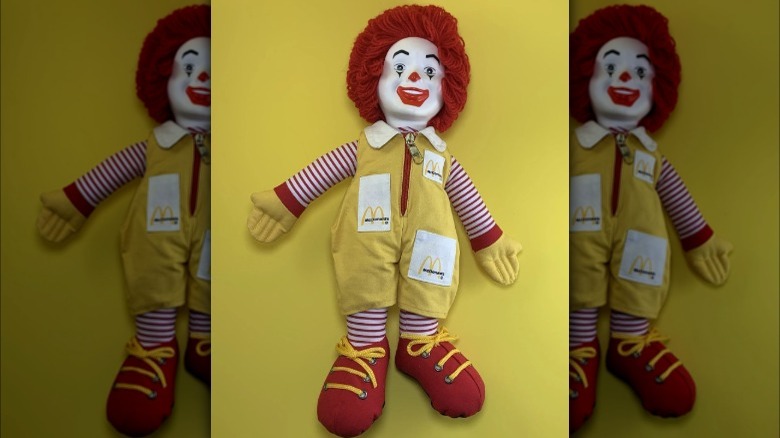
Ronald McDonald's ascent to global stardom truly accelerated in the '80s, and he outlasted many of his phased-out McDonaldland compatriots, such as Captain Crook and the Professor. By this point, his oversized clown shoes, red-and-white-striped shirt, and white face paint had become fairly consistent.
Ronald McDonald updated his look for '90s kids
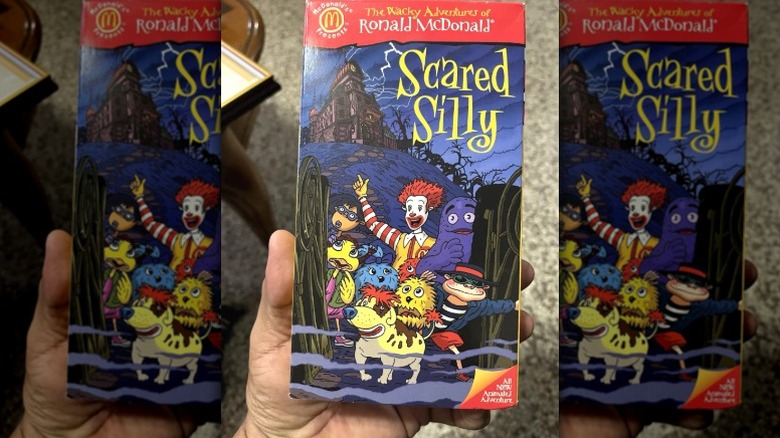
Ronald McDonald's look was slightly updated in the 1990s to appeal to a new generation of children. His bulky jumpsuit was replaced with a somewhat sleeker costume featuring a red McDonald's logo on his lapel instead of the traditional patches. During this era, he also starred in the direct-to-video animated series, "The Wacky Adventures of Ronald McDonald."
The 2000s attempted to redefine Ronald as an active-lifestyle advocate
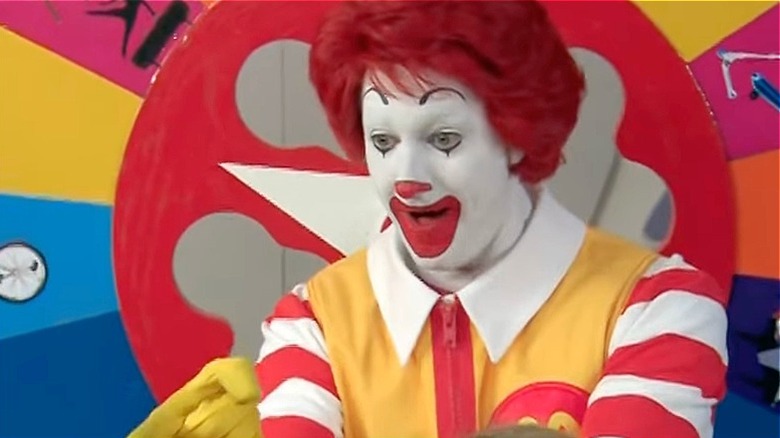
In the 2000s, actor David Hussey served as the primary Ronald McDonald from 2000 until 2014. Following the 2004 release of the critical (and not entirely objective) documentary "Super Size Me," the company pivoted its marketing strategy; it tried positioning Ronald as a proponent of active living through efforts like the "McKids Adventures" series, a campaign that emphasized physical activity and nutrition education.
Intense scrutiny pushed Ronald McDonald out of sight in the 2010s
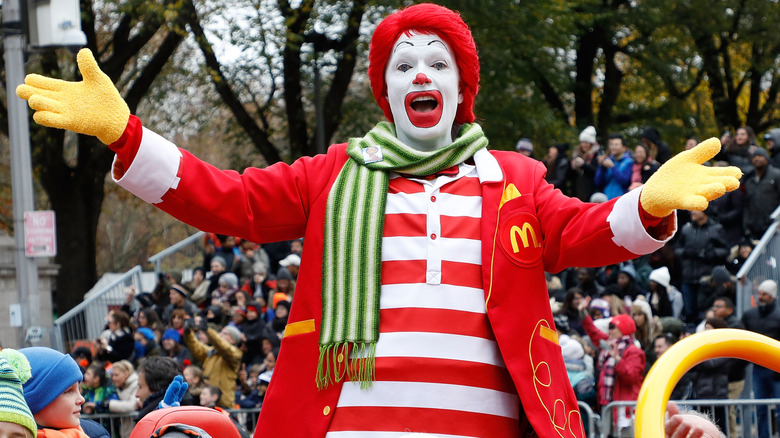
If you've ever wondered whatever happened to Ronald McDonald, look no further than the 2010s, which were a tough time for the mascot. The character faced increasing pressure from health advocacy groups calling for his retirement due to concerns over childhood obesity and fast-food marketing, leading him to undergo a 2014 costume redesign. His new look ditched the jumpsuit for a red blazer (though he still sported yellow cargo pants). However, these efforts were sidelined by the "creepy clown" phenomenon in 2016 — a wave of global hysteria that turned traditional circus imagery into a PR liability, and pretty much pulled the plug on Ronald's public appearances for years to come.
Ronald McDonald remains a nostalgic presence in the 2020s
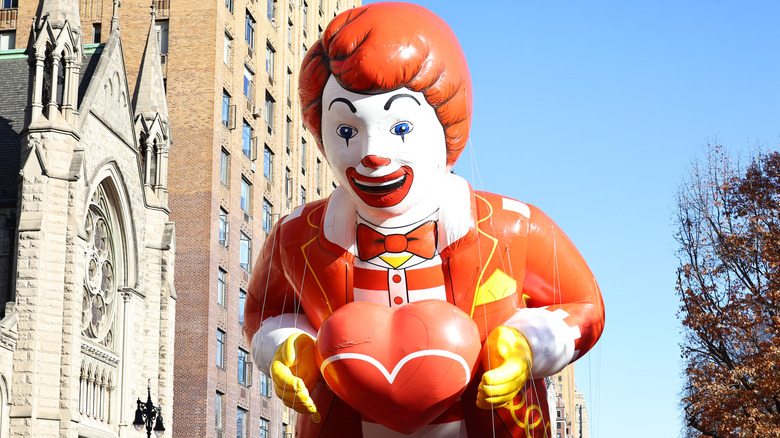
In the 2020s, Ronald McDonald's role has largely receded from the spotlight — though not entirely. He continues to make occasional cameos in nostalgic marketing campaigns and select community events. Who knows — perhaps a formal comeback (and maybe even yet another redesign?) is on the horizon.