

5 Big Changes Coming To Walmart In 2026
Walmart doesn't rest on its laurels and let the world pass it by, that's for sure. The supermarket chain, which remains the largest private employer in the U.S. and a massive physical-store powerhouse, is always leading, innovating, and seeking to improve the customer experience in a variety of ways. For example, it's constantly getting in new products each month, and it has switched up its in-store dining options throughout the years, with everything from McDonald's to Subway. Of course, customers have come to expect updates and upgrades with each passing year, too, and 2026 is no different.
Instead of piecing together all the changes coming to Walmart this year, we've rounded up five big ones that you should know about. Most likely, at least one will have some bearing on your own personal shopping experience, whether you're an occasional Walmart-goer, or a die-hard, can't-live-without-the-W superfan who thinks the Great Value products are better than the name brands.
John Furner succeeds Doug McMillon as Walmart's new CEO
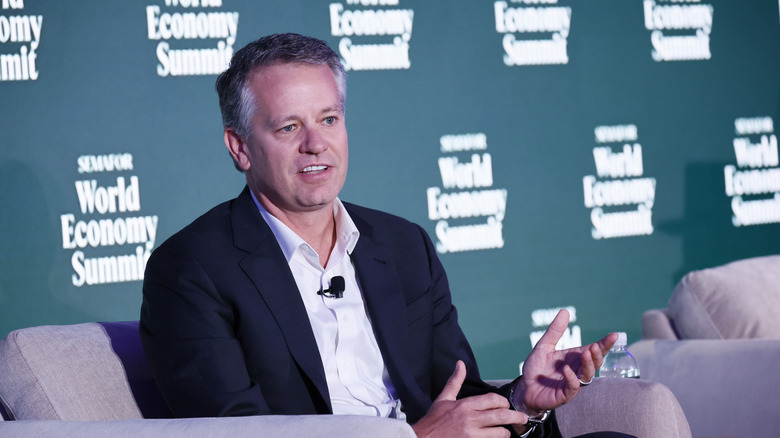
After serving at the helm of Walmart as its CEO for 12 years, Doug McMillon stepped down at the end of January. He proved to be a guiding light for the company, leading the way with a clear-headed vision. Under McMillon, Walmart embraced technology, helping the company stay relevant against major e-commerce force Amazon, which threatened to dominate through the latter part of the 2010s, as well as the first half of the 2020s. Taking his place was a lifelong Walmart employee, John Furner, who actually started working at the company as a humble hourly associate in the early 1990s.
Digital shelf labels will roll out across all stores
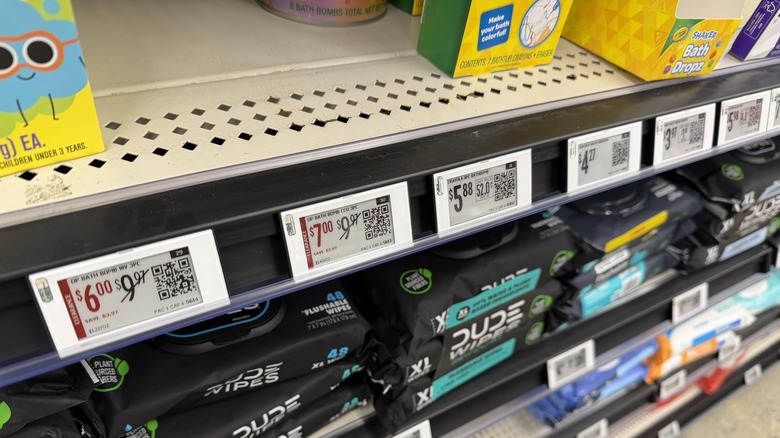
Maybe you've already seen them in your Walmart; instead of tags in front of the products on shelves, there are now tiny little screens that read the prices. Yes, Walmart is embracing digital shelf labels, or DSLs, and while it has already begun to implement them in stores, it expects to finish the process within the next year. Once the changeover is completed, this will save employees lots of time, as the manual process took hours.
However, it does mean that Walmart would have far greater access to dynamic pricing — that is, pricing based on a number of factors, like demand for a product or how much is currently in stock (surge pricing describes when a business increases the cost). While Walmart has indicated that it would not pursue dynamic pricing in stores, the move has drawn scrutiny from some consumers and industry analysts. You tell us — has a huge corporation ever been untruthful toward its customers before?
Walmart is deepening its AI strategy with new tech collaborations
Walmart has been experimenting with AI partnerships since the fall of 2025, when it teamed up with OpenAI ChatGPT. The program allowed customers to make actual purchases while using ChatGPT, all while the AI service learned more about what they liked, needed, and wanted in order to anticipate and then perhaps offer suggestions for purchases (before the customer even knew they themselves wanted or needed it).
However, in 2026, Walmart adopted an open-partnership strategy, continuing its work with OpenAI while simultaneously launching a new partnership with Google Gemini. The partnership is similar to the one with OpenAI; as customers interact with Gemini, the AI program will make suggestions for Walmart products when relevant. And as it comes to know the individual customer better, we can assume its recommendations will improve, too (having access to the user's purchase history will also factor in).
Both Walmart and Sam's Club are removing synthetic ingredients from products
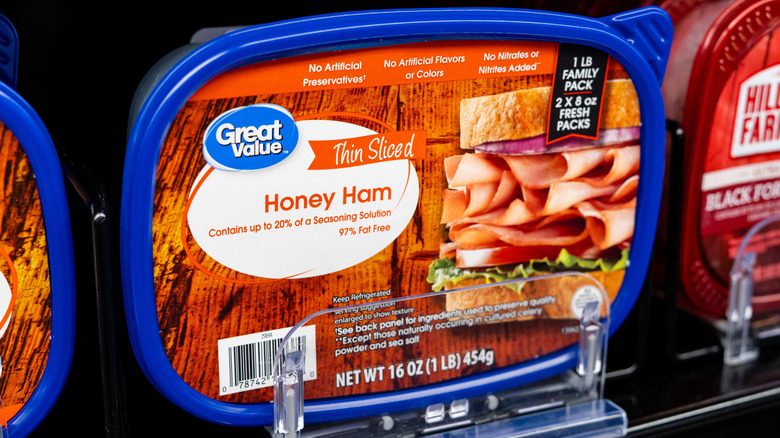
Did you know that Sam's Club is owned by Walmart? It's true — and in 2026, the subsidiary was able to announce that it had removed 40 different ingredients, "including certified synthetic colors, artificial flavors, aspartame, and high-fructose corn syrup," from all of its Member's Mark products; in the event that a food item couldn't be reformulated, it was simply removed from the product lineup.
Parent company Walmart faces a much tougher task, as its Great Value, Marketside, and Freshness Guaranteed brands encompass many more items than Member's Mark does — a reason why Sam's Club is often cheaper, while Walmart offers more varied products. But Walmart has promised, nonetheless, to remove over 30 ingredients, "including certain preservatives, artificial sweeteners and fat substitutes," from its private brands, and customers will begin to see the formulation changes this year.
Walmart is building and converting new, modernized stores
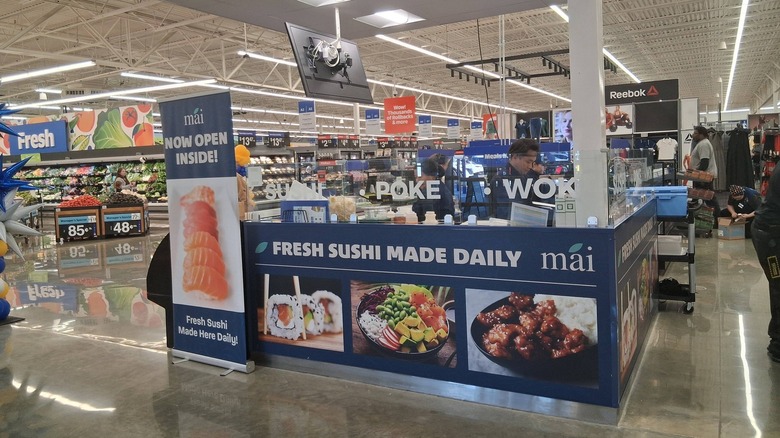
While it can feel like there's a Walmart in every town from coast to coast, the chain is nonetheless expanding its physical presence in 2026 as part of a major initiative to build or convert over 150 stores nationwide. Recent openings have occurred in states like Florida and California, featuring both Supercenters and smaller Neighborhood Markets. These stores reflect the "Store of the Future" model, a modern design that has been rolling out across the country since 2025 to optimize customer convenience. Features for the Store of the Future include things like a fresh sushi station, attractive displays in certain departments, and the incorporation of digital technology throughout the physical spaces.