

Think Twice Before Putting Restaurant Parmesan Cheese On Your Pizza

If you're a fan of going out for Italian food, you've probably noticed the small shaker filled with parmesan on your table. Its nutty flavors, umami taste, and high amount of protein make it the perfect topping for pizza or pasta, but always make sure to double-check it before using; you have no way of telling how long it's been sitting out.
Compared to other cheeses, parmesan is pretty hardy. In its block form, it has an impressively long shelf life thanks to its low moisture content, which helps to inhibit bacterial growth. However, once grated, the cheese becomes exposed to the elements, such as oxygen and moisture, which make it vulnerable to spoilage. On top of that, if it's been sitting out in the open for days or even weeks, you have no idea what other customers were there before you. This makes cross-contamination with allergens or bacteria a real risk.
Once parmesan is grated, it's generally seen as good practice to refrigerate it — leaving it out for no more than four hours max. If a restaurant is on top of its game, it'll replace each batch daily, but this isn't the most cost-effective practice. If you don't want to take any chances, you can always politely ask your waiter if they can provide you with freshly grated parmesan — any serious Italian restaurant would have heaps stored in the kitchen. If you're feeling a little extra, you can even bring your own store-bought parmesan to the restaurant.
Signs the parmesan is well past its prime
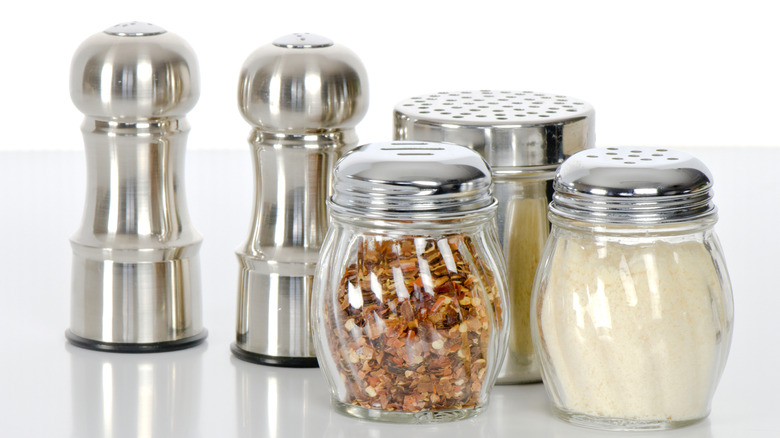
If you're looking at the jar of parmesan on the table and wondering if it's worth sprinkling on your pizza, there are several telling signs that it might be well past its prime. Grated parmesan should be a pale-yellow color, and if it has any signs of discoloration, it's probably gone rancid. Similarly, trust your nose, and if the Parmesan smells off, skip it. Other warning signs include a powdery or slimy texture. If you notice any of these signs, you should inform your waiter so the next customers don't accidentally use it.
Signs of mold growth in grated parmesan is also another major red flag. While mold on a hard block of hard cheese is generally safe, as its dense structure prevents it from penetrating deeply, so the affected areas can be safely removed. However, this doesn't apply to grated parmesan, as its high surface area allows mold spores to rapidly spread throughout the batch. Any signs of mold in the grated parmesan mean that the entire batch should be quickly discarded, as consuming it can cause a whole host of unpleasant side effects.
Beyond going rancid, if parmesan has been sitting outside for too long, it will eventually lose its flavor from drying out. To keep your grated parmesan fresh, always store it in a refrigerator in an air-tight container, where it can last for up to several months.