

Alton Brown's Trick For Baby Back Ribs Will Make You Look Like A Chef

The 3-2-1 rule of cooking ribs may make them fall-apart tender, but Alton Brown's 8-3-1-1 seasoning trick is what makes them delicious. By using a standard template of eight parts brown sugar, three parts salt, one part chili powder, and one part something extra, you have a great, easy-to-make process that still lets you add your own personal flair.
Sugar is vital in any sort of dry rub because it not only provides sweetness, but also some binding action to keep the rest of your seasonings on the meat. But since you don't want a pork-flavored dessert, balancing it with salt delivers a more savory flavor. The chili powder is especially indispensable, providing an earthy smokiness that makes up most of your meat's seasoning. You'll find these three ingredients in most store-bought barbecue rubs, but what makes a dry rib rub truly great is the finishing touches.
The final part is where you should feel free to develop your own signature blend of extra seasonings to round everything out. Black pepper and onion powder are staples of most great barbecue, but don't neglect light touches from herbs like thyme or a bit of basil. You can even opt for some dried ginger or citrus peel for something lighter, as they both pair excellently with salt, sugar, and chili powder.
Use Alton Brown's foil-wrap method for perfectly moist ribs
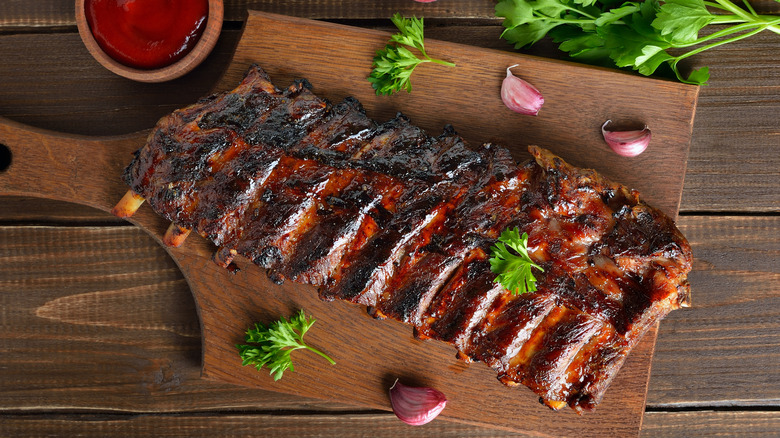
When cooking ribs on the smoker, it's easy to develop a great glaze by just painting them with your favorite barbecue sauce an hour before they're ready to pull. However, when Alton Brown makes his in the oven, he prefers to wrap them in foil. This keeps them moist, braises them in their own juices, and lets them sit in all that seasoning you just painstakingly rubbed in. Still, Brown takes this a step even further by developing the base of a beautiful sauce. After mixing together some acidity, savoriness, sweetness, and garlic, he opens up one end of the aluminum packets and pours it all in. This is a great trick to guarantee moist ribs, especially when using leaner varieties like baby backs.
White wine is a particularly good base for this, as it has plenty of acidity, and the tannins help further tenderize the pork. Since your ribs already have heavy amounts of brown sugar, a bit of nice honey adds some complexity to their flavor profile that pairs nicely with other umami-based seasonings like Worcestershire, fish sauce, or Maggi. Once the ribs are done, simply drain the liquid, simmer it on high until it reduces and becomes thick, then slather the ribs. All they need is a quick 30 seconds under the broiler to develop a nice sheen, and they're ready to eat.