

McDonald's Big Mac Sauce Vs Big Arch Sauce: Here's The Difference
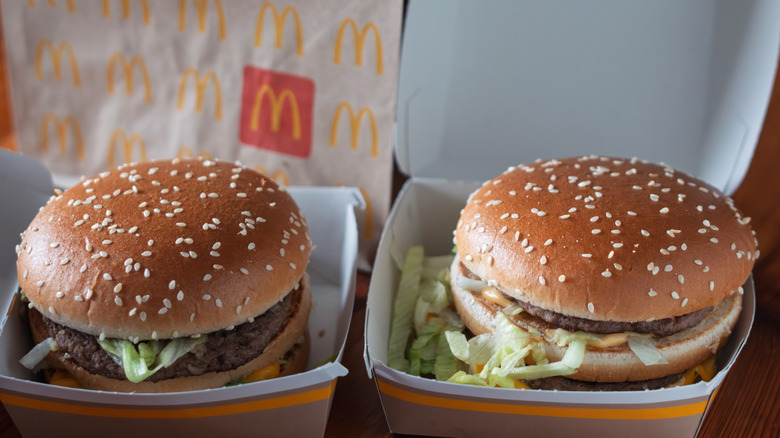
As one of the globe's most prominent fast food chains, it's no surprise that consumers maintain a close eye on McDonald's offerings. Especially prone to a foodie magnifying glass? The chain's sauce selection. In addition to classics like mayo, barbecue, ketchup, and mustard, Golden Arches always keeps it interesting with brand-specific offerings, whether the now phased out McDonald's Szechuan Sauce or newly debuted Creamy Chili McCrispy Strip Dip.
Among such condiments, few captivate quite like the Big Mac sauce, an industry secret spread onto its flagship burgers for decades. So with the U.S. debut of the Big Arch in 2026 – a new extra-large burger that comes with its own signature sauce – some condiment comparison is to be expected. After all, McDonald's itself is set on distinguishing the sandwich by way of the dressing: "What truly sets it apart is the new BIG ARCH Sauce," the chain noted (per McDonald's). "[It's] tangy, creamy, with the perfect balance of mustard, pickle[,] and sweet tomato flavors."
Truth be told, the sauce differences aren't so drastic. Opposed to the Big Mac's familiar relish-plus-mayo creamy charms, the Big Arch sauce works tomato flavors into a similar formula. A few additional nuances appear alongside, enough to delineate burgers by sauce, but not to redefine a McDonald's experience.
The Big Mac sauce keeps flavors tangy, sweet, and creamy
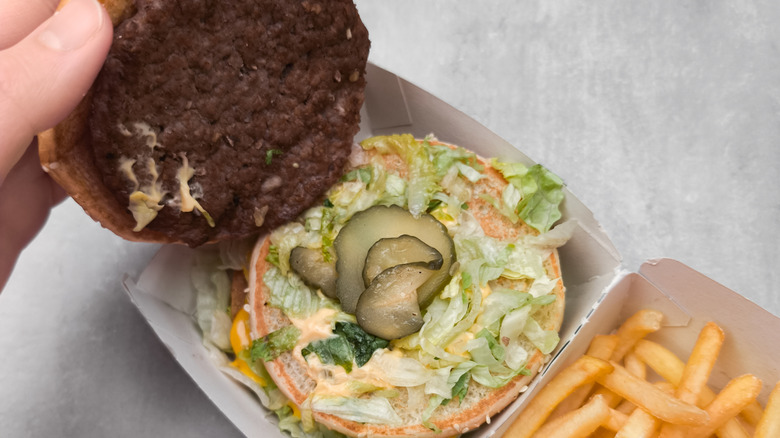
Big Mac sauce debuted in 1968 alongside its namesake burger, kick-starting decades of intrigue. Over the years, the sauce has taken on several tweaks, including an over two-decade run under a different recipe, as well as a 2018 removal of preservatives. Regardless, the appeal has remained the same: Tangy and umami flavors plus a hit of sugar, all worked into a creamy condiment base.
Many propose that Big Mac sauce is just Thousand-Island dressing, and indeed, there's overlap between the two. Both sauces share a backbone of sweet pickle relish and mayo, yet the Big Mac sauce crucially diverges with the absence of ketchup, Worcestershire sauce, and any spicy component. Intriguingly, the lack of such umami-laden inclusions is also what distinguishes the Big Mac dressing from the Big Arch sauce, which relies on tomato paste for flavor.
The two McDonald's sauces do share a lightly spiced backbone, folding in aromatics like paprika and turmeric. Yet the Big Mac sauce's use of vinegar, sugar, and sweet relish maintains a sweet and gentle character. Unlike the Big Arch sauce, no mustard appears in the mix (although homemade versions often include it), letting creaminess take charge. Even opposed to rivals like Shake Shack and Burger King, the Big Mac sauce is sweet and mild for a burger dressing, a comparison applicable to the new Big Arch, too.
Expect tomato and a touch more bite in the Big Arch sauce
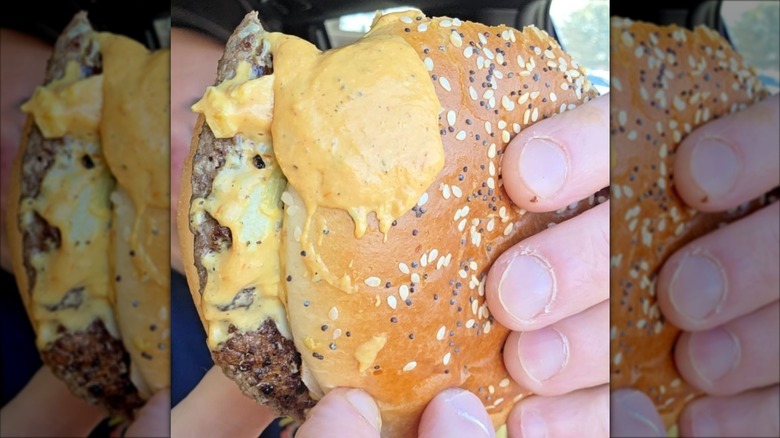
Unlike the decades-old legacy of the Big Mac sauce, the Big Arch sauce is one of McDonald's modern inventions. Trials for the new burger first ran in 2024, exclusively in Canada and Portugal. Following a positive reception, this half-pound sandwich, which also differs from the McDonald's Double Quarter by way of three white cheddar cheese slices, received a U.S. release in March 2026.
Intended as part of one of the chain's boldest new dishes, the burger's new sauce was quick to draw attention in both flavor and quantity. Yet while the burger build in total did generate interest, McDonald's dressing didn't push the envelope. Consumers note that it's tart and creamy — precisely the kind of adjectives historically used for the Big Mac sauce. The distinct inclusion of tomato paste does indeed appear on the palate, and with no sweet relish to cover, many cite there's a touch more tang in the mix. The ever-so-slight bite from mustard is noticeable, too — although no one will call the Big Arch sauce spicy. Instead, it essentially lands as a riff on the Big Mac sauce, with the appeal of a classic burger dressing.