

The 9 Best Italian Pasta Dishes You've Probably Never Heard Of
With the introduction of Italian immigrants to America came a rush of appetizing cuisine and sensational food rich with vibrant flavors. Still, some dishes were more welcomed on U.S. shores than others, taking a firmer hold and being adapted with American ingredients, while others failed to make the journey.
Even with the popularity of Italian-American cuisine across the nation, there are still plenty of traditional dishes rooted in Italy that few here have ever heard of. Of course there's the ubiquitous spaghetti carbonara and the ever-present manicotti. But true Italian pasta dishes are much more expansive than this.
Just how many dishes might you have missed out on by ordering tortellini time after time? There are dozens of old-style Italian dishes that are lesser known in the States, although they may be revered and regularly eaten in places like Florence or Sicily. Whether you make these recipes yourself or have to travel to the pasta motherland to try them, these nine extraordinary dishes are worth the effort.
Pasta alla gricia
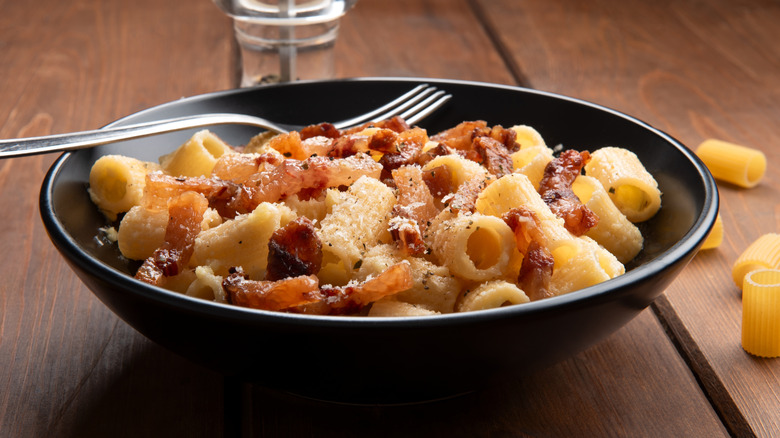
Perhaps the least known of Rome's four cardinal pasta dishes, (carbonara, amatriciana, and cacio e pepe are the others), pasta alla gricia is a bit of an underappreciated gem. A dish that likely was brought to Rome by Apennine immigrants, its major components are actually quite minimal.
The pasta is cooked partway, then added to a sauce composed of Pecorino Romano cheese, black pepper, fatty guanciale, and pasta water. Why the pasta water? The starch left in the water after boiling helps with the emulsification of the dish, creating a smooth, creamy sauce enriched by rendering the guanciale. The use of guanciale is essential to the dish. Although some may try and substitute pancetta, it's not gricia without authentic, smoked pork cheek to correctly flavor the pasta.
While tomato-based pastas like amatriciana — a dish like gricia but with the addition of eggs and tomato — may seem more Italian, it's very likely that pasta alla gricia came first, since tomatoes didn't make their way to Italy until the 1700s. Some historians believe gricia may date back as far as the 5th century, predating both amatriciana, the later invented carbonara, and perhaps cacio e pepe (an even simpler pasta made from Pecorino Romano and black pepper) as well. For this reason, the dish is often referred to as the Mother of the Roman pastas, possibly being the dish that the other three more well-known pastas spring from.
Pasta al limone
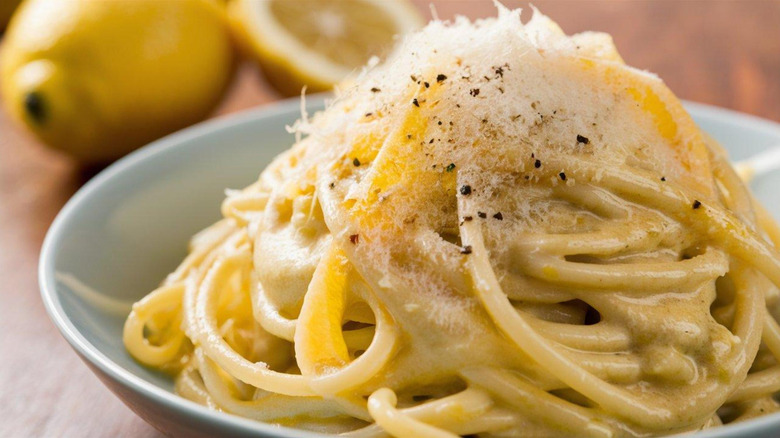
Creamy pastas can be a bit heavy, but not pasta al limone. In this classic Italian dish typically enjoyed during the summer months of Southern Italy, the flavors of bright lemon are combined with dairy. The most basic recipes use just lemon zest, lemon juice, cheese, and starchy pasta water, while others add cream, butter, or olive oil.
Spaghetti is the pasta type most commonly used, cooked to a stage just before al dente and combined with fresh ingredients right in the pan. To craft this exceptional dish, lemon zest is cooked in butter (or oil) and the undercooked pasta is added with some pasta water. Cheese is added along with lemon juice, and presto! You have pasta al limone.
The dish is quite popular along the lemon-rich Sorrentine peninsula and Amalfi coast in Southern Italy, a region abundant with aromatic citrus. Although some dishes add elements like cream or cream cheese, but many find the additional dairy to dampen the signature citrus notes that make this pasta unique. It seems best to save your cream for pasta alfredo instead, allowing the lemons to take center stage in this less familiar dish.
Spaghetti all'ubriaco
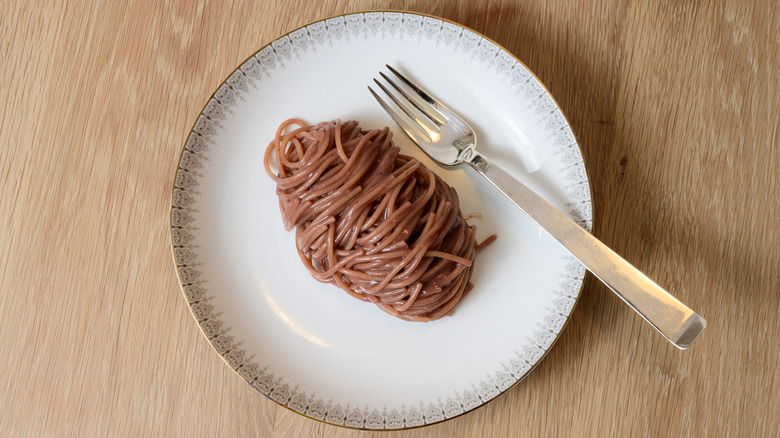
Although no one is quite sure which region this boozy pasta originated from, it's undeniably an Italian creation. Several eateries in Florence have claimed the recipe as their invention, despite the fare also being popular in Sicily and Tuscany. Rarely seen on menus outside of Italy, spaghetti all'ubriaco is essentially pasta cooked in red wine and embellished with olive oil, garlic, and occasionally butter.
Otherwise known as drunken spaghetti, this richly-hued pasta possesses a savory flavor having sponged up the beautiful notes of the wine. The key to this dish is in using the correct red wine. While you don't necessarily need to use an extravagant vintage, you shouldn't use a basic cooking wine either. You want to find that sweet middle spot, using a vino you would typically enjoy drinking on its own.
The dish can be kept minimal, allowing the wine to take center stage, or dressed up with cheese, lemon zest, and other herbs like parsley or bay leaves. Either way, this little-known dish is sure to impress, be you making it for yourself or an entire dinner party.
Fettuccine alla papalina
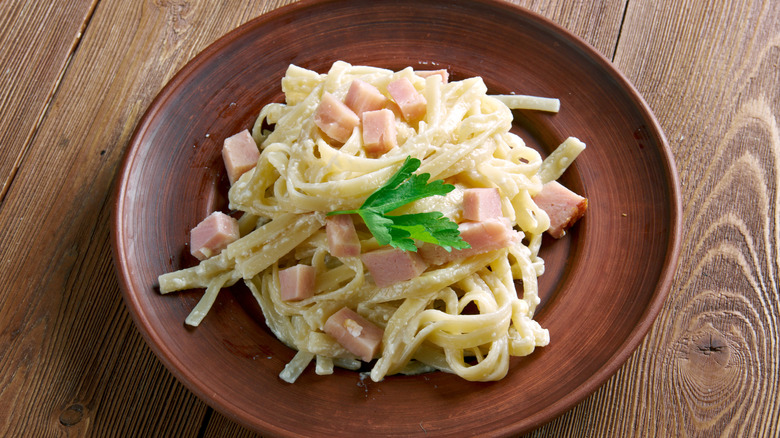
Fettuccine alla papalina or pasta alla papalina is an often overlooked pasta dish whose story seems closely intertwined with a much more famous one. As the legend is told, pasta alla papalina — or Pasta for the Pope — was prepared for a cardinal soon to be given a papal title when he asked a Roman chef to craft a more refined version of spaghetti alla carbonara.
Carbonara, the youngest of the principal Roman pastas, seems to have popped up in Rome in the 1940s, using egg, Pecorino Romano cheese, black pepper, guanciale, and pasta water. Fettuccine alla papalina appears to be a more polished version of the carbonara dish, which many theorize might actually have been born out of World War II rations.
Replacing pork cheek with prosciutto or ham and Parmesan with pecorino, the titular dish was born. As with carbonara, freshly beaten eggs are also used, along with the addition of onion. Fresh egg pasta is the preferred choice for this elevated fare. Traditionally, the dish uses fettuccine, although wide pastas like pappardelle or tagliatelle are also sometimes seen. Later versions also came to incorporate peas and cream, adapting the original.
Spaghetti al nero di seppia
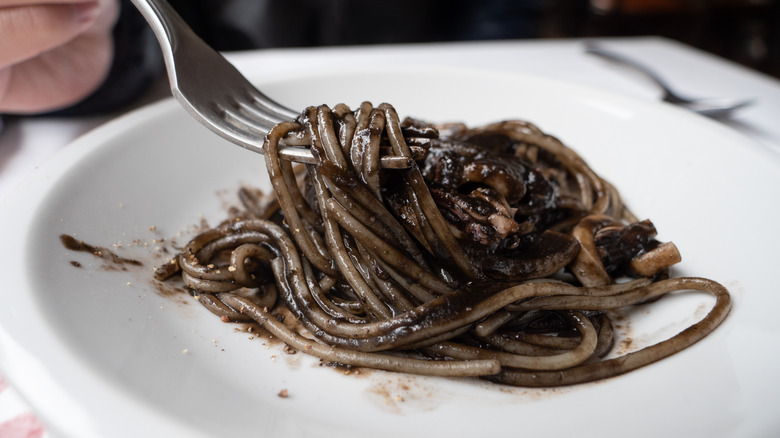
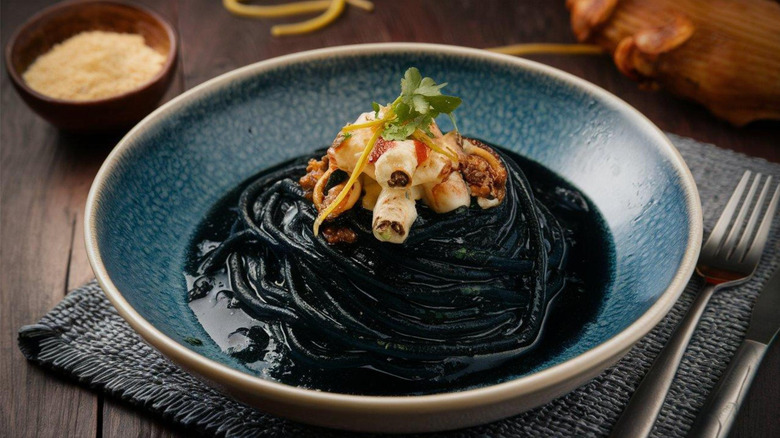
Spaghetti with squid ink, otherwise known as spaghetti al nero di seppia, may look intimidating, but its flavor is truly exquisite. Enriched with earthy squid ink and combined with white wine and garlic, this pasta bears ties to both Sicily and the Veneto region of northern Italy. A bold-looking dish, its flavors are somehow savory, salty, and subtle all at once.
The dish begins with cooking the squid with oil, garlic, and other seasonings. White wine and squid ink (traditionally from a cuttlefish) are added next, turning the sauce a gorgeous black hue. Finally, some al dente pasta is added to the mix. Although delicious, it's a dish you must be careful eating as well as preparing, due to the tendency for squid ink to stain.
More contemporary recipes occasionally add calamari or tomato, giving the dish a slightly more colorful appearance. The dish remains popular in the coastal regions of Italy, especially Venice, where seafood is plentiful. A fare difficult to locate outside of Italy, it's a recipe one must try if presented the opportunity.
Frittatina di pasta
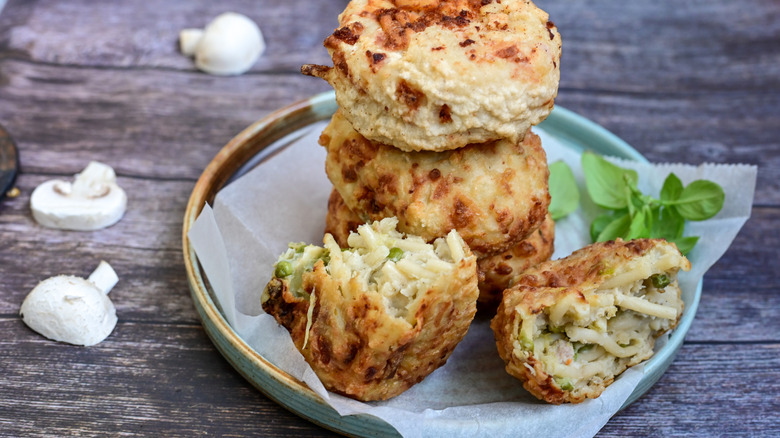
Before fried mac and cheese ever hit the culinary scene, frittatina di pasta permeated the streets of Naples. A fried cluster of pasta blended with various cheeses and other accouterments coated in breadcrumbs, this mouth-watering pasta creation was designed to be eaten on the go, enjoying gooey bites amidst the bustle of the Italian streets.
A food that arose in the mid 1900s, this calorically-dense food wielded unused pasta along with simple, household ingredients, making it a popular fare for busy workers and poor students. The fried coating not only makes the dish portable, but keeps ingredients piping hot bite after bite.
Using a bechamel rather than eggs to help bind ingredients together, its signature element is its handheld nature, with ingredients varying wildly. While the most often seen versions contain peas and ham, today you'll find frittatina di pasta with artichoke and prosciutto, eggplant and cheese, or sausage with vegetables, among other variations.
Not to be confused with frittata di pasta, which resembles a pasta-filled quiche more than this Neapolitan street food, frittatina di pasta requires no utensils — just a healthy appetite. It's a food with working class roots, made for the masses by enterprising cooks with whatever staples happened to be on hand. Deliziosa!
Spaghetti alla Nerano
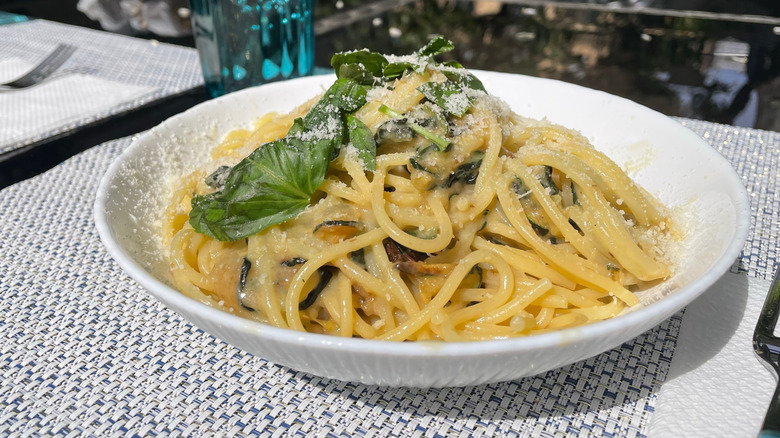
Although spaghetti alla Nerano is often described as spaghetti with zucchini, in reality this Italian dish is vastly more elevated than its description suggests. After all, it happens to be one of Stanley Tucci's favorites. A creation that emerged from Campania in the 1950s, it marries spaghetti with fried zucchini, provolone, garlic, and fresh basil.
The signature element of this dish is that the zucchini must be thinly sliced and fried beforehand. While some proclaim the summer squash must be deep-fried to be authentic, others find that pan-frying in a skillet works as well. Once the zucchini is ready, it is added to al dente pasta along with olive oil, garlic, and a splash of pasta water, to be plated and topped with cheese and fresh basil.
For the best results, only the sweetest zucchini should be used. Chefs often taste the squash raw to confirm before frying, as bitter zucchini can ruin the dish. A hallmark feature is also that it uses Provolone del Monaco — a semi hard cheese made in the Sorrento Peninsula from raw milk. Still, many Americans substitute regular provolone, Pecorino Romano, or Parmigiano-Reggiano for a taste similar to the original dish.
Pasta e patate
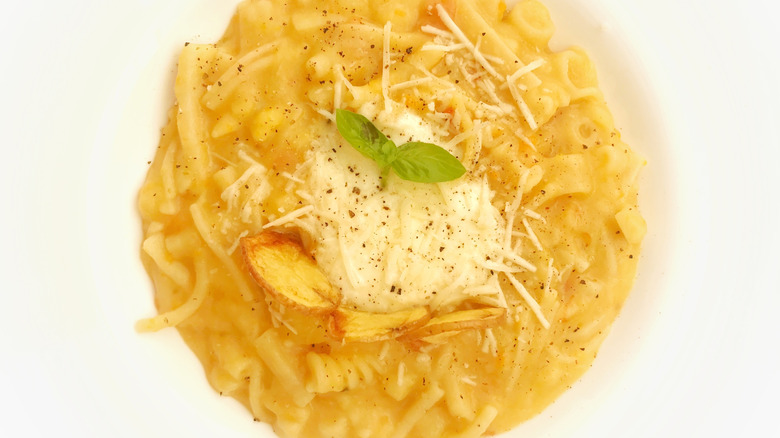
Somewhere between a pasta and a soup, the Italian stew known as pasta e patate has been gracing Italian tables for decades. Crafted from pasta, potatoes, and whatever other household ingredients happened to be on hand, this peasant dish is as varied as it is well-known in Italian households.
Many versions will include celery, onions, and carrots along with parsley and garlic. Quite often cheese rind and tomatoes are added as well in this "kitchen sink"-type pasta dish. The fare can be tailored to individual tastes, being either thick or thin in consistency, and using whatever leftover pasta happens to be lurking in the pantry. At its roots, pasta e patate evolved from a tradition of "cucina povera," or poor cooking, cobbled together from leftovers rather than a set recipe.
To make this dish, first the vegetables are cooked along with the potatoes, then stock is added, and finally pasta. Often stored in a tureen to keep it warm, it is ladled into bowls and topped with cheese for a warm, comforting dish treasured in the cold of winter. Grander versions might include more elevated cheeses, pancetta, prosciutto, or guanciale, alongside rosemary and other herbs, taking this satisfying peasant food to new heights.
Spaghetti all'assassina
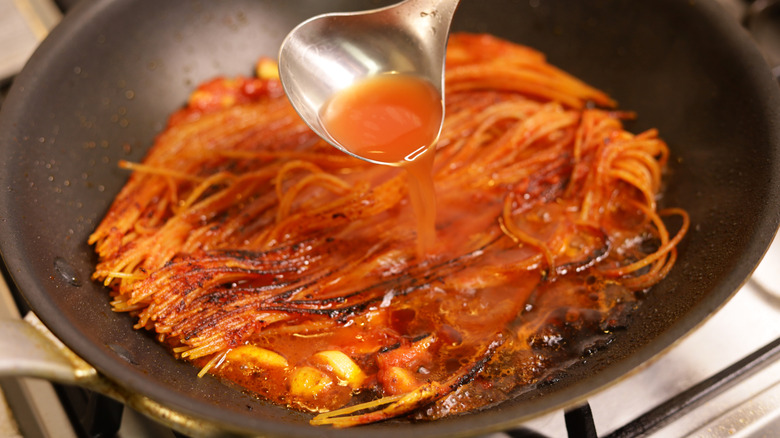
While the name "assassin's spaghetti" might give you pause, the most threatening thing about this dish is actually the spice level. Built from raw pasta cooked directly in a tomato sauce with chili flakes, this delicately charred dish is one of the more fiery Italian classics seen less often on trattoria menus, although it has recently made a few waves on social media.
The stories behind spaghetti all'assassina are nearly as sensational as the dish. According to one version, a man chars his pasta after being distracted by a captivating lady; others say the first customers that ate it claimed it nearly killed their palate due to the spice. However, it's more likely it refers to the spice level or semi-burnt nature of the fare. The dish seems to have emerged from the city of Bari in Puglia during the 1960s, but such amusing stories add far more flare to this unusual pasta recipe.
There are multiple ways to make this unique dish. Some tenderize the pasta by boiling it before adding it to the sauce. Others add the dry spaghetti directly to the pan, flipping the pasta and adding more tomato sauce as needed, as done with risotto. The result is a chewier dish, crisped to the chef's liking and enhanced with heat. A rich flavor emerges from the caramelized sauce, whose sweetness counteracts the spicier elements.
Still popular in the city of Bari, modern spins on the original include the addition of elements like stracciatella cheese or substituting the traditional tomato sauce for broccoli rabe. While few would say it's a pasta worth dying for, it sure is delicious should you ever have the opportunity to taste it.