

Why Aldi Wraps Its Produce In Plastic
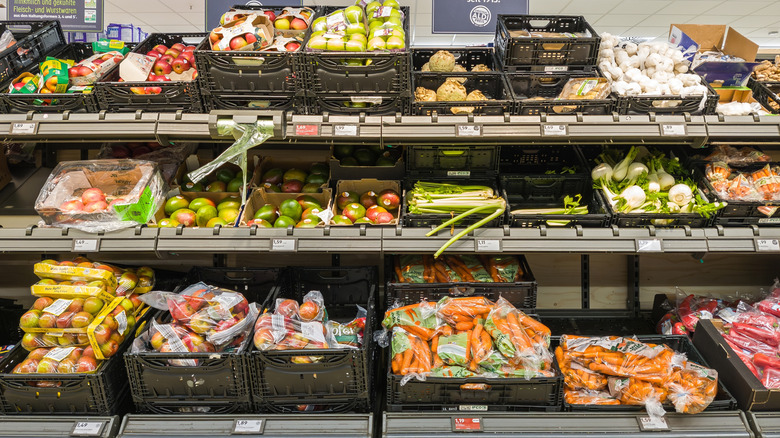
Shopping at Aldi offers many great perks, such as a simple, no-frills experience at affordable prices — just take a look at its low-cost seafood. However, the chain isn't perfect, and out of all the things that annoy its shoppers, its excessive use of plastic packaging is at the top of the list.
Eco-conscious shoppers have expressed frustration at the chain over its liberal use of plastic packaging. To make matters worse, eagle-eyed customers have noticed that in recent years, it appears to be using even more plastic packaging. "I am outraged that Aldi has made the switch to wrap more things in plastic," one Redditor noted. "Remember[,] just 10 years ago[,] when all fruit and all eggs came in containers made from cardboard pulp?" This is an interesting observation, considering that many supermarkets are facing intense pressure to reduce their plastic usage in favor of more sustainable packaging options.
While plastic packaging is far from the most environmentally friendly choice, there are several reasons why Aldi relies on it. On its UK website, Aldi acknowledges its detrimental environmental impact but claims that it serves a functional purpose of protecting delicate produce from damage, as well as extending its shelf-life. There is some truth to this, and plastic packaging may be a necessary evil to prevent food from oxidizing. However, research by WRAP suggests that packaging does not always extend the shelf life of fresh produce as much as people assume. Some shoppers also say that plastic adds a layer of hygiene by shielding foods from wandering hands in stores, though produce should always be washed at home regardless of how it's packaged.
Aldi has received a mixed reception on the sustainability front
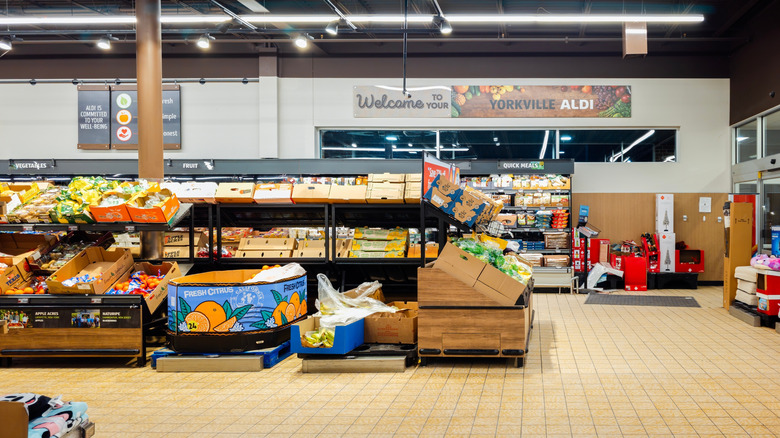
Many grocery stores have started taking steps to reduce plastic use. For example, Costco is working with suppliers to cut down on packaging and is exploring compostable alternatives. Large chains like Walmart have also set targets to reduce plastic use by 15%. In the face of criticism, Aldi has also pledged to reduce the environmental impact of its packaging.
On its website, the company said that by 2025, it aims for all packaging to be reusable, recyclable, or compostable, while also using less material overall and increasing the amount of recycled plastic used. However, right beneath these pledges, it also noted: "Affordability of innovative and sustainable materials, along with engagement and customers' access to curbside recycling and composting infrastructure, remain key barriers toward our packaging goals" (per Aldi). So these promises are by no means a guarantee, and progress remains unclear — but if we're going off this 2026 Reddit post, it looks like there's still plenty of work to be done.
However, it's not all gloom and doom, and beyond promises of change, there are tangible examples that the German grocer is actively trying to reduce its environmental footprint. For starters, its already swapped out plastic packaging for a paper-based alternative for its toothbrushes. On top of that, some U.K. Aldi locations are trialing removing plastic pulp trays and punnets from various fruits and vegetables, which it estimates could eliminate an annual total of 370 tons of plastic and packaging (per Aldi). Here's hoping the same measures can take place in the U.S.!