

The 'Blueberry Capital Of The World' Is Located In A Small American Town

Blueberries are versatile fruits that star beautifully in sweet treats, like muffins and smoothies, but pivot easily for savory applications like vinaigrettes, meat dishes, and even to make unexpectedly delicious pizza toppings. It's hard to imagine life without those juicy berries abundantly available in grocery stores, but if it weren't for the historical events centering around one area of New Jersey, that's exactly where the world might be.
While Washington is the U.S. state that grows the most blueberries, one small New Jersey town claims the title "Blueberry Capital of the World." With a population of just over 15,000, as of 2026, Hammonton, New Jersey, is by no means big. But one aspect of the community is huge: its blueberry production. In 2023, New Jersey produced more than 50 million pounds of blueberries, and 80% of the output — that year and every year — came from farms in the Hammonton area. Hammonton is blessed with the ideal soil, weather, and geographic attributes to produce the exquisitely plump and juicy berries the area has become famous for.
One can scarcely drive through Hammonton without seeing references to the town's favorite berry. From the city's welcome signs to its Blueberry Crossing shopping center, blueberries are everywhere. The city holds an annual "Red, White & Blueberry Festival," marking its 40th year in 2026, which welcomes thousands of visitors who flock to the small town to enjoy festivities like blueberry pie eating contests, a blueberry pancake breakfast hosted by the local Kiwanis Club, and to savor blueberry-laden goodies like blueberry lemonade, blueberry donuts, blueberry cinnamon rolls, and blueberry cannoli.
New Jersey was the birthplace of commercial blueberry cultivation
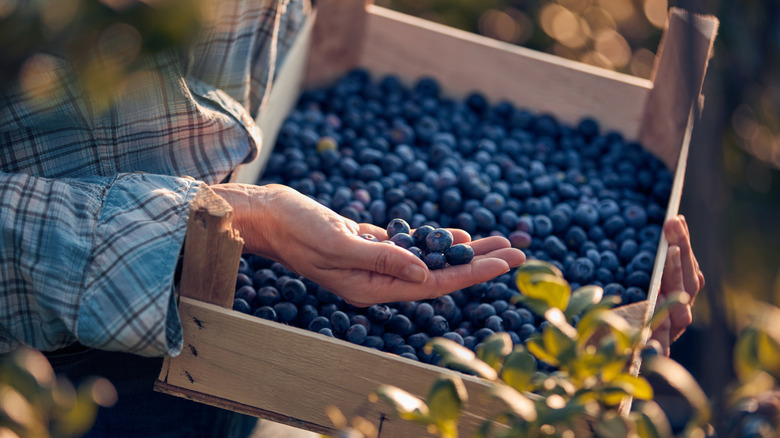
While New Jersey may not produce the most blueberries in the world or even in the country, the state — and specifically the Hammonton area within it — has a claim to the "World's Blueberry Capital" crown that no other place has. New Jersey is where the world's very first cultivated blueberries came into being.
Until the early 1900s, blueberries were only found growing in the wild — farm cultivation didn't exist at all. It was a New Jersey farmer named Elizabeth White and a USDA botanist named Frederick Coville who pioneered the commercial production of blueberries in the United States, succeeding where others had previously failed. White and Coville were each conducting their own independent research into wild blueberry cultivation. The two began corresponding, and Coville eventually joined White on her family farm, located near Hammonton, to work collaboratively on the project. The pair ultimately went into business together, and in 1916, they sold their first commercial blueberry crop. That farm, known today as Whitesbog Historic Farm and Village, has become a tourist destination and continues to be farmed by new generations of Elizabeth White's family.
The heritage of the blueberry farms in and around Hammonton certainly marks a true American growth story that has impacted the entire world. From those early beginnings on that New Jersey farm, blueberry production has exploded globally. Today, blueberry cultivation exists on every continent but Antarctica. While the wild blueberries that started it all are only minimally available in today's marketplace — and almost always in frozen form — their cultivated counterparts are found abundantly in grocery stores (check out these helpful tips if you want to pick out the best ones).