

Popcorn Was The Star Of This Peculiar Sandwich In The 1900s

We may receive a commission on purchases made from links.
Let's get one thing straight right off the bat: We here at Food Republic are not the arbiters of popcorn enjoyment. Like your kernels Chicago-style, with loads of caramel and cheese in every bite? More power to you. And far be it from us to ever besmirch the glory that is savory, Flavacol-coated movie theater popcorn, whether you enjoy it straight from the cinema or prefer it prepared on your own stovetop. Of course, all of those options are typically consumed as-is; they're coated in different toppings, but they are a snack (or meal) unto themselves.
Enter: the 1900s popcorn sandwich. Sounds fairly straightforward — but the reality is anything but. This isn't a sort of fairy bread or Hagelslag situation where you simply sprinkle your chosen ingredient (in this case, popped kernels instead of sprinkles) onto a buttered piece of bread and call it a day. Oh, no. This recipe, which hails from a 1909 cookbook by Eva Greene Fuller called "The Up-to-Date Sandwich Book," is an open-faced affair that incorporates two cups of popcorn, "five boned sardines," a smidge of salt and cayenne pepper, ketchup (enough to "form a paste"), and some Worcestershire sauce.
@sandwichesofhistory The Popcorn Sandwich (it's not even a sandwich!) #fyp #sandwichesofhistory #sandwichtok
The fun doesn't stop there, folks, because all of these ingredients? Yeah ... they get blended up (the O.G. recipe actually calls for both a meat chopper and a chopping bowl) into a savory spread, slathered on buttered bread, topped with a dusting of parm, and toasted to completion. Et voilà! Lunch is served.
Was the popcorn and sardine sandwich actually ahead of its time?
So, yeah, we'll level with you: This recipe sort of hangs out among the other old-school sandwiches no one eats anymore (at least, we haven't stumbled across it much, if at all, out in the wild). However, there are facets of the recipe that actually make a lot of sense and can be applied in more ... er, modern applications, so to speak.
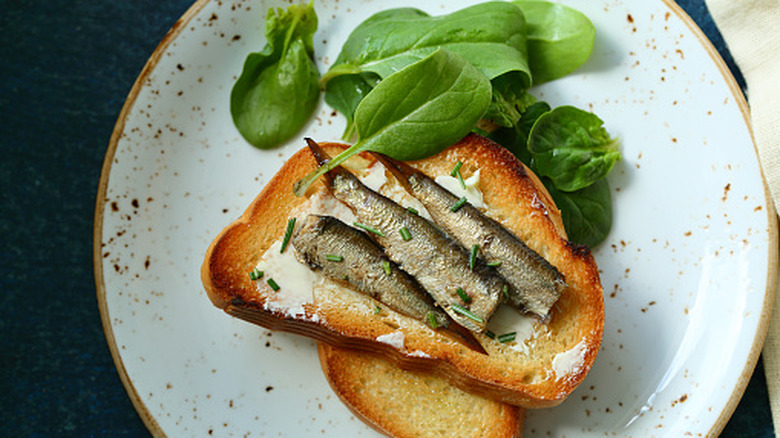
For instance, let's address the elephant in the room: the sardines. They might seem like a polarizing addition here, but the oily fish — especially when blended — becomes a savory base that pairs pretty dang well with the toasted nuttiness of the corn and the tang of the Worcestershire. If you're still scratching your head, think of it this way: More contemporary (albeit loose) interpretations include dishes like fancy tinned fish crostini or the French pan bagnat, which is essentially just a salade Niçoise served up in sammie form.
Then there's the texture. By running the popcorn through a meat chopper to create a fine meal, Eva Greene Fuller was essentially creating a gluten-free "breadcrumb" binder long before it was a dietary trend. It's not so different from how a modern chef might use toasted panko or a nut-based romesco sauce (which, it bears mentioning, actually goes great with smoky fish sandwiches) to add body and depth to a spread. See? Perhaps not so peculiar, after all.