

Don't Be Fooled: Here's How To Spot A Recipe That Was Written By AI
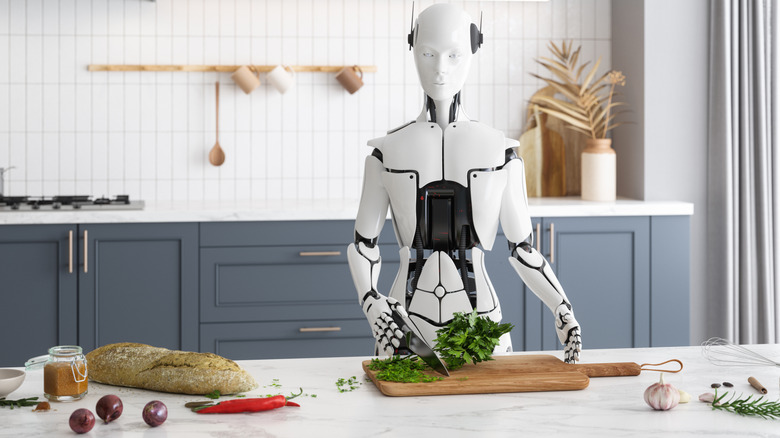
Artificial intelligence certainly has its place in the culinary landscape today. You have fancy AI ovens that can be controlled with your phone, and fast-food chains making use of the tech at their drive-thrus. But one place it really does not belong is in recipe creation. And let's face it: These days, it's virtually impossible to scroll Instagram, Facebook, or TikTok without coming across an AI-generated recipe that initially looks like it was lovingly crafted by a human creator. But here's the rub: If it wasn't, then you could be left adrift mid-cook while whoever used robots to quickly generate the recipe is making money off your clicks. Thankfully, Food Republic consulted with Marissa Stevens, founder and (real) recipe developer for Pinch and Swirl, and she had one crucial piece of advice for spotting these machine-made meals.
"The biggest sign I've noticed is vagueness in recipe directions that can lead a recipe to go very wrong," she told us. "Real recipe developers spot likely pitfalls because we have to avoid falling into them ourselves; we write to those moments so home cooks can avoid them." Examples, she said, include directions that might read, "Cook until done." While technically that is an instruction, you'll find yourself looking for more exact cook times or clear signs that the dish is done, none of which AI can provide (and all of which real recipe writers will include). A hallmark of a quality guide is the inclusion of step-by-step photos to remove the guesswork.
More signs a recipe is AI-generated
Marissa Stevens informed us that the vagueness can also spill over into quantities, too. She shared that you sometimes won't know it until you're actually mid-cook, but that single cup of store-bought broth the recipe calls for might not be enough. You might actually need more if it reduces too quickly, but AI has no idea of that because it has never stood over a hot stove and felt the steam from simmering liquid hit its face.
More experienced cooks can also recognize vagueness' sister symptom: bad timing. "Any recipe that tells you to caramelize onions in 10 minutes has never actually caramelized onions," Stevens said (it's a process that often takes 45 minutes at minimum for a well-rendered final product). But, she explained, AI averages all the timing from a variety of recipes on the internet and oftentimes spits out bad advice, not only undercooking but also overcooking to extremes, like suggesting you bake a light and airy Chantilly cake for four hours. Unfortunately, all of this means that home cooks end up wasting their time and, significantly, their money on dishes that have never actually been tested by any humans.
Analyze photos and comments to avoid AI recipe scams
Rather than get duped over and over again when an AI-generated recipe doesn't turn out, you can practice spotting these foul misdeeds on the fly before you buy the ingredients and set aside time to cook. If you come across a recipe you think might be AI-generated, do a little detective work.
"First and foremost, take a minute to validate the source," Marissa Stevens advised. She suggested poking around the website for a few minutes at least, specifically the "About" page, where you can verify if there's a real human behind the recipes. No personal introduction (with a photo or two) very likely means there is no one actually testing anything.
You might also check whether the recipe's author actually interacts with comments, both on the website and on social media, according to Stevens. People tend to have a lot of questions and concerns when it comes to cooking, and a real recipe creator will have responses addressing those issues. One major red flag to look out for is no comments section or a closed comments section.
Finally, AI photos are getting more and more difficult to discern, but it's not impossible if you know what to look for. First and foremost: AI photos are typically impossibly glossy and perfect, often missing the little flaws that real food has, like crumbs on a plate or grainy texture. Another major red flag is if the photo doesn't match the recipe, such as an ingredient appearing in the picture that the instructions don't mention.