

10 Essential Tips For Cooking Bacon In The Oven
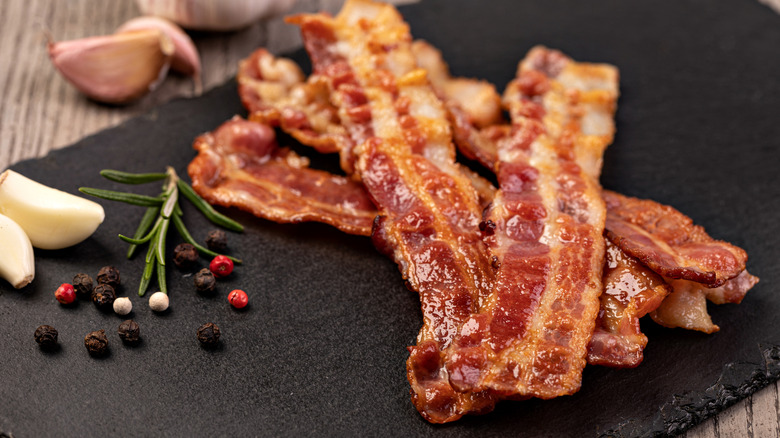
There's nothing quite like the distinctly savory smell of bacon. The salty pork product is an incredible combination of fat and protein that becomes chewy, crisp, and melt-in-your-mouth delicious when cooked low and slow. While many people reach for a cast-iron or nonstick pan when the need for bacon arises, baking strips is a mess-free way to avoid grease splatters. Plus, it lets you cook for a crowd in considerably less time than frying a few pieces per batch.
When running my small catering company, making bacon this way was a lifesaver. This method allows you to work on other parts of the meal as the meat cooked, and cleanup is much easier with no stovetop splatters. There's also the advantage of easily glazing the baking bacon, but we'll talk about that more later. If you've never tried using your oven to make bacon (and even if you have), these tips will help you get it right on the first try and beyond.
Start with a cold oven
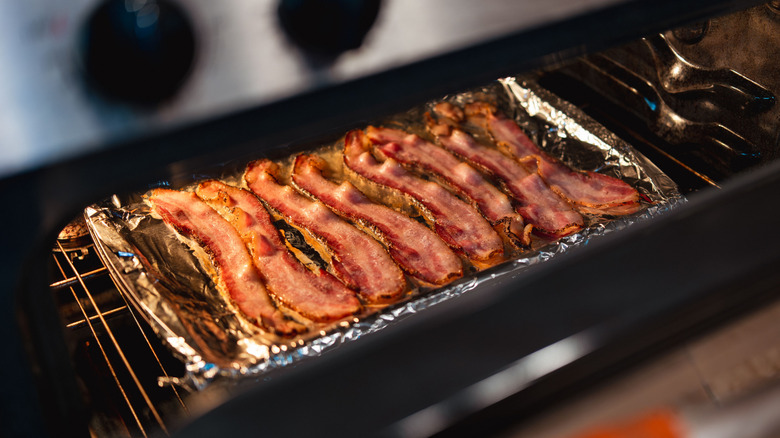
For as ubiquitous as bacon is in American households, few people realize how fussy the stuff can be. Bacon curls, shrinks, and chars much faster than other cuts of meat, partly due to the thin slices, but more because of its fat content. The fats are distributed unevenly through American-style bacon, hence the term "streaky bacon" in recipes from outside the U.S. That fat heats at a different rate than the protein does, making the edges of the bacon shrink and undulate as the protein begins to cook while the fat is still warming up.
That uneven heating is why throwing cold bacon into a hot oven will make the bacon curl. So, if you're looking for the right temperature for oven bacon, start with a cold appliance to allow the protein and fat to slowly heat up together to, ideally, 400 degrees Fahrenheit — although any temperature between 350 and 400 degrees Fahrenheit will work well. The usual 20-minute cooking time will increase the more you lower your temperature, so be sure to check your bacon often for doneness.
Be sure to line the pan
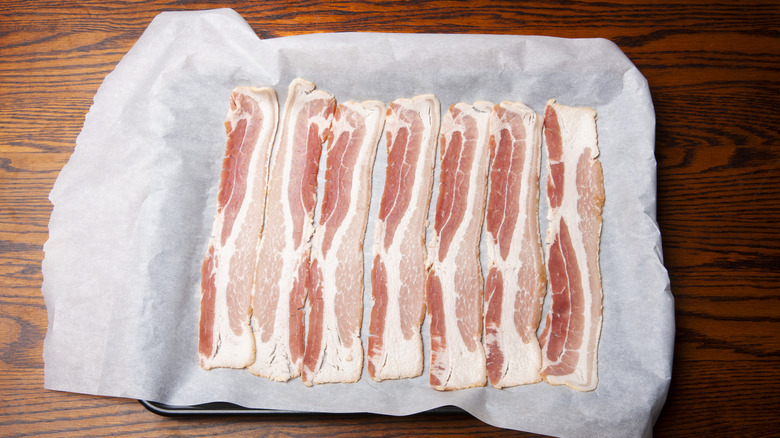
Lining the pan with foil or parchment paper will make cooking your bacon even easier. This method helps the meat not stick to the cookie sheet, and in the foil's case, contains the grease. Parchment paper helps cook the protein evenly, but the paper will let the grease run under it, which doesn't really help with clean up. Parchment paper is still better to use with thin slices of bacon, though, because the thinner the pieces, the more likely they are to stick. Parchment paper is nonstick, so that's no longer a problem.
The paper is also useful if you want to ensure the bacon stays flat for sandwiches or presentations. Line one pan with foil and layer the bacon onto it before placing a piece of parchment paper over the bacon. Place the second tray on top of the paper-covered pieces of meat and bake at 400 degrees Fahrenheit for around 20 minutes (or until done).
Never overcrowd the pan
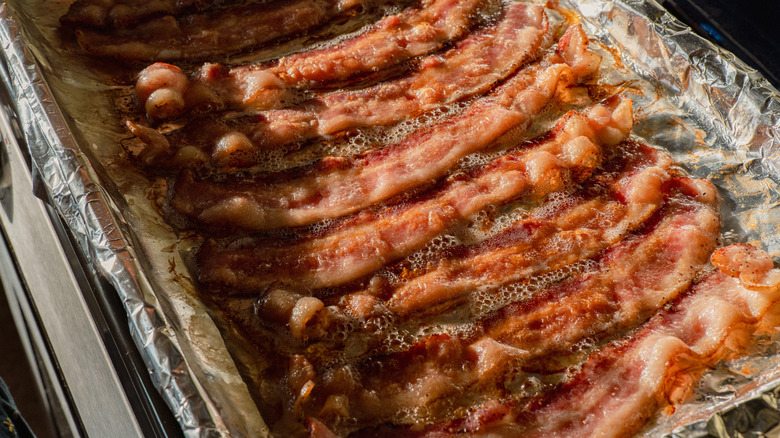
This one might sound obvious, but you'd be surprised how many people get impatient and think, "Well, what could it hurt to pack the pan?" The answer is everything.
Not only does overcrowding a pan make the food cook slowly and unevenly, but it also increases the risk of a grease fire. If you find yourself in that situation, baking soda can put out the flames if used quickly and carefully. However, turning off the heat and covering the pot with a metal lid works best to smother the fire. And besides, under the best of conditions, you'll have bacon that's cooked down one half, while the other side remains flabby and raw. It defeats the purpose of cooking the bacon this way.
Instead of overcrowding one baking sheet, it's better to either divide the batch over two lined cookie sheets or to prepare it in two batches (be sure to drain the oil if reusing the foil after it's cooled). It never hurts to keep frozen bacon on hand, either, in case you want to make two batches while you're baking. You can freeze it in strips, cubes, or bits for quick use in salads, sandwiches, and snacks like a spruced-up date-night popcorn. It's definitely worth finding a little freezer space for extra baked bacon, if such a thing can exist in your household.
Don't leave the bacon in the pan
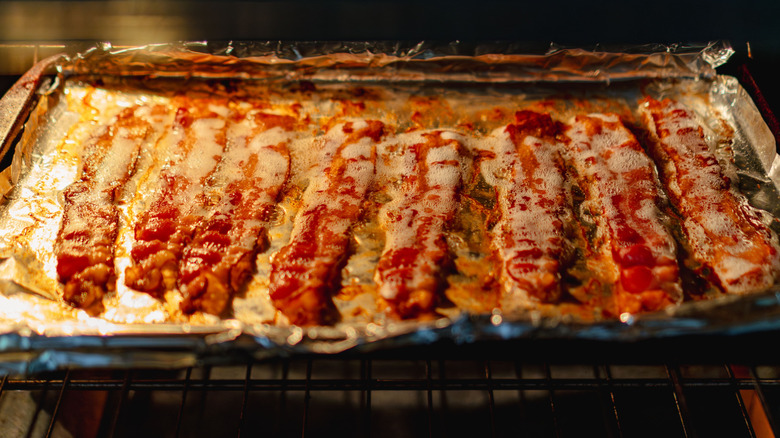
A kitchen is a busy place, so accidentally leaving something on a tray or in a pan too long will happen at some point. A good tip is to reset the oven timer for two minutes after you take the bacon out of the oven. If you're not able to take the sizzling strips off the baking sheet immediately, the two-minute timer will keep the meat from soaking up the hot fat, turning the beautifully crisp pieces of pork limp, soggy, and unappetizing.
The sooner you're able to remove the bacon to drain on paper towels or on a cooling rack, the more excess fat will drip off. You can even take a tip from the Barefoot Contessa, Ina Garten, herself, and bake bacon slices directly on a cooling rack. If you like, you can strain the bacon fat to remove any solids and save the grease to cook with later. Sautéing mushrooms or making traditional hoe cakes are just two delicious ways to use bacon fat in your recipes.
And if you're looking for ways to use leftover bacon after a brunch, try coarsely grinding frozen bacon bits with spices and sugar before using the mixture in a shortbread dough. The cookies can be savory if you add cheese and rosemary or sweet if you make them into thumbprint cookies with a spicy jam. Either way, it's a perfect way to treat yourself for being a great host.
Let the bacon lose the 'fridge chill'
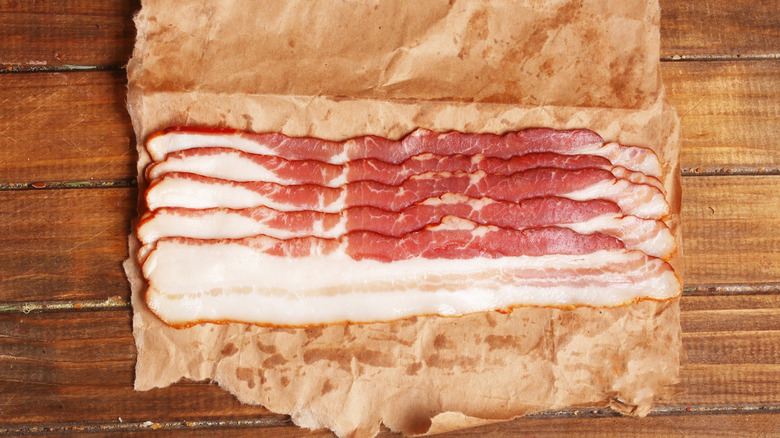
Listen, we're all guilty of this. It's very easy to roll out of bed on the weekend, start the coffee pot, and line a cookie sheet before lining it with still-cold bacon. But when bacon is taken straight from a cold refrigerator to a warming oven, the fat won't render as well as it could, leaving the strips curled and flabby. But if you allow the bacon to sit at room temperature for a few minutes before cooking, it lets the "fridge chill" fall away, helping the bacon to cook evenly and crisp up in the oven.
The difference a mere 10 minutes at room temperature can make in the bacon fat rendering out is stark. And the reason is simple. Cold fat and protein take longer to heat than room-temperature slices. The hotter the oven gets, the more chance there is that the fat and protein will seize up, making the strips curl and shrink. This is because fat and protein cook at different temperatures, with protein beginning to cook before fat warms enough to render out. Starting from a cold oven with bacon that's lost its fridge chill will create tasty pieces with a great crunch and meaty bite.
Stay low and slow while baking bacon
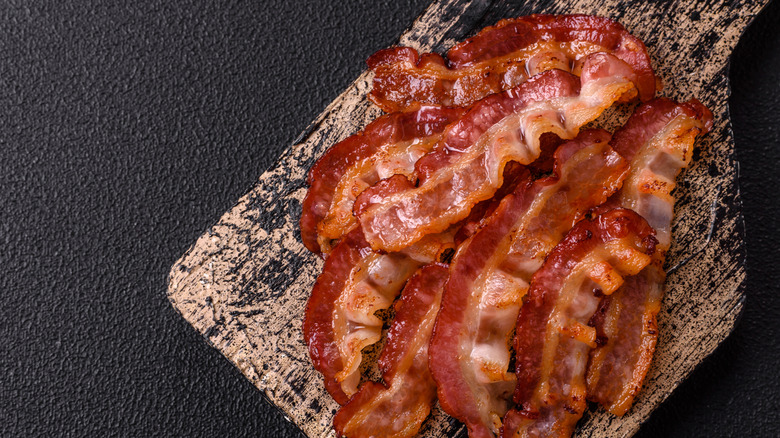
It might be tempting to crank up the oven's heat in an attempt to get more snap to your bacon, but the truth is that's just going to burn it. The strips are generally too thin to be cooked over 400 degrees Fahrenheit for very long without charring. And cooking it at too high a temperature also increases the risk of a grease fire. Luckily, roasting your bacon at low heat for a longer period allows more of the fat to render out anyway, leaving the remaining protein crisp and the remaining fat to be melt-on-the-tongue tender.
And yes, you read that correctly. Oven temperatures above 350 degrees Fahrenheit qualify as roasting the meat instead of just baking it. That's not a nitpicky thing. Roasting meat helps brown it, creating more flavor and texture through the Maillard effect, which helps meat develop a crispy crust through the loss of moisture on its outside surfaces. The higher oven temperatures speed up this process, and bacon has the perfect combination of fat and protein to roast quickly and evenly without drying out.
Rotate your pans halfway through
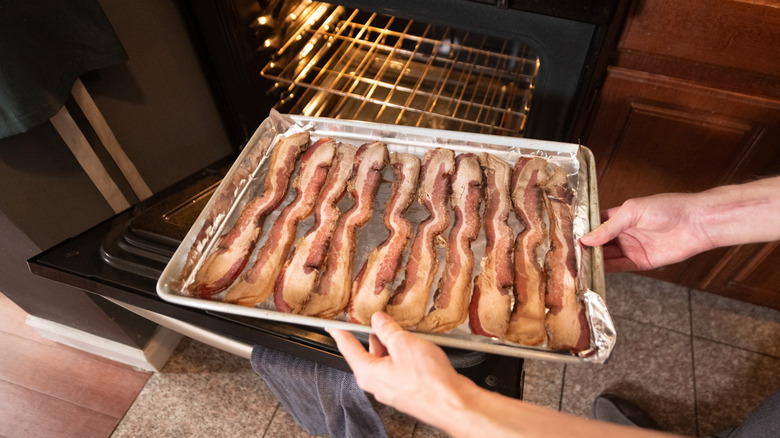
If you want your bacon to cook evenly in the oven, do not skip this step. It's often overlooked, but rotating your pans halfway through a baking session is important whether you're making brownies, cookies, or strips of bacon. It helps avoid any hot spots in the oven, with a bonus of allowing you to flip or move any thinner pieces before they can burn. To rotate your pans, turn each of them 180 degrees to make the back edge of the pan become the edge closest to the oven door. You should also move the top pan to the bottom rack and the bottom pan to the top rack if you're making a large batch. All this moving might seem excessive, but it makes for a better finished product.
If you aren't sure if your oven has hot spots, grab a piece of parchment paper and heat the oven to 450 degrees Fahrenheit. Line a baking sheet with the parchment paper and put it in the hot oven for 10 to 15 minutes. If there's a darker (or burned) spot on the paper, you know where the oven's hot spot is, and you can avoid it when possible. When it isn't, just rotate your pans and check on the meat often to be sure it isn't getting too brown.
Flip the bacon
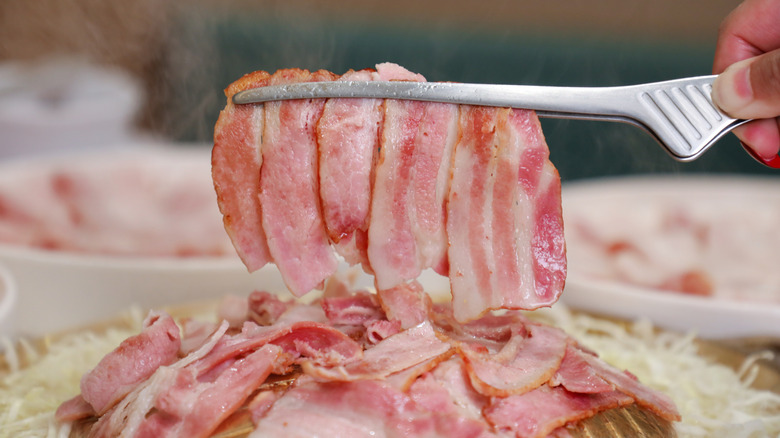
Flipping bacon slices might not seem necessary in the oven, but doing it helps the protein to cook evenly if you're baking it without a cooling rack. It also helps ensure the bacon doesn't get too brown in the oven by making sure you check it periodically. Thicker slices will also need flipping to ensure they cook and brown without steaming.
If you are using a cooling rack to roast the bacon, you can nudge the pieces around with tongs halfway through the bake time. That small movement will re-grease the rack and keep the bacon from sticking. If you'd rather take a more hands-off approach, using a second cookie sheet on top of parchment-covered bacon slices will help the meat crisp up while staying flat. No matter how you choose to do it, just be sure to drain the slices as soon as possible after removing them from the oven if you aren't using a cooling rack. That will keep your bacon crunchy without being too greasy.
Glaze your bacon
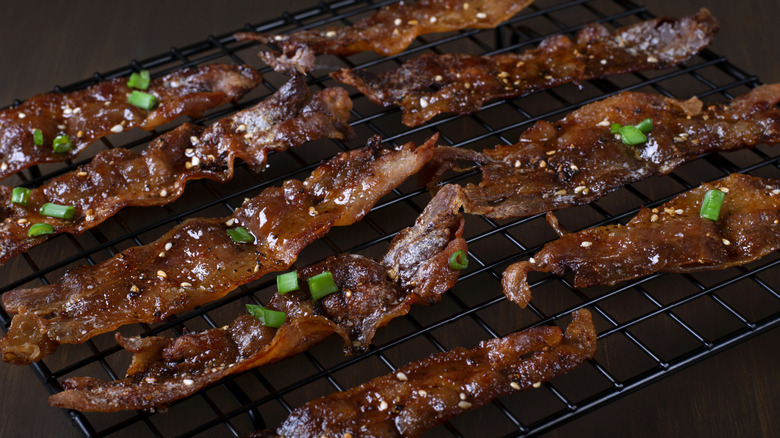
Okay, maybe it's not essentially essential, but it is our favorite tip for roasting bacon. Use a bit of maple syrup, honey, spices, and/or brown sugar to glaze your plain bacon and give your slices a wonderful burst of flavor and added crispiness. Specifically, Alton Brown prefers brown sugar to make crunchy bacon — and if it's good enough for Alton, it's good enough for the rest of us.
You can customize your glazes with almost any spices and herbs, provided you make sure they don't burn easily. Pepper bacon with brown sugar, espresso powder, and dark chili powder can add a smoky, spicy, sweetness to breakfast eggs or a Bloody Mary.
To glaze bacon in the oven, you should specifically use a metal cooling rack to roast the bacon on. This helps the fat drip off, along with any excess sugar. Keeping the bacon above the fat helps it cook more evenly and crisp better than leaving it in the pan. It also keeps the bacon from burning with any caramelizing sugar on the bottom of the baking sheet.
Carefully consider using a cooling rack
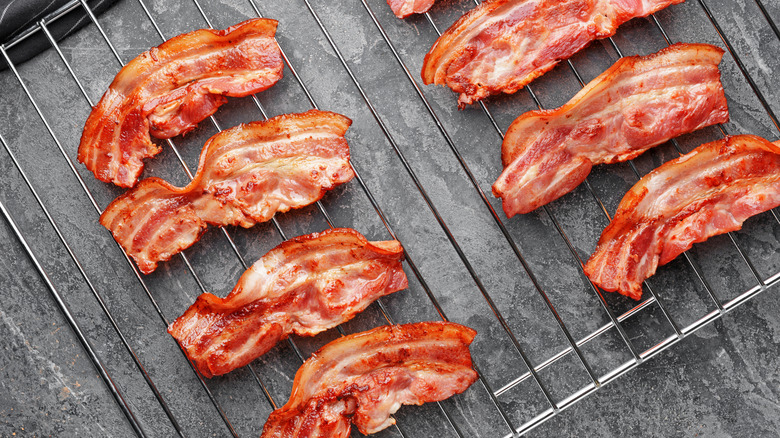
While some swear by cooling racks (even if they're not glazing their bacon), this tip remains controversial. Some people love the added crispiness and lack of fat around the bacon in the pan as a plus, while others don't think the cooling rack clean up is worth the hassle. You can have incredible bacon in the oven, either way, so this one really is up to you. Personally, I use a metal cooling rack for all my oven-roasted bacon because I appreciate the added crispiness from hot air circulating around each slice.
If you use a cooling rack, be sure it's oven safe. Most metal cooling racks will be, but be sure to check that the metal hasn't been treated with something such as a non-stick coating. Those coatings can chip and leave residue in the food. They also might not be rated for temperatures as high as a roasting oven, letting chemicals leach out into what should be delectable bacon.