

Never Put Expensive Meats In Your Slow Cooker. Here's Why
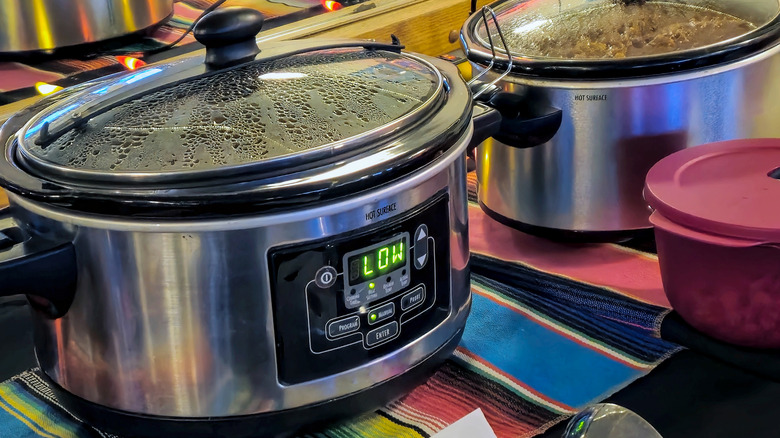
The slow cooker is one of the most convenient kitchen devices out there, but that doesn't mean that anything can go in it. While we love it for simple, three-ingredient pot roast or comforting chili, there are certain meats that you should avoid putting in, and those are usually the expensive ones. You might be wondering: How does the price of meat affect its cooking method? To find out, Food Republic spoke with Ashley Lonsdale, ButcherBox chef-in-residence.
For starters, we need to dig into what the slow cooker actually does, and why it works best with tougher cuts, which typically command lower price tags in the beef world. The kind of cut you'd use in a pot roast, for example: tough, dense connective tissue, which eventually breaks down into gelatin after long, low-and-slow cooking, making it fall-apart tender. "Expensive cuts of meat have much less connective tissue than other cuts, making them more tender and suitable for quick, high-heat cooking," Lonsdale explained. For the slow-cooker, the meat needs to be tough and hardy to survive.
Think ribeye or the more affordable Denver steak, which are both famous for their rich intramuscular marbling. While they tend to carry a higher price tag, these cuts are best cooked by searing over high-heat, creating a flavorful crust and juicy texture. When placed into a slow cooker and subjected to low-and-slow heat, all that fat will eventually melt out, leaving the meat dry rather than tender. The same applies to expensive steaks that sit at the opposite end of the spectrum, such as filet mignon, which is prized for its leanness. While this is great in most circumstances, in the slow cooker, it's almost guaranteed to come out bone-dry.
What cuts to use in the slow cooker
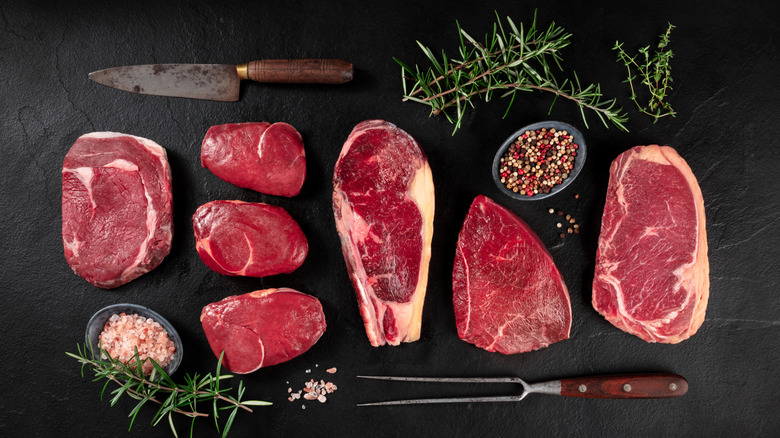
Don't get us wrong; some traditionally expensive cuts of beef can benefit from slow cooking. "A tenderloin or ribeye roast will do exceptionally well with long, very low heat — between 250 and 300 degrees Fahrenheit — if the internal temperature does not creep above medium-rare," Ashley Lonsdale explained. "Slow cooking is a great way to control the meat's internal temperature, achieving a rosy hue and a tender bite from edge to edge." However, the same can't be said for using the slow cooker, where constant moist heat and extended cooking times can easily push these naturally tender cuts past their ideal doneness.
As for the best cuts of steak to use in the slow cooker, look no further than a simple chuck roast. A chuck roast comes from the shoulder area of the cow, which is a hardworking section that gets plenty of movement during the animal's life, allowing it to develop heaps of connective tissue and collagen, making the meat naturally dense and firm when raw. When seared, it's a miss, but in a slow cooker, it transforms into a flavorful, tender, and shreddable beef. Another similarly tough and inexpensive cut to use is brisket, which comes from the chest, an equally hardworking area of the cow.
However, not all expensive cuts of beef are ill-suited for the slow cooker. Take veal shins, for example, which are traditionally a luxurious cut, particularly in Italian cooking. It also happens to be full of dense, connective tissue. In this case, the slow cooker is perfect for allowing it to reach its full tender potential. Think high-end dishes like a veal shin ragù, or braised veal shin with risotto Milanese.