

How To Pick The Best Slow Cooker Size For Your Kitchen
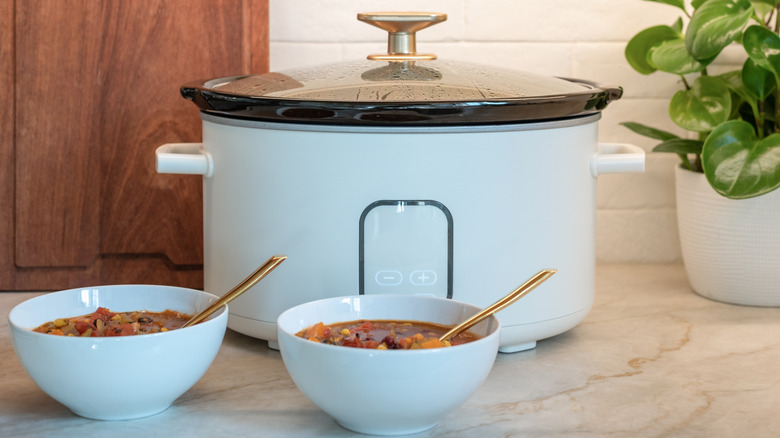
A good slow cooker offers a level of hands-off convenience and bulk cooking that few other appliances manage. However, Lynne Just, chef and consumer test kitchen manager at Hamilton Beach, says they aren't a one-size-fits-all tool.
"Consider how many people you will be cooking for most often when choosing the size of the slow cooker," says Just. "The crock size is the determining factor for what you cook." She says that 6- and 7-quart cookers are the most popular, but larger versions are gaining popularity, like Amazon's best-reviewed 8-quart model. However, if you're typically only cooking for two, a smaller 3.5-quart model might be easier to use and store. If you're just looking to make a dip or get a single-portion dinner going before work, a 1- or 2-quart option might even be best for your needs.
Just explains that a 6-quart model can serve more than seven people, reliably cooking a 6-pound chicken, 4-pound roasts, or producing enough barbecue for 25 sliders. A 7-quart option ups this a bit, holding a 7-pound chicken, 5-pound roast, and making 30 sliders. If you have a small household but like to host, these could still be solid choices. You can even craft a DIY foil divider to cook two dishes at once so you don't get tired of huge amounts of the same leftovers.
Size and capacity determine slow cooker performance
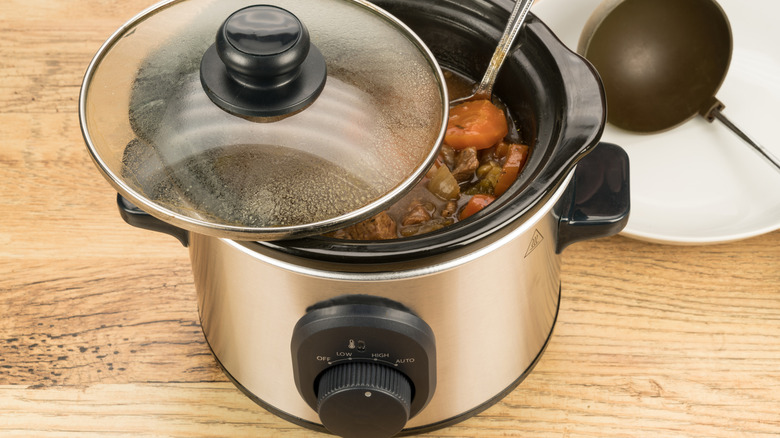
While slow cookers may seem magical, you have to observe a couple of requirements to help them work properly. While it may be tempting to buy a massive 8-quart slow cooker on the off chance you need to prepare a ton of food, improperly filling it may produce less-than-desirable results.
"For best results, the slow cooker crock should be at least half-full but no more than about three-quarters full," Lynne Just explains. Overfilling your slow cooker is one of the most common mistakes to avoid, especially with smaller models. Since they use such low heat, too many liquids and solids mean it'll take longer to reach a low simmer, leaving some ingredients perfectly done and others just warmed through. Just like how you should avoid slow cooker recipes that don't specify a meat's size and shape, you should also avoid any that don't recommend a particular appliance size.
On the other hand, underfilling your slow cooker puts you at risk of overcooking or even burning your food. The increased surface area from a larger appliance means your ingredients have more exposure to heat, so liquids boil off faster. For a roast, you risk burning the bottom and removing the liquid it needs to season and develop a tender texture. For something like soup, you'll end up with a far thicker liquid, and ingredients at the top of the pot may be less done than ones at the bottom, closer to the heat.