

Get Better Restaurant Service By Following This Simple Habit
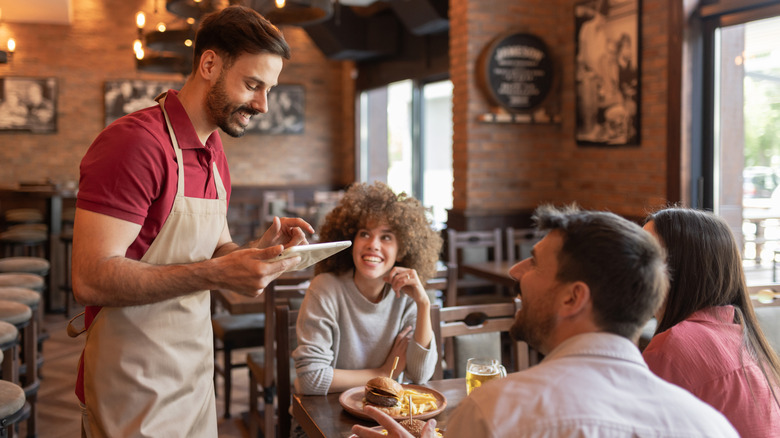
If you grew up in a "we have food at home" family, then chances are good you never really dined out until you had adult money of your own. As a consequence of that, proper treatment of waitstaff wasn't really modeled to you (let alone any of the little-known etiquette rules for fine dining), so now, even years later, the level of service you receive may suffer due to inadvertent bad manners when eating in a restaurant. However, according to Nikki Sawhney, a certified etiquette consultant and director of the New England School of Protocol, that is easy enough to improve: All you have to do is demonstrate basic politeness and consideration to the waitstaff.
Sawhney told Food Republic that the restaurant industry is a pressure-cooker environment where the relentless pace leaves very little room for error. "From a server's perspective, small gestures like awareness, respect, and courtesy make a large impact," she explained, adding that showing kindness and respect, especially when the restaurant is crowded, chaotic, and busy, helps make servers feel genuinely seen and appreciated, and can even reduce servers' stress levels all around. And while you should treat the waitstaff well because they are also humans, you, the diner, also benefit: "A happy server is more cheerful, attentive, and willing to go out of [their] way," Sawhney told us. For example, you can even send food back without offending your server if you're respectful from the get-go.
How to practice interacting with waitstaff
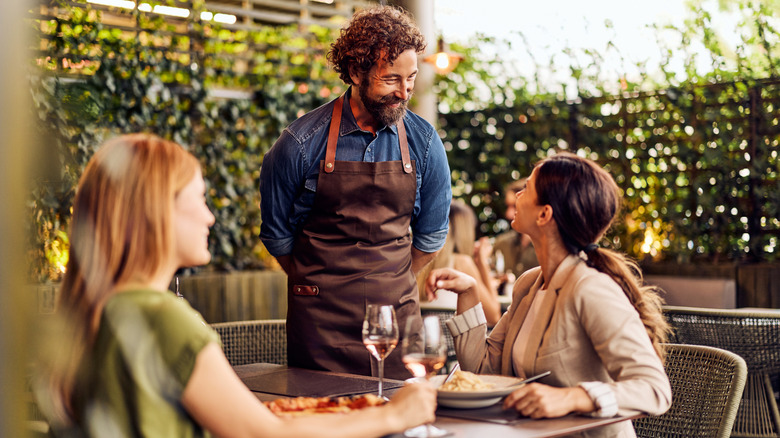
As easy as it might be to know, modifying how you treat waitstaff isn't as simple as it may sound in practice, especially if you're used to interacting with service workers in a more standoffish or stoic manner. But, Nikki Sawhney told us it helps to start when your waiter or waitress appears at your table by "acknowledging their presence with a smile or a nod" (though "a friendly hello" is likely best). Listen when your server tells you their name, because addressing them by it is another key to sharing a positive interaction (this might also mean you have to put down your phone when they are at your table). Another small action that can have a big impact is always saying "please" and "thank you" instead of outright demanding.
She had other suggestions for making your server feel as though you have considered them and their workload, like making one request instead of a dozen smaller ones (or if you have multiples, make them all at once instead of sending your waiter or waitress running back and forth). And when phrasing those requests, be sure to use a polite tone and words, and try to make at least some eye contact.
"As a patron[,] practice small habits mindfully, and over time they will come naturally," Sawhney advised. Doing so "can turn your dining experience from ordinary into an exceptional one," and it's far simpler than following some of the more bizarre rules of fine-dining etiquette.