
Neither Maine Nor Maryland Is Considered The 'Oyster Capital Of The East Coast'
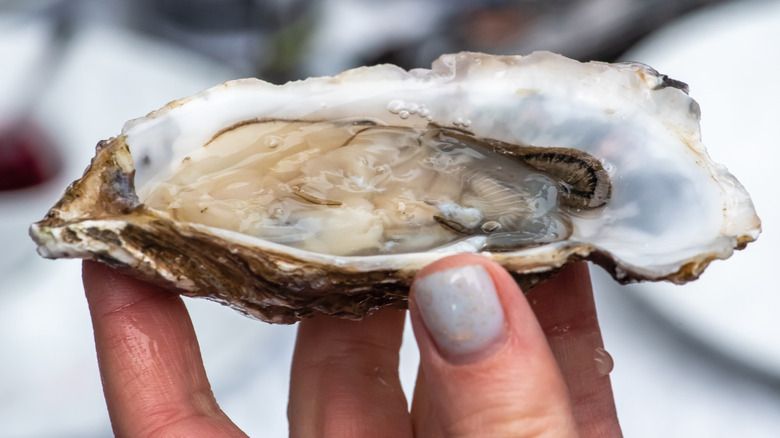
The East Coast reigns supreme when it comes to long-standing seafood traditions. Maine is celebrated for its world-famous lobster rolls, while Maryland is synonymous with steamed blue crab generously seasoned with the iconic Old Bay Seasoning. Yet while these seaside states boast thriving coastal food scenes, neither claims the crown when it comes to oysters. That distinction belongs to Virginia, widely regarded as the oyster capital of the East Coast.
The state is renowned for its oyster industry and is home to eight distinct oyster regions along the Chesapeake Bay and the Atlantic coast. For those less familiar with oysters, they take on the characteristics of the waters in which they grow; this reflection of their environment is known as the "merroir." Factors such as salinity, temperature, mineral content and tidal currents all influence their flavor and texture. As a result, oysters harvested from different regions can vary noticeably.
Virginia ranks first on the East Coast in oyster production, and according to Virginia Farm Bureau Insurance, the state has sold more than 40 million oysters each year since 2016. Beyond impressive production levels, oysters are deeply woven into Virginia's culinary identity. Several regional dishes have emerged over time, most notably the classic pairing of oysters with Virginia ham, in which the briny saltiness of the oysters meets the cured sweetness of the meat in a creamy sauce that highlights the state's land-and-sea traditions. In recognition of this heritage, the entire month of November is officially celebrated as Virginia Oyster Month, with many events taking place to honor the industry.
The ins and outs of Virginia oysters
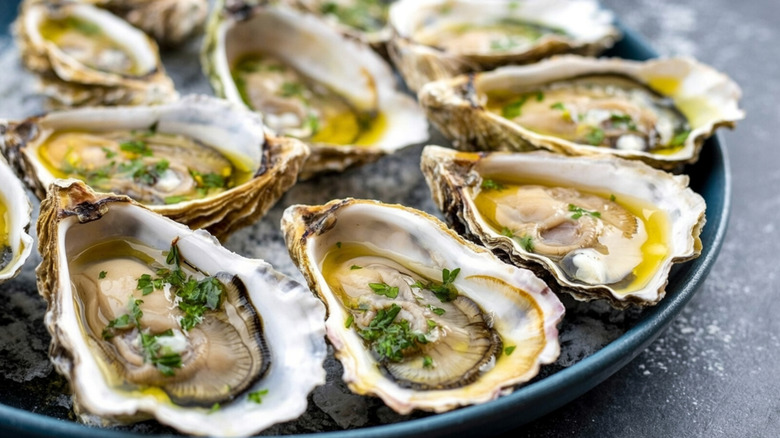
The Chesapeake Bay, the largest estuary in the United States, features a vast watershed that provides varied salinity levels. It is also relatively shallow, allowing rapid shifts in temperature and water quality. These dynamic conditions create eight distinct ecological zones where different oyster populations thrive: Seaside, Upper Bay Eastern Shore, Lower Bay Eastern Shore, Upper Bay Western Shore, Middle Bay Western Shore, Lower Bay Western Shore, Tidewater, and Tangier and the Middle Chesapeake Bay.
The saltiest Virginia oysters come from the Seaside region, the only region outside the bay, because of its proximity to the Atlantic Ocean. Famous examples of Seaside oysters include the Chincoteague, known for its intensely salty, briny profile. If you prefer your oysters sweeter, your best bet is to procure them from regions farther from the Atlantic coast, such as the Upper Bay Western Shore, which has much lower salinity levels. One of the most iconic examples of an oyster from these low-salinity regions is the Rappahannock River Oyster, known for its ultra-sweet, minerally flavor.
To farm oysters, growers start with young oysters that are placed into cages that either float or sit on the seafloor. After several months or years, the oysters are removed and harvested — and thanks to modern farming and food safety practices, they are safe to eat year-round, not just during the traditional "R" months. Historically, overfishing and pollution have taken a serious toll on the Chesapeake Bay. But because oysters are natural water filters, they are essentially nature's way of removing harmful pollutants. In recent years, this has made responsible oyster farming one of the bay's most environmentally regenerative industries.