

Why You Shouldn't Throw Fruit Scraps Out Of Your Car Window
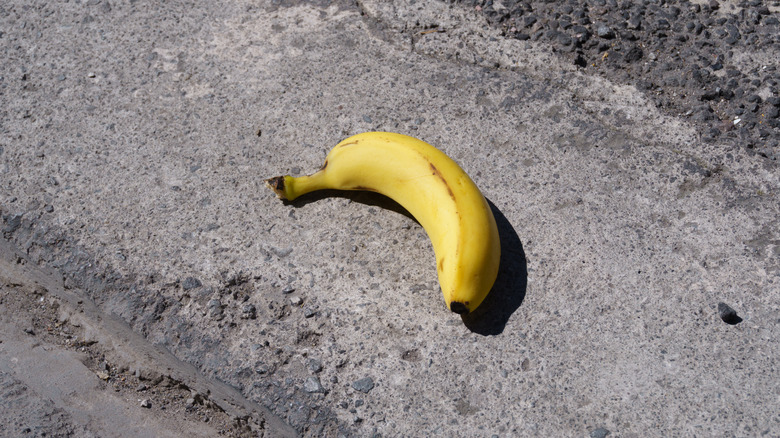
To most people, tossing garbage out of a car window is an obvious no-no. Yet the same instinct rarely applies to fruit scraps. The reasoning seems harmless enough: They're biodegradable, so they won't leave any lasting mark on the environment. However, that's only half the story. While fruit waste will eventually break down, it doesn't do so without consequences. Unlike plastic packaging, the damage may be less visible and long-term, but throwing organic scraps on the roadside can still cause a whole host of unexpected environmental problems to arise.
Unless you're Babe Ruth, that fruit you toss from your car window isn't going to travel very far. It will most likely land near the roadside, where it will inevitably draw wildlife dangerously close to the incoming traffic. This places both them and drivers at risk of collision. On top of that, certain leftovers, like discarded apple cores, can cause digestive issues for animals, including dogs, while the seeds themselves can pose a choking hazard.
And while we're at it, let's clear up the biodegradable myth. Yes, technically, all fruits will break down over time, but some take much longer than people assume. Soft fruits, like berries, decompose relatively quickly, but citrus peels and banana skins can take several months to fully rot. That means they don't just continue attracting wildlife, they also linger as an unsightly form of litter long after they've been tossed aside. To make things worse, their seeds also break down slowly, but they also increase the risk of invasive fruit plants growing in non-native areas.
Responsible ways to discard your fruit scraps
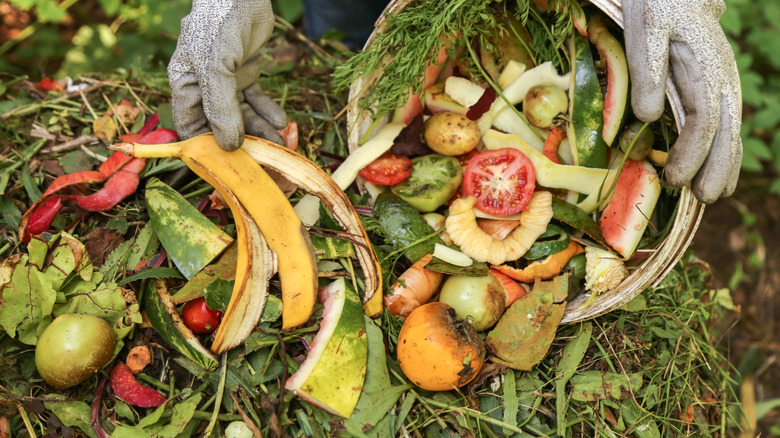
There are many food scraps that can be repurposed, and fruit fits comfortably into this category. One of our favorite ways to use leftovers is by adding them to the compost bin. While banana peels can be awful for the surrounding environment, in compost, they act as a natural fertilizer by adding potassium and phosphorus, two of the three key minerals for healthy plant growth. However, if you're using a worm compost, we recommend only adding citrus peels in moderation, as too much acidity can be harmful to the worms.
In the same vein as composting, another creative way to use fruit scraps is to turn them into mulch. You can chop the scraps into small pieces and spread or bury them around the soil in your garden beds, where they will break down and provide the soil with essential nutrients.
If gardening isn't your thing and you decide to throw your scraps into the garbage, it's likely that they'll end up in a landfill, where they decompose and release a significant amount of methane, a greenhouse gas. Fortunately, there are plenty of ways to dispose of your fruit scraps in an environmentally friendly way. For example, you could repurpose your apple scraps into a sweet, crispy treat. Or, many farmer's markets across the country offer food-scrap drop-off programs, turning waste into compost. This initiative is a win-win; you can head down to the market and enjoy the fresh, local produce, all while doing your bit to help the environment.