

What Is Woody Okra And How Do You Avoid It?
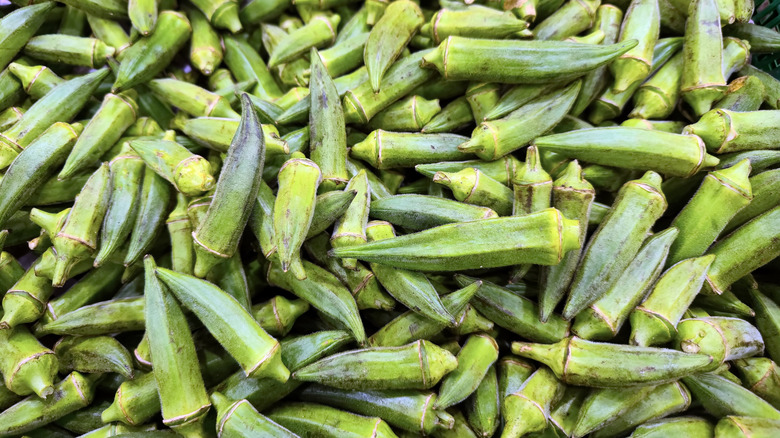
Whether you stew it, bake it, or fry it, okra is such a versatile vegetable thanks to its tender crunch. However, you may notice that some have an almost woody texture, snapping like old twigs. While common, this is an easy thing to identify in the grocery store and only requires you to give it a little bit of a squeeze.
Okra is such an underrated vegetable to grow because, once it flowers, it quickly becomes ready to harvest. However, that means it has a short window and quickly develops a fibrous, hard texture when its seeds mature. While you can sometimes avoid woody ones by sticking to those that are only a couple inches long, there are so many varieties that this isn't always the most reliable method. Instead, when you're at the store, give each pod a light squeeze. If you hear a "snap" or the ridges feel particularly prominent, it likely won't have the right texture.
Good okra should have a soft, almost bouncy texture to it and not break with a bit of light pressure. While this does mean it'll have the slime that some people dislike, you can always leave it out overnight with the tops and bottoms removed to dry it without ruining its texture. Woodiness may make them harder to work with and limit your preparation options, but you can sometimes revive them if they're not too far gone.
How to revive woody okra
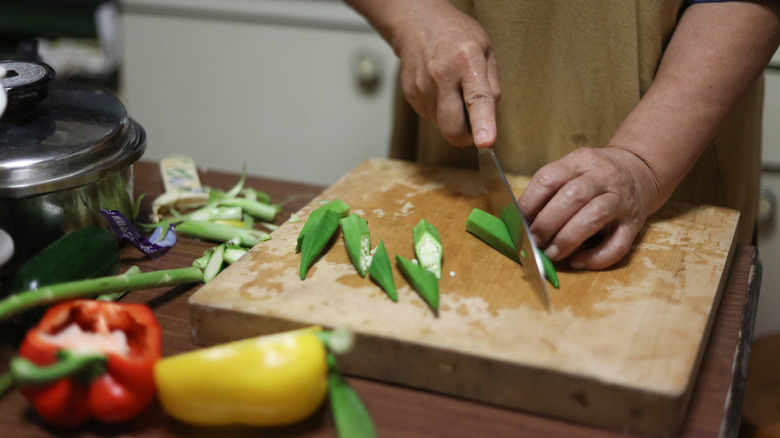
Unless your okra is especially large, sounds hollow, and is hard as a rock, you've got a good chance of using it in some fashion. While especially woody pods aren't salvageable, ones that just have a touch of firmness are fairly easy to bring back to tenderness with a bit of extra effort.
If the texture is just slightly off, producing a slight snap when squeezed and being only a little oversized, one minute in the microwave can bring it back to tenderness. Lay your okra on a plate and heat it until you hear a slight pop. This means that the vegetable's natural moisture has become steam, moistening the flesh before creating enough pressure that it bursts a seam. While the texture may not be quite perfect, you can further improve it by simmering it in soups or roasting it with a bit of fat from oil.
If your okra is too hard and fibrous for the microwave trick, pickling is an easy, affordable way to transform an unusable ingredient into something delicious. Brine is great at moisturizing dry vegetables, and by thinly slicing your pods, you maximize their surface area contact with it. You'll end up with something similar to dill pickle slices, perfect to use as a game-changing ingredient for coleslaw or as an especially Southern addition to a charcuterie board. In a worst-case scenario where there's no saving them, harvest the seeds and use them to add some texture to soups, stews, and dipping sauces.