

For Thriving Mustard Greens, Follow This Timing Rule
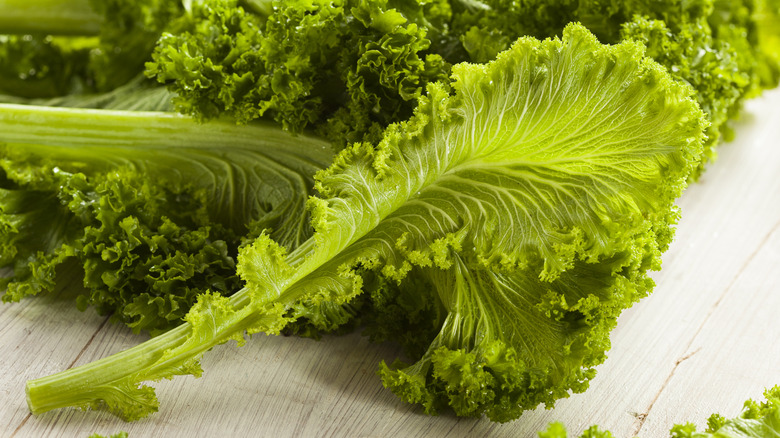
Gardening takes patience, whether you're a first-timer just starting out or a seasoned pro. You can't expect your herbs, veggies, fruit, or flowers to pop up mere days after you plant them; they need time to grow. Another thing gardens require? Good timing. You can't go planting your seeds willy-nilly, especially if you live in a climate that experiences four seasons. Case in point: According to Angelika Zaber, a lawn care specialist and gardening expert working for Online Turf who spoke to Food Republic, mustard greens should be planted in cool weather, not warm or hot.
Like many types of lettuce, mustard greens are easy to grow and quite prolific, but they do require some forethought before the seeds go into the ground. "Preferably three or four weeks before the last spring frost" is the best time to plant them, according to Zaber, as it ensures the seeds can germinate and start to sprout before warmer weather hits. Cooler weather, and as it turns out even a frost, can make the mustard green leaves sweeter.
Zaber told us that the reason you want to get them planted well before summer is because heat makes them bolt, or go to seed, which affects the taste and can make them bitter. She suggested that gardeners living in warmer climates, like Zones 8 through 11, can grow them as a winter crop instead and plant in early fall to help avoid premature bolting.
Proper timing and technique ensure delicious mustard greens
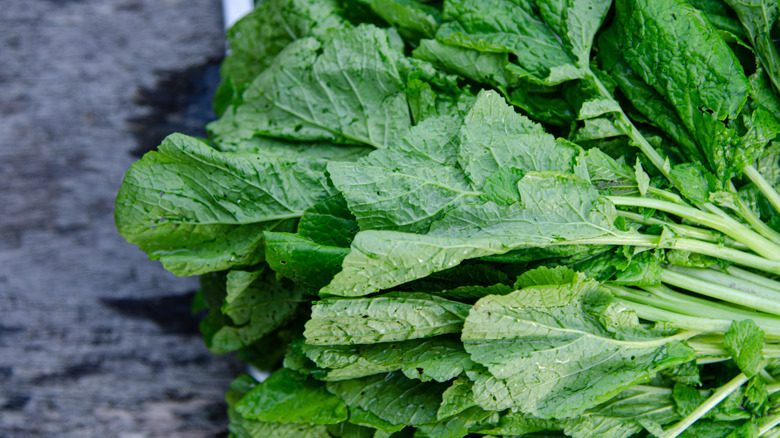
Mustard greens are such a rewarding (and unfussy) vegetable to grow because they go from seed to harvestable leaves in less than two months. However, you've got to be ready to pick them, according to our expert Angelika Zaber. "Leaving them in the ground for too long can negatively affect their taste, causing them to turn bitter," she explained. Taste isn't the only thing affected; the leaves also become tough and woody. This texture change prevents them from wilting properly in dishes like tofu curry with mustard greens or blending seamlessly into a quick ginger and garlic stir-fry.
To avoid this fate, Zaber suggested picking them once the plant is 3 to 4 inches tall for young leaves and 6 to 8 inches for more mature ones. She was also quick to remind us to pick them in the morning, when the leaves are still full of water. Leafy vegetables like collard and mustard greens are cut-and-come-again, meaning you can harvest individual leaves from around the plant and, provided you leave the stem, they'll regenerate again and again. Zaber advised not cutting more than a third of each plant at once.