

You Can Skip This Step When Making Bacon In Your Oven
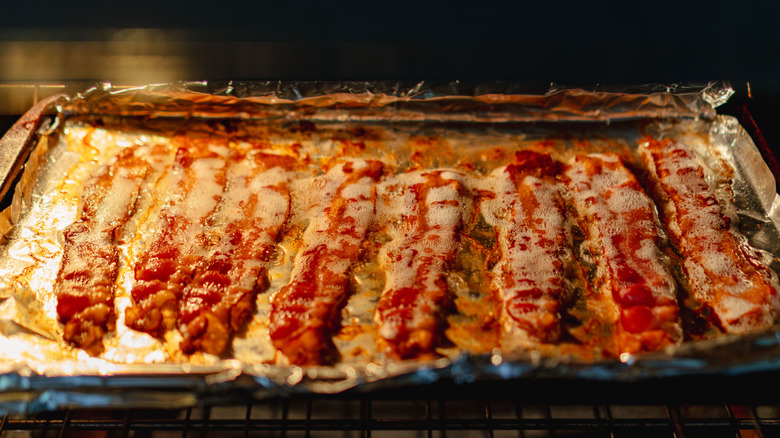
There are many ways to cook bacon, and aside from pan-frying, oven-baking is one of the most popular methods for achieving perfectly crispy strips. However, one step typically used in oven cooking is best skipped when making bacon, and that's preheating. While this may go against all-conventional wisdom, Food Republic spoke with Ashley Lonsdale, chef-in-residence at ButcherBox, who explained why starting with a cold oven actually delivers better results.
"Starting with a cold oven gives the bacon fat time to slowly increase in temperature," Lonsdale explained. "This gradual change renders the fat, which produces crispy, evenly cooked slices." Bacon fat is stored primarily in the white streaks running through the meat, and it cooks faster. When it's not given enough time to render, the shrinking fat will shrink much faster than the lean meat, causing it to contract and curl. The same principle also applies to pan-frying bacon, and instead of starting with a hot pan, placing the strips in a cold skillet and bringing the heat up gradually produces better rendering, more even browning, and allows the bacon to be basted in its own smoky flavors.
"If you want to go a step further, for the crispiest bacon, cook it on a wire rack set inside a sheet tray," Lonsdale added. This allows even circulation of air, and the rendered fat will collect in the tray, so you can strain it through a fine-mesh sieve for later use. Once cooked, allow the bacon to rest briefly on a paper towel to absorb excess grease.
What is the best method for cooking bacon?
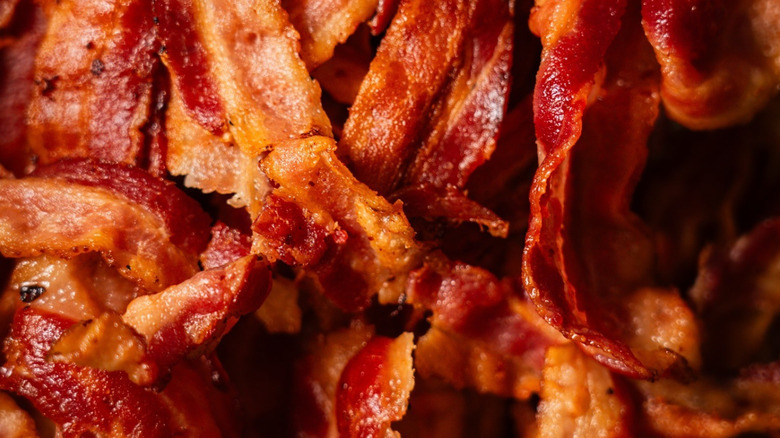
The decision to pan-fry or oven-bake your bacon comes with its own set of pros and cons, but whether you're cooking your bacon from cold or preheated, there are several factors pointing to the oven being the superior choice. "Oven bacon cooks significantly more evenly than the stovetop, since the heat is circulating from all sides instead of just from a flame below," noted Ashley Lonsdale. This ensures a uniform finish on each strip, and the excess space makes it ideal for cooking up large, family-style batches.
Pan-frying is undoubtedly the more time-efficient option, and unfortunately, skipping preheating won't actually reduce the overall cooking time for oven-baked bacon. The oven still needs to reach the target temperature before it can cook evenly. However, opting for the oven can save you a whole lot of time on cleanup. When pan-fried, the water content in the bacon turns to steam, causing it to splatter on the surrounding areas — even you. This can cause stubborn grease stains to build up, which are notoriously tricky (but not impossible) to clean. Baking your bacon avoids this entirely; just be sure to place it on greaseproof paper or aluminium foil, so the rendered fat doesn't stick to your sheet pan.
If you want the perfect balance between stovetop and oven cooking, the air fryer is a great pick. It delivers the speed of pan-frying while using circulating hot air to crisp bacon evenly with minimal mess. Though the cooking space is smaller, the dry environment helps to produce the crispiest, most convenient results.