

How Cayenne Pepper Helps Keep Unwanted Guests Out Of Your Garden
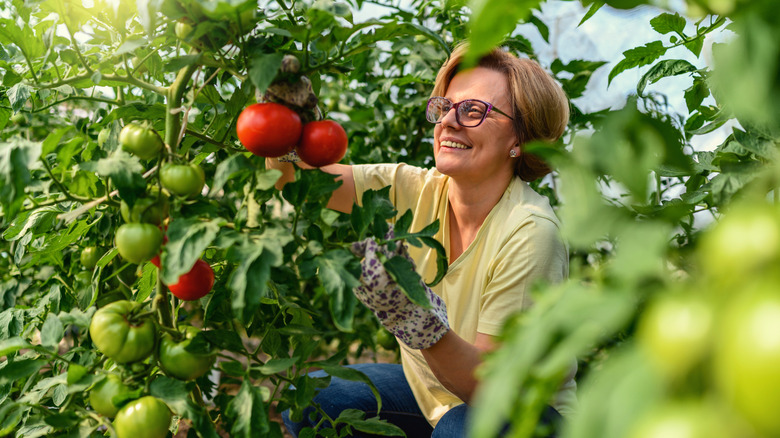
Having a home garden can be a game-changer for anyone who loves cooking with the freshest ingredients possible. But the biggest obstacle between you and your harvest is pests, who are just as eager to enjoy your fruits and veggies. Luckily, there's a simple pantry staple that can help keep them away: cayenne pepper. To learn how this spicy ingredient can protect your crops, Food Republic spoke with Angelika Zaber, a lawn care specialist and gardening expert at Online Turf.
According to Zaber, cayenne pepper works as a pest deterrent because of two natural qualities: its smell and its heat. Its spiciness comes from capsaicin, the same compound found in all fiery chile peppers, and on the Scoville Heat Unit (SHU) scale, cayenne typically falls between 30,000 and 50,000 SHU, which fits it firmly in the hot range.
While garden pests nibbling at your crops can be frustrating, it's worth remembering that we're sharing the space with them and, in many ways, it's more their territory than ours. That's why cayenne pepper stands out as a helpful solution: It acts as a nonlethal deterrent. "While it does not hurt the animals, it is known to cause discomfort when inhaled or eaten, causing them to avoid the treated areas," Zaber explained. While any type of pepper is viable, the ultrahot varieties may cause unnecessary pain — if you'd think twice before eating it, just imagine what it would do to a small animal!
How to use cayenne pepper to protect your garden
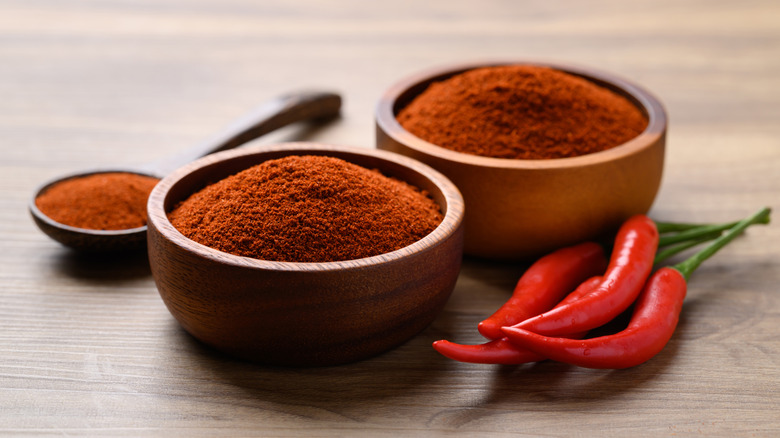
When pests have been snacking on the vegetables in your garden, there are usually a few telltale signs to look out for. Larger ones, such as rabbits, often leave behind visibly chewed leaves or partially eaten produce. Smaller pests, including insects and slugs, tend to cause more subtle damage, like tiny holes in leaves or discoloration that slowly spreads across the plant. Spotting these clues early can help you figure out what you're dealing with and take action before the damage gets worse.
"The most effective and simple way to use it is to simply sprinkle cayenne pepper around the areas that have been affected by the animals you are trying to deter," Angelika Zaber told us. "Make sure not to apply it directly onto plants, especially edible ones, as it can affect their taste later on." While cayenne generally won't have much impact on hardy, established crops, you should avoid applying it in sunny weather, as heat and direct sunlight can potentially cause leaf scorch. The best way to use it is to dilute it with water and apply it using a spray bottle.
Zaber also noted that the effectiveness of cayenne pepper can last for up to a week, so it requires regular reapplication to keep pests at bay. "In case of heavy rain, this may be reduced to just a few days," she added.