

What Kitchens Actually Looked Like In The 1950s
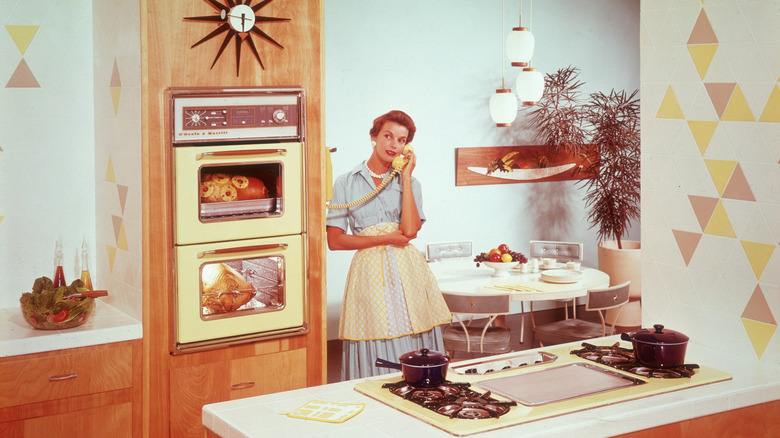
A lot of nostalgia-inspired design practices have made their way back into modern kitchens. An old-school lighting trend has vintage glass fixtures — or new pieces created to look like them — brightening culinary spaces once again. Various retro kitchen items have also made a trendy return, and brass fixtures from the Victorian Era are a vintage kitchen decor trend that's coming back around, too.
Much of this trend comes with modern upgrades, though — while it's patterned after the designs of yesteryear, it's not exactly the same. For instance, furniture makers are selling midcentury-style pieces that have that old-school look, but with modern features like built-in charging stations for electronics. Laminate countertops, popular in the past, have also made a resurgence. They're much more durable now, though, and have the added upgrade of digital printing technology to mimic virtually any material or create any pattern a homeowner can dream up.
If today's vintage designs are more style-reflective than authentic, then it begs the question: What did retro kitchens really look like? What elements would one have found, for instance, in a 1950s-era culinary space? Food Republic has taken a deep dive into the design trends of the '50s and the types of environments folks ate and cooked in from yesterday.
Pink kitchens were all the rage
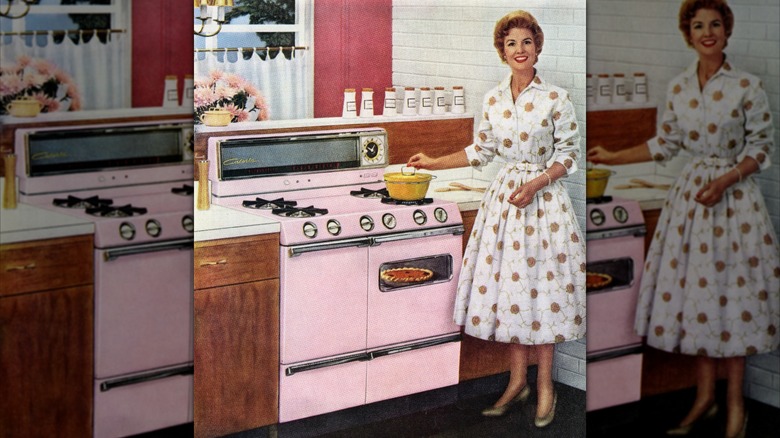
Breaking from the sterile white kitchens of previous decades, homeowners in the 1950s embraced colorful appliances and decor. The first colored appliances debuted from General Electric in 1954, with other companies following suit, and pink kitchen designs and machinery became especially in vogue. First Lady Mamie Eisenhower was hugely influential in this pink movement, decorating the First Family's living area of the White House in rosy hues and influencing housewives the country over to think pink, too.
Knotty pine cabinets were everywhere
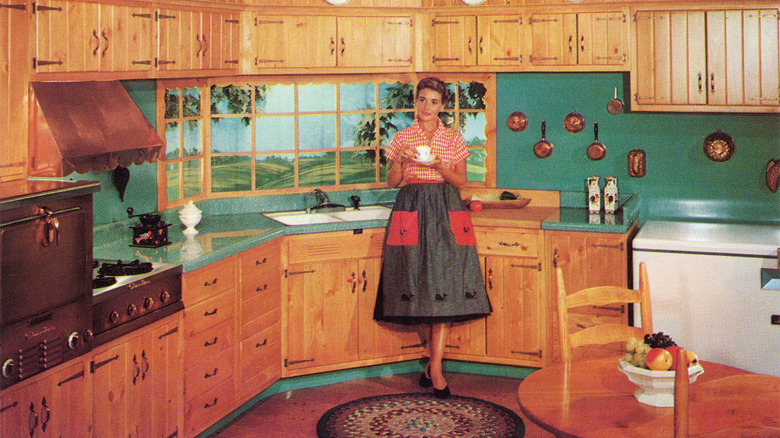
Wood paneling was popular in 1950s homes, and pine cabinets (especially knotty pine) were abundantly found in kitchens of the day, most commonly finished in orange and reddish tones. The rustic aesthetic created by these warm-hued wood cabinets was particularly sought after, and pine was inexpensive and abundant, making it a popular choice.
Laminate counters across the land
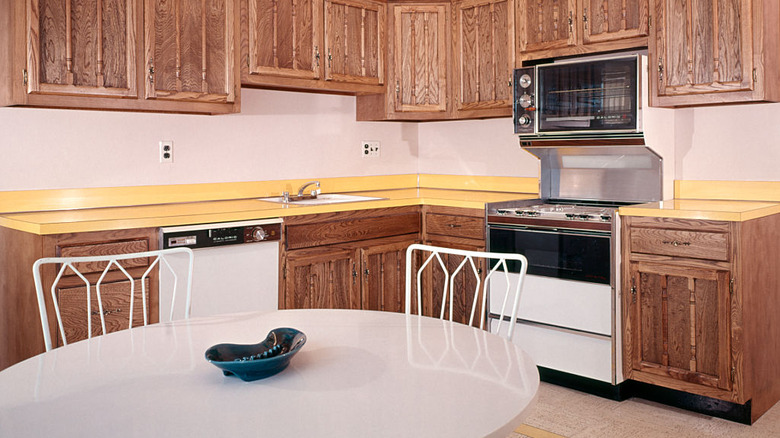
Laminate surfaces were another hugely popular kitchen and dining feature in the 1950s, with laminate countertops and dining sets found in homes from coast to coast. Formica became the standout laminate countertop brand and a generic word for the product in general, and the Space Age-esque Skylark pattern (renamed Boomerang decades later) became the most popular style.
Brightly hued cabinets
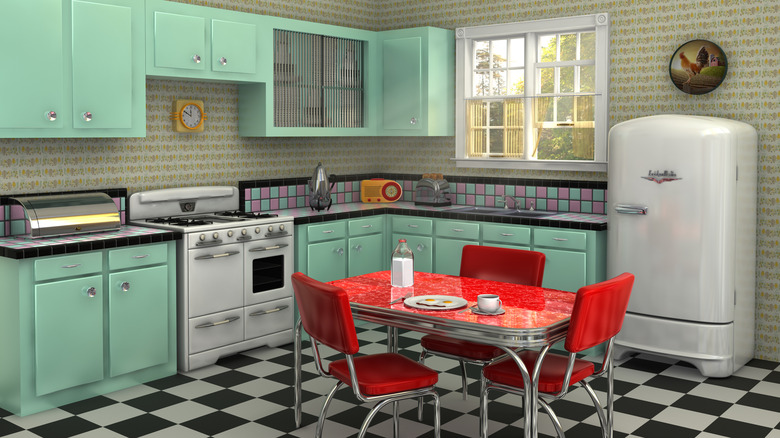
Laminate also made its way to kitchen cabinet doors in the 1950s, and metal cabinets were another popular feature, both lending the sleek, shiny aesthetic that was highly sought after. Cabinets could be found in cheerful hues like mint green, pink, blue, and bright yellow.
Checkered patterns covered kitchen floors
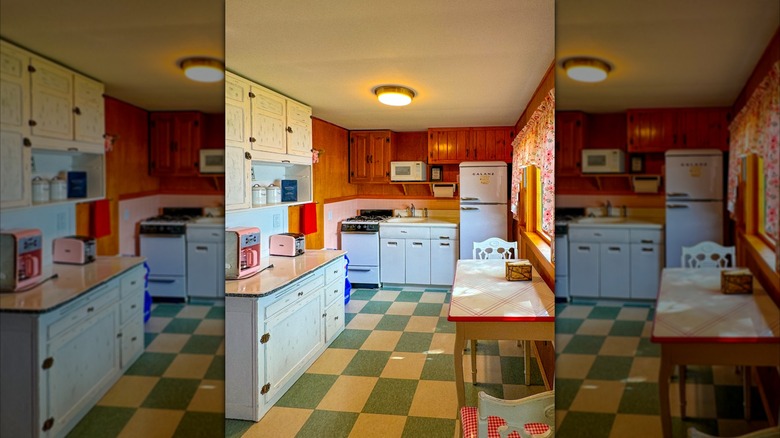
Checkerboard floors were another common feature in the 1950s-era kitchen, fitting the trend of using clean lines and merging playful style with practical function. Black-and-white checkered flooring was a staple in 1950s diners, and American homes took the look further by also regularly bringing color into play.
Wrapped up in wallpaper
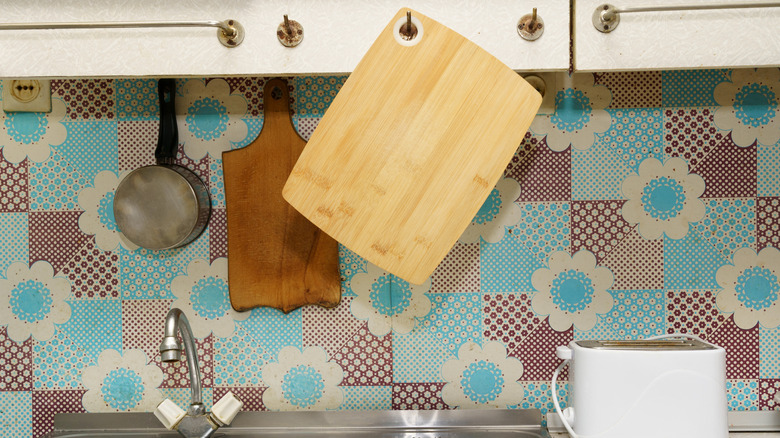
Wallpaper was also popular, and it wasn't uncommon to see multiple textures and patterns in the same room. Popular designs included florals and abstract geometric patterns — in very vivid colors, of course.
Colorful, curvaceous appliances
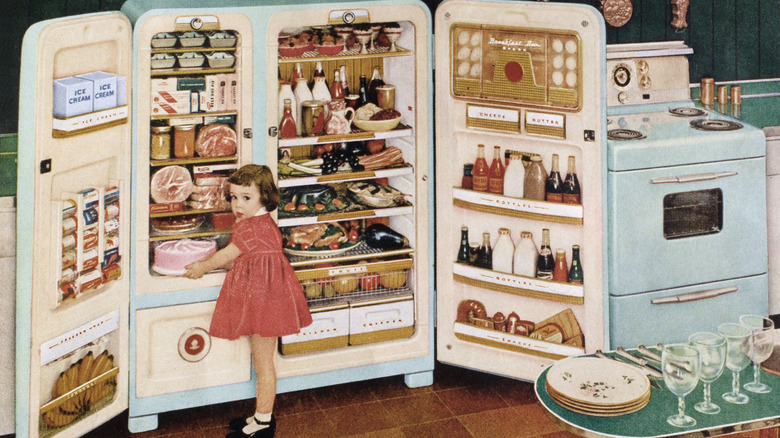
Kitchen appliances of the 1950s, like refrigerators and stoves, were curvy and rounded, and often found in colors that matched the cupboards and walls. Side-by-side and bottom-freezer refrigerator models debuted in the late 1940s and began appearing in popular colors in the '50s — including some mammoth machines like the Kelvinator Fabulous Foodarama, a model that proves mid-century fridges were smarter than those of today.
Gadgets galore
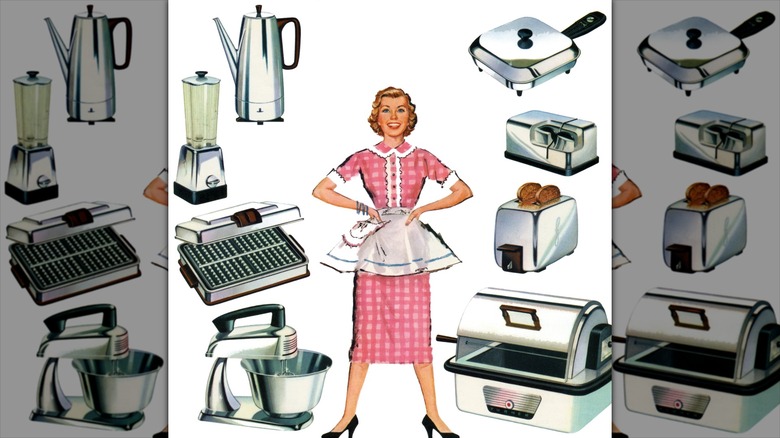
A 1950s kitchen was often bursting with gadgets, as new, time-saving devices were abundant during post-World War II prosperity. Small appliances like electric frying pans, garbage incinerators, handheld mixers, countertop dishwashers, and electric tea kettles were all high-tech gizmos of the age.
Cheerfully patterned fabrics
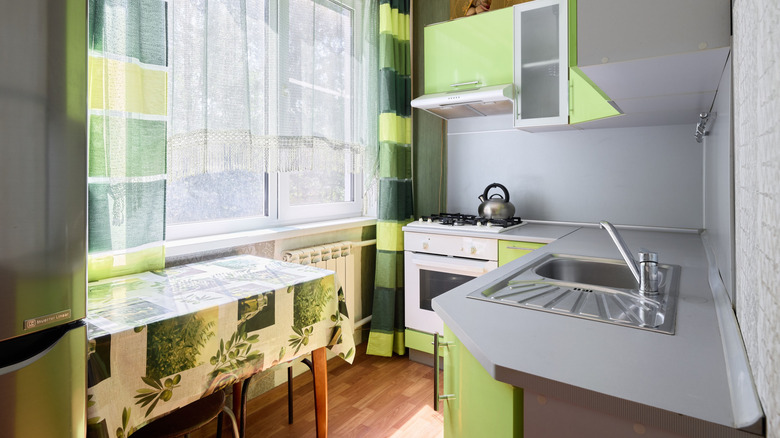
When it came to the fabrics, things like tablecloths and curtains were likely to have ruffles as well as cheerful, homey patterns, like polka dots, novelty prints, and florals. Drapes, called cafe curtains, which covered only the bottom portion of a kitchen window, became popular, as did valances made in matching fabrics.
Open floor plans
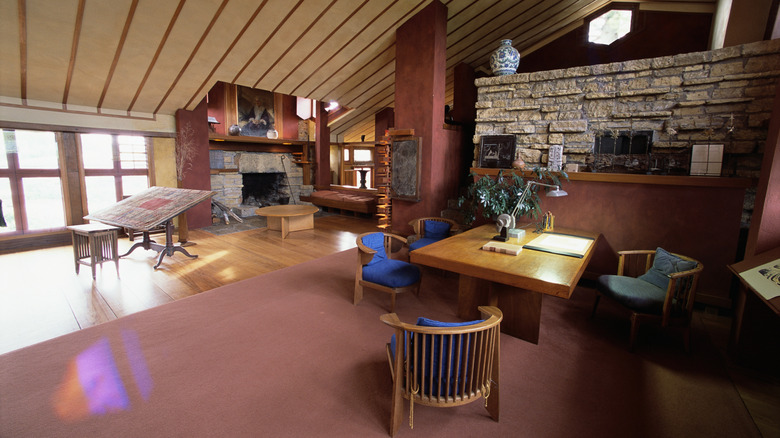
The 1950s saw the innovation of open floor plans, which connected closed-off kitchens with other areas of the home, making it the hub of the house instead of a separate space. Famed architect Frank Lloyd Wright was a pioneer of this, which often included fireplaces that were open on all sides.