

Why You Can't Go To The First-Ever Starbucks Location
When Starbucks first hit the scene, it revolutionized the coffee experience by offering a cozy, relaxed space away from home or work. Today, the brand is just as well known for its ever-growing list of innovative drinks, quirky drink sizes, and collectible merchandise. And while the iconic mermaid logo can now be spotted all over the world, anyone hoping to visit the very first Starbucks location may be disappointed to learn that it no longer exists.
The first Starbucks opened on March 30, 1971, at 2000 Western Avenue in Seattle, Washington. The early version of the brand looked very different from the Starbucks we know today and didn't even serve brewed coffee. Instead, it sold artisan whole-bean coffee, along with a curated selection of teas and spices. Although the shop was popular, the building was scheduled for demolition in 1976.
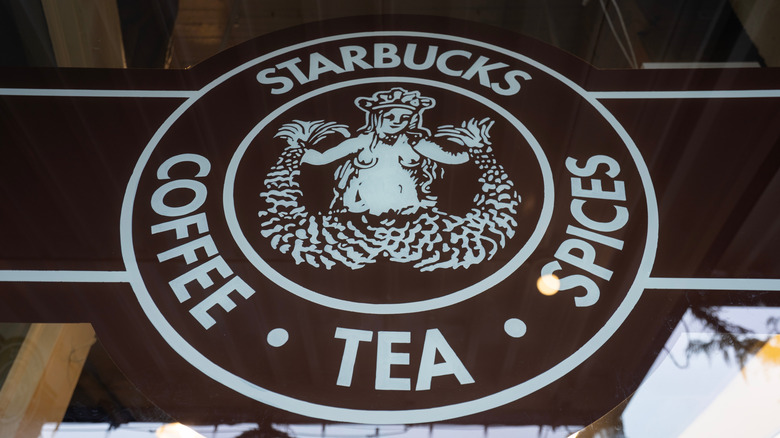
After the original location was torn down, Starbucks relocated nearby to 1912 Pike Place. For devoted fans hoping to connect with the brand's roots, this location is the closest alternative and often claims the title of the first Starbucks location. While it is not the original storefront, it does feature the original brown logo and offers a grab-and-go system with no seating, staying true to the brand's early days. Many coffee lovers treat it as a pilgrimage destination, so expect long lines.
Starbucks has redefined coffee culture through decades of expansion
Today, Starbucks has more than 40,000 stores worldwide. That scale makes it not only the largest coffee brand, but one of the biggest retail chains of any kind. Operating in more than 80 countries, the Starbucks we know and love today looks vastly different from the small Seattle third space that opened its doors in 1971.
Starbucks initially started as a coffee-bean wholesaler, selling beans roasted by the famous Peet's Coffee. While the company did offer samples, it was not until 1982 that it began to sell freshly brewed coffee. Then, in 1984, Starbucks installed its first-ever espresso machine, introducing the Caffè Latte. Another major turning point for the chain came in 1987, when former CEO Howard Schultz, who had been instrumental in shaping the brand's café-focused vision, purchased the company. Under his leadership, Starbucks shifted its identity toward becoming a true coffeehouse.
The brand experienced a major transformation in its traditional format in 1994, when the first-ever drive-thru location was introduced in Southern California. The idea has certainly caught on, and what was once a novelty has become standard practice all over the world. Today, modern Starbucks stores rely on highly automated, state-of-the-art espresso machines designed for speed and consistency, producing drinks at the push of a button. The company also continues to nod to its roots in craft and home-style brewing, but with a modern twist, by introducing the Clover Vertica machine, which offers fast, freshly brewed coffee on demand.