

How To Clean Wood Kitchen Cabinets Without Damaging Them
We may receive a commission on purchases made from links.
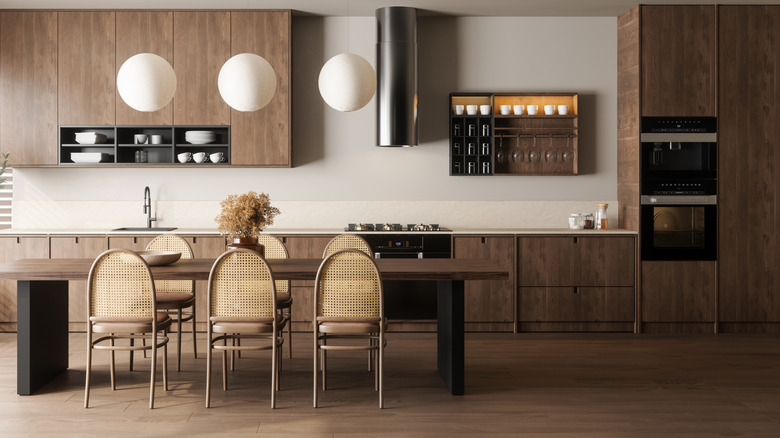
Wood cabinets may add warmth and texture to a space, but cleaning them while preserving their texture and longevity can be a bit tricky. However, Marisol Rivera, cleaning expert and professional organizer at Sparkly Maid Austin, says you probably already have the tools you need.
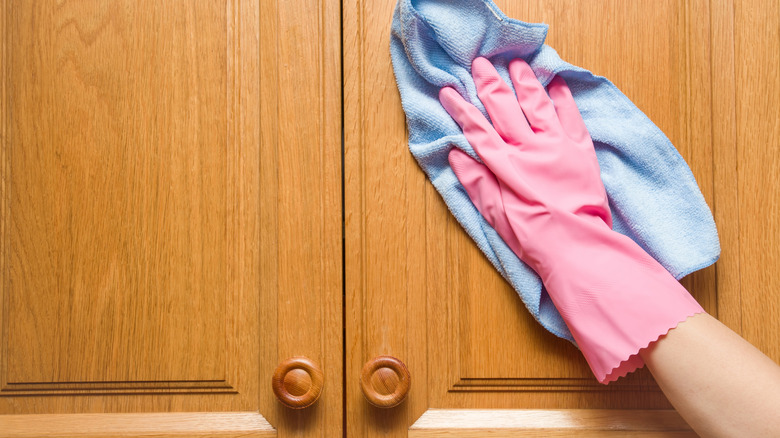
"The safest method of cleaning your wood cabinets would be to utilize a solution of warm water and a small amount of mild dish soap such as Dawn, with a soft microfiber cloth," Rivera says. Most gentle dish soaps are plant-derived, meaning they are not only great at merging with unwanted grime and bacteria, but also non-toxic. Microfiber cloths are absorbent and non-abrasive, with tons of tiny fibers that trap and absorb messes captured by the soap. This cleaning power also limits how much water you may need to use, as excessive amounts can soak into the wood and warp your cabinets over time.
"Most chemical-based cleaning products are too harsh for the finish on the cabinets and will either strip or corrode the finish making the wood more susceptible to stains and scratches," Rivera says. Wood is one of the kitchen surfaces you shouldn't clean with vinegar due to its acidic nature, and instead of using ammonia, bleach, or commercial degreasers, she recommends naturally cleaning your kitchen with baking soda by making a paste (applied only to stubborn spots). Still, regular maintenance lets you keep things simple and is the best way to keep cleaning days short and easy.
How to maintain your wood cabinets
The longer grease and stains sit on a cabinet, the more likely they are to harm the finish. The key here is not only addressing problems right away but also providing protection against messes you may not immediately notice.
"Weekly cleaning of your cabinets with a lightly dampened microfiber cloth will remove dust and fingerprints that can become permanent stains if left unchecked," Marisol Rivera says. She also recommends deep cleaning their interiors once a quarter, though you may need to increase the frequency depending on how often you cook or if you use a lot of oils and spices. While light amounts of such buildup may not be immediately harmful, they will make cabinets look more dull.
If your cabinets are particularly greasy, Rivera recommends a five-to-one ratio of water and Murphy Oil Soap, which contains a mixture of potassium hydroxide and vegetable oil. While some homeowners use plant-based fats like olive oil to tackle sticky residue, use them sparingly on wood cabinets; although they provide a beautiful temporary sheen and a moisture barrier, they must be buffed completely dry to prevent a tacky buildup. Regular maintenance ensures a bright exterior that remains resistant to cracking and discoloration.