

Avoid This Vintage Planter At Thrift Stores For Your Own Safety
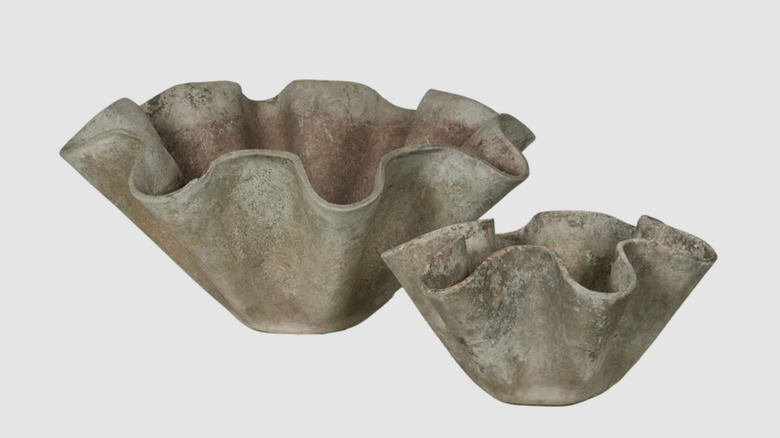
A nice, sturdy planter can cost you a pretty penny, so it's natural to want to thrift one rather than buy it new at the store. However, when you're browsing your options, keep a lookout for pieces from Willy Guhl, because while his work was beautiful and functional, many of his pieces were made with Eternit, a type of cement that contains asbestos.
Before the health risks were fully understood, the durability and heat resistance of asbestos made it a popular material for everything from roofing to Julia Child's baking tile. However, the danger of asbestos arises if the material becomes friable — meaning it begins to flake, crack, or crumble. Even in outdoor, well-ventilated areas, disturbing these fibers can lead to inhalation, which puts you at risk of long-term respiratory issues. Pets or wildlife can also be at risk if they sniff or dig at a weathered planter. Furthermore, asbestos fibers can shed into the soil over time, creating a hidden hazard for you when you are repotting or digging in the garden.
Many collectors covet Guhl's pieces, so most stores will advertise a piece's origins and charge upward of $1,000 for a planter. Some have a maker's mark with the word "Eternit," but others, both from Guhl and other sources, may have white striations, a telltale sign of asbestos fibers. Fortunately, modern, safer materials can be just as lightweight and affordable as Eternit without the risk, so whether you're thrifting, buying new, or repurposing, you have plenty of options.
Safer material options for planters
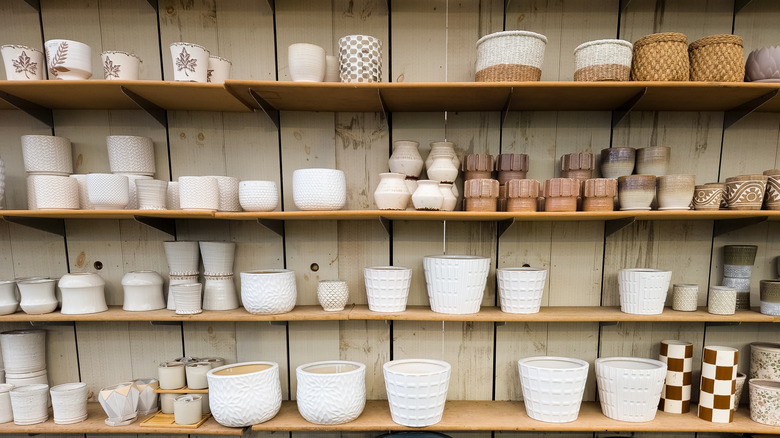
Willy Guhl's planters are appealing because they're relatively lightweight, durable, and have a natural look, but modern materials can achieve some or all of these qualities more safely. Whether you're repurposing a teapot into a cute indoor planter or looking for something you can grow a pomegranate tree in, asbestos's strengths are largely redundant in the 21st century.
If you need something lightweight but extremely durable, fiberglass is usually a safe bet. While it can be more expensive than other synthetics, it requires minimal maintenance, lasting for years with nothing more than an annual hosing off. If you're looking for the most durable option possible, galvanized steel washtubs are rust-resistant and only require drilling a few drainage holes. Modern galvanized steel is also considered safe for raised bed gardens, as the zinc coating is a stable micronutrient that is unlikely to leach harmful contaminants into your soil under normal, non-acidic conditions.
If affordability is your priority, terracotta is a classic choice. While it offers a beautiful natural look and is durable indoors, in outdoor settings, standard terracotta can crack during "freeze-thaw" cycles as moisture trapped in the clay expands. While wood and plastic are also affordable, they have shorter lifespans: Wood naturally biodegrades over time if not sealed, and standard plastics may not stand up well to direct sunlight or freezing winter conditions.