

Don't Throw Out Leftover Carrot Scraps – Make This Dessert Instead
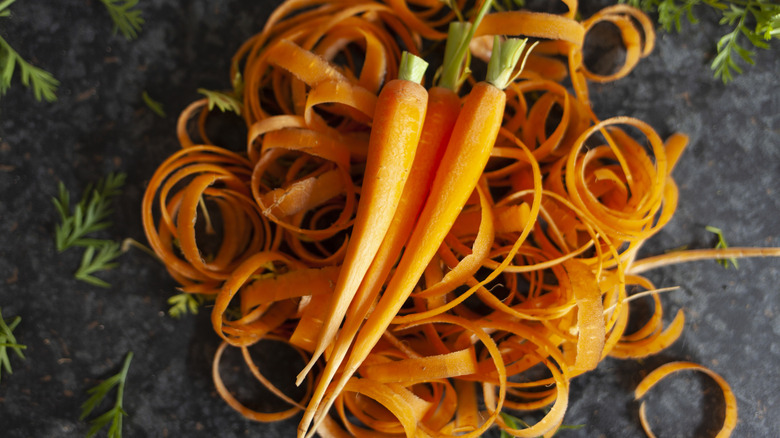
One of our favorite facts about carrots is that from the root to the leafy green top, every part is edible. But despite this, the body — also known as the taproot — is the most used part, while other elements like the skin, leftover pulp, or ends often go to waste. But in the spirit of zero-waste cooking, you could use your scraps to make a simple vegetable broth – or, for a more exciting twist, transform them into a delicious take on an Indian classic: carrot halwa (not to be confused with halva). By chilling the halwa, which is essentially a pudding, and blending it with milk, you get a creamy, ice-cream-style version of this beloved dessert. To learn more, Food Republic spoke with Priya Lakshminarayan, vegan cookbook author and recipe developer at Cookilicious.
According to Lakshminarayan, cooking down the carrot scraps is what really brings out there flavors. While the carrots still retain their earthy character, cooking them down deepens their natural sweetness and mellows the vegetal flavors. She recommended cooking in ghee (aka liquid gold), which is a clarified butter known for its richness and creaminess. "This step essentially turns them into a halwa‑style dessert base, where the natural sugars are released and the intense earthy notes mellow into warm, caramelized sweetness," she explained.
While Lakshminarayan's recipe involves grating the raw carrots, some common scraps are near-impossible to grate, such as skins or pulp. Instead, you could give them a rough chop or pulse them in a food processor before cooking to help them break down more evenly and blend smoothly into the base.
How to upgrade your carrot halwa
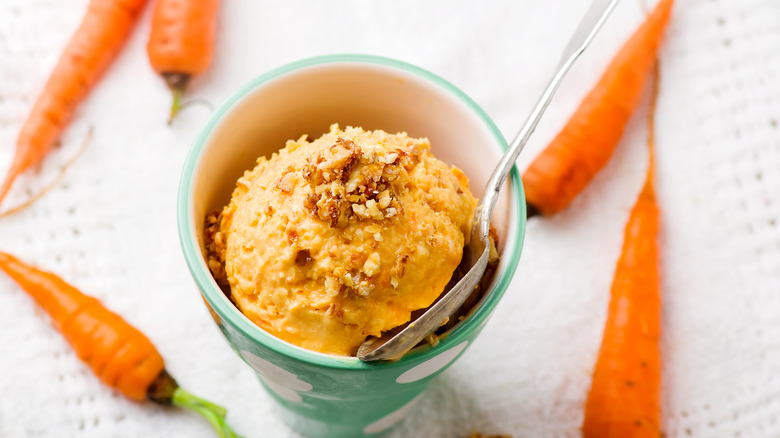
Any carrot scraps can work in a halwa, but some have distinct characteristics that can give your ice-cream an edge. "I use fresh, tender, and young organic red carrots to make carrot halwa ice cream," Priya Lakshminarayan told us. "You can also use black carrots if you have." Black carrots halwa is known for its intense black-purple color, as well as a deeper, more spiced taste than the comparatively sweeter orange carrot halwa. On top of that, they're also filled to the brim with powerful antioxidants, making your dessert both indulgent and nutritious.
Halwa is usually paired with a variety of Indian-style spices, which are infused with the hot ghee to create a deep, aromatic base. As Lakshminarayan noted, carrot halwa ice cream is a fusion dessert, so in this spirit, why not try experimenting with a wide range of spice blends? One Western-style mix that would work amazingly is pumpkin spice. Halwa is traditionally served warm in winter, and the cozy, autumnal flavors of pumpkin spice complement the comforting nature of this dessert perfectly.
Don't be shy about adding texture with toppings. "For mix-ins and toppings, I love toasted nuts like pistachios, almonds, or cashews for contrast and crunch. Coconut flakes, golden raisins, or candied nuts work especially well. A drizzle of condensed milk or a swirl of caramel adds indulgence, while rose water or orange zest can brighten the overall profile."
If you enjoy the warm, classic carrot halwa and don't want to eat it cold, an easy way to add oomph is by pairing it with a scoop of vanilla ice cream on top. Alternatively, you can always use your carrot scraps in Western-style desserts, such as an Ina Garten-inspired carrot cake or muffins made from leftover pulp.