

Why You Should Never Boil Scrambled Eggs
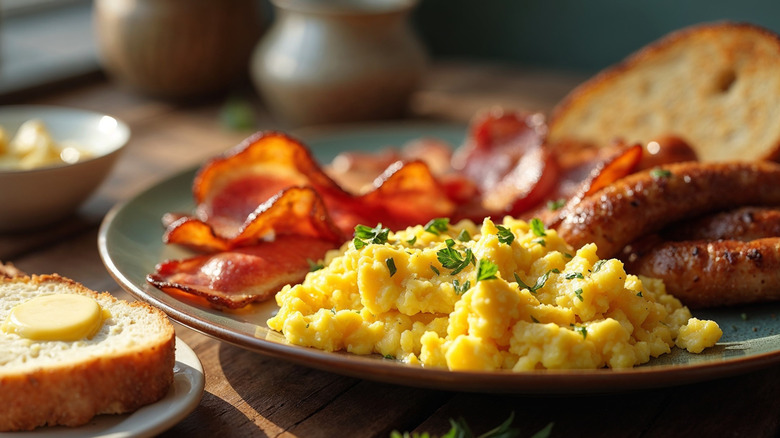
Many of the different ways to cook scrambled eggs have their own strengths, even if their flavors do not quite turn out how you hoped. However, Food Republic tried several methods, and out of all of them, boiling them turned out to be the worst, yielding nothing but horrible results.
Advocates of this approach claim it is easy, since you only need to bring a pot to a boil, give it a good stir, and pour in the whisked eggs. The circular motion keeps the raw proteins contained, preventing them from thinning out into wispy ribbons. However, the biggest drawback to this process is a total lack of taste. While traditional preparation allows you to season with salt and spices or enrich the eggs with oil and butter, boiling in plain water simply washes those flavors away. Even attempting to infuse the liquid with chicken bouillon is a highly inefficient use of seasoning compared to simply sprinkling it over eggs in a pan, oven, or microwave.
Fans of boiling scrambled eggs also mention that it creates a light, fluffy texture. However, even the most thorough straining leaves water on the surface, and leaving them to dry leaves you with a cold breakfast. If you are looking for a cooking method that is both easy and creates an airy end product, you have plenty of other options that taste far better.
How to easily cook fluffy scrambled eggs
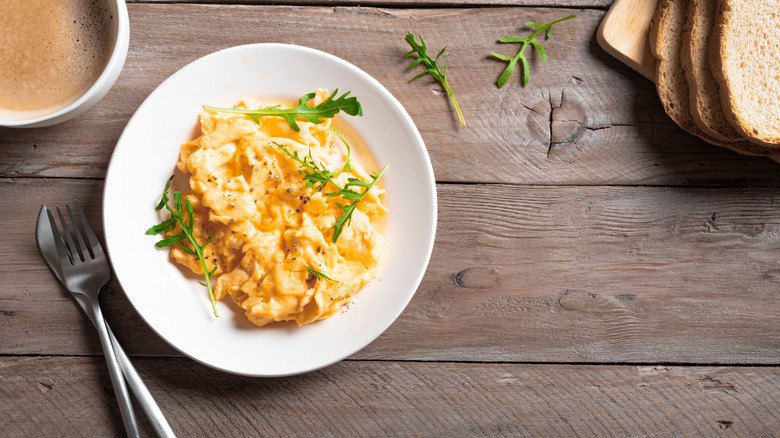
The key to delicious scrambled eggs is making sure they have enough moisture. In wet-heat methods, this prevents them from drying out. In dry-heat methods, water escapes as steam, creating bubbles, which gives the eggs a light, tender structure. This is why, when comparing water versus milk in scrambled eggs, water usually yields an airier texture.
Steaming creates perfectly fluffy scrambled eggs every time and is fairly hands off. Even without extra fat from cream, dairy, or butter, you get something similar to French-style scrambled eggs with a custardy texture. If you do not have a dedicated steaming setup, all you have to do is bring an inch of water to a boil, place a heatproof bowl of scrambled eggs in it, and let the steam do the work. Once the top of the eggs has set up, your breakfast is ready for any other add-ins, like cheese, hot sauce, or a bit of extra butter.
If you don't mind dirtying a pan, ricotta is the secret ingredient you need to keep on hand. Just one dollop while whisking the eggs, or dropped in right before they fully set up, is all you need for a light texture with a bit of extra flavor. Ricotta is about 72% moisture, with a texture similar to cream cheese, so it melts perfectly in a pan and provides just enough extra water to prevent your breakfast from drying out.