

Use This Cut Of Meat For Mouthwatering Beef Kebabs

Kebab is an ancient, globally beloved dish valued for its bold flavors and versatility — whether in the form of Greek-style souvlaki, Middle Eastern spice-filled shawarma, or Turkish döner. While many regional varieties are slow-roasted on a vertical spit, the classic shish kebab follows a simpler formula: Small pieces of seasoned meat are skewered, then cooked over an open flame to develop smoky grill flavors. While any meat can be used for kebab, few rival the taste and texture of beef — but not all beef cuts are equal. According to Joonas Jokiniemi, founder of Grill Smoke Love, the best ones to use are top sirloin or ribeye.
Jokiniemi explained that sirloin — a cut taken from the rear back portion of the cow — makes for perfect kebab meat due to its moderate marbling. While marbling can vary significantly across sirloin cuts, top sirloin generally offers better marbling than bottom sirloin. When grilled, this fat renders out, basting the meat from within to deliver a succulent, beef-forward flavor. "It also has a firm, even texture, so when I cut it into cubes it stays together on the skewer and cooks predictably," Jokiniemi added.
Jokiniemi also noted that ribeye — the most popular cut of steak in America, and the crème de la crème in terms of marbling — is his go-to when he's in "'treat yourself' mode." But while it's both guaranteed to deliver flavor and "very forgiving," Jokiniemi warned of its tendency to drip, which can cause flare-ups — aka fat hitting the open flame and igniting. This can overcook the meat and also poses a burn risk. To avoid this, trim off any excess fat and dry the steak before grilling.
Avoid lean or tough cuts for the best kebabs
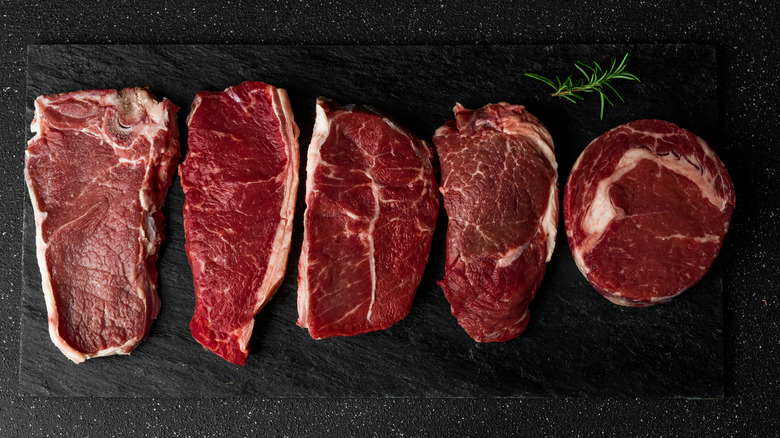
Open-flame cooking truly captures the essence of kebab, but it offers far less precise temperature control than stovetop cooking. This makes it a trickier method for less experienced cooks, which is why the cut of steak matters so much, as some are far less forgiving on the grill than others. According to Joonas Jokiniemi, lean and tough cuts are best skipped for this reason.
Lean cuts are steaks with relatively low fat and marbling, with the most notable example being the exceptionally lean filet mignon. While prized for its clean beef flavor, there's limited marbling to render and protect the meat. Therefore, exposure to intense, open flames can quickly strip away moisture, Jokiniemi explained. On the other hand, tougher cuts — like brisket or chuck — are even poorer choices for kebabs as they contain dense connective tissue. While they're the top cuts for low-and-slow cooking methods, which break down the tissue into a tender, melt-in-your-mouth texture, when cooked over a high-heat grill, it has no time to soften. This leaves the meat burnt on the outside and tough inside, Jokiniemi told us.
To keep things simple, Jokiniemi shared his formula for the perfect kebab: "Uniform one- to one-and-a-half-inch cubes, trim silverskin, and don't overcook — medium-rare to medium is where beef kebabs taste the best." On the grill, the most reliable way to hit that range is with a meat thermometer, aiming for an internal temperature of 130 to 140 degrees Fahrenheit.