

Oatmeal Vs Grits: Which Breakfast Food Packs More Protein?

There are plenty of unexpected ways to pack in your proteins, and it's not just the regular suspects like chicken breast or eggs. You can find serious protein gains in all kinds of foods, from non-meat options like legumes and tofu, to everyday breakfast staples sitting in your pantry, like oats or grits. But which one of these classic morning favorites delivers more? If oats are your go-to pick-me-up, you'll be glad to know they pack considerably more protein than grits.
Your body needs protein to function; it's the essential building block for building and repairing tissues, and keeping you full and energized throughout the day. According to the USDA, 1 cup of plain, cooked oatmeal made with water contains about 5.3 grams of protein. That's almost double the protein found in grits, which provide only 2.86 grams per cup (via the USDA). While neither is comparable to super high-protein options like meat or dairy, they're both great options to add a bit more nutritional value early in the day.
Oats contain protein that's largely derived from avenalin – a storage protein responsible for supplying nutrients during germination. They're also naturally high in carbohydrates and fiber, making them extremely nutritionally well-rounded. Grits, on the other hand, are made from coarsely ground corn that's boiled in water and milk until thick and creamy. If you're from the American South, you're probably already familiar with this comforting staple. For everyone else, grits are similar in texture and preparation to Italian polenta, but more coarse. Their relatively modest protein content comes from what remains of the corn kernel after processing, but much of the grain's original nutrition is stripped away (especially if you get the instant type).
How to boost the protein levels of your oats and grits
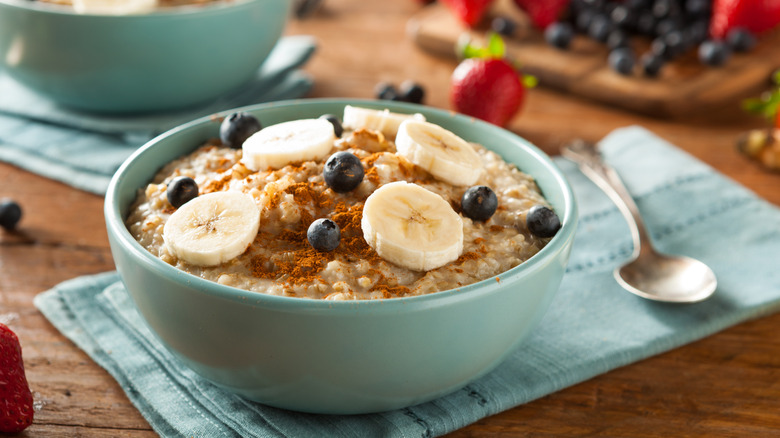
Oats and grits have both similar and different preparation methods. The most obvious common method of preparing these two classics is by simmering them in water or milk until they soften and thicken into a porridgy consistency. From there, each can be customized with a variety of add-ins depending on personal preference. While each contains a relatively humble protein content compared to other heavy hitters, there are several creative ways you can boost their protein content.
The easiest way to customize the protein content is by swapping water for a high-protein cooking liquid. Instead, milk or soy milk will make your oats and grits more protein-dense, while also contributing to a richer, creamier texture. Beyond that, the toppings you use can also make a huge difference. You could go the easy route and mix in protein powder — but there are plenty of more creative (and tasty) high-protein options to choose from. For grits, which go great with savory toppings, you can add tasty, protein-boosting add-ons like eggs, shredded chicken, or even a hearty dollop of cottage cheese. Add a little chili crisp on top? Heaven.
While grits aren't typically eaten raw, oats are extremely versatile and don't always need to be cooked. For an ultra-high protein breakfast, make a granola-style bowl by mixing your raw (or toasted) oats with a generous serving of Greek yogurt. To top things off, you can add some fibrous, protein-rich toppings like almonds — which pack more protein than eggs — or pumpkin seeds to improve both the texture and flavor. This simple combo can turn oats' modest 5 grams of protein into 10 (or more) grams in just a single, delicious breakfast bowl.