

This Is How Often You Should Clean Your Kitchen Sink Drain To Keep It Smelling Fresh
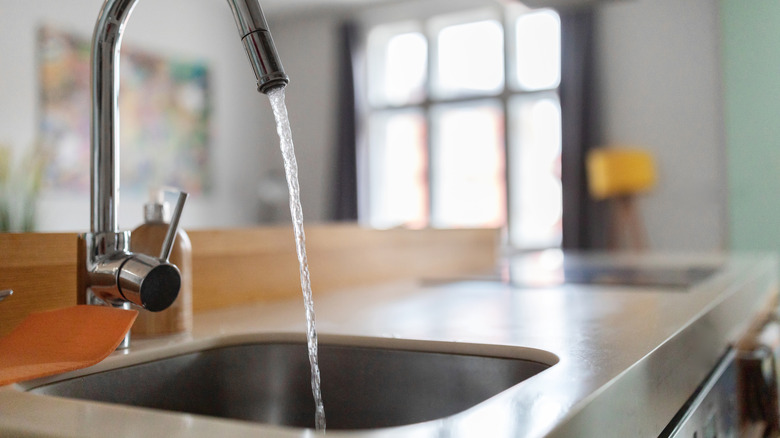
A clean, sparkling kitchen starts with more than just shiny countertops and spotless pans — it's what's happening in the places you can't see that really makes a difference. Similarly to how you should always clean behind (and under) your larger kitchen appliances, the sink drain is one of the places that can quietly collect food scraps and general gunk, creating the perfect environment for bacteria to thrive. This can lead to foul odors taking over your kitchen no matter how clean you keep everything else. To find out how often you should clean your sink drain, Food Republic spoke with Olivia Parks, owner and lead organizer of Professional Organizer New Orleans.
According to Parks, you should strive to clean your sink daily. "Taking a few extra seconds to rinse and wipe around the drain helps catch food residue before it can build up and start to smell," she notes. To make life easier, consider investing in a sink strainer, which helps trap food scraps before they even have a chance to slip down the drain. Parks also recommends a deep clean at least once a week to help prevent buildup and clogged pipes.
There are also several steps you can take to prevent grease buildup. When cleaning your pots and pans, make sure to never, ever pour oil down the drain. It hardens as it cools, leading to stubborn, gunky buildup that's extremely hard to remove without heavy cleaning agents. If you've been deep-frying, make sure all the oil goes straight into the trash bin. The same goes for leftover food on your plate, and all dishes entering the sink should be as clean as possible in order to prevent food debris buildup.
How to deodorize your drain
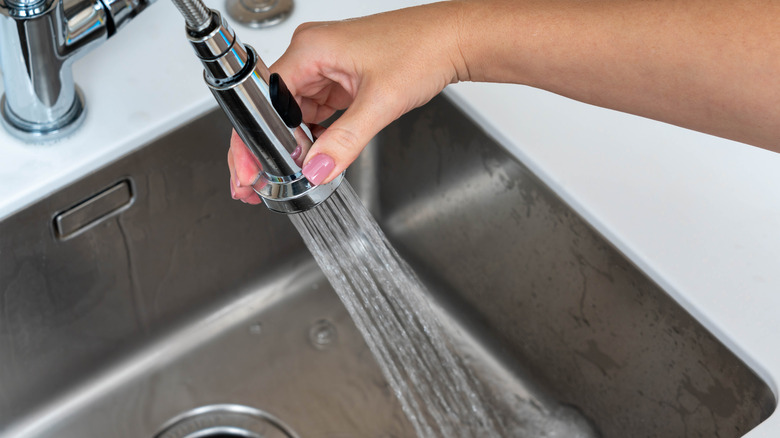
Fortunately, cleaning your sink drain is usually super simple and will take you no time at all. "To deodorize the drain, I usually start by letting the hot water run in the sink and turning on the garbage disposal at the same time to clear anything sitting in the drain," Olivia Parks told us. She also recommends adding a small squirt of dish soap and letting the hot water run again. While this is a solid tip for routine cleaning, sometimes buildup can be stubborn, and you might need to whip out your secret pantry cleaning essential: baking soda. Pour baking soda into the drain, and then follow with white vinegar. Let the mixture fizz for a few minutes, then flush with boiling water, finishing with a few lemon peels in the disposal to clear residue and leave a fresh, clean scent. The baking soda/vinegar reaction produces carbon dioxide, which helps dislodge minor blockages.
You should always factor in the material of your sink, as Parks notes that this can make a big difference in how it responds to cleaning. "Stainless steel sinks can handle gentle scrubbing, while porcelain sinks and other styles should be cleaned with a soft cloth and non-abrasive cleaner to avoid scratching," she explains. Stainless steel is one of the most durable kitchen sink materials, which is why it's so commonly used in professional restaurants. The material is considered self-healing, meaning minor scratches and scuffs blend back over time, and it's also naturally resistant to bacteria.